Why aren’t we talking about what’s happening to women in mental health care?

It was utterly shocking to read Scout Tzofiya Bolton’s description in the Guardian a week ago of how she was re-diagnosed from having bipolar disorder to having a diagnosis of emotionally unstable personality disorder (EUPD), and, excluded from care then ended up in prison.

                  And yet, sadly, wasn’t. 

Because many women and girls have told me similar stories during my research for Out of Her Mind. 

We know it’s remarkably easy to be given this diagnosis. Women are three times more likely to be given it, and some are very clear about how easy it is to receive it. Challenging a doctor’s views, as Scout did, is one way. 

When I was training in psychiatry ‘borderline’ or ‘EUPD’ wasn’t a recognised diagnosis but difficult women were usually labelled as having ‘hysterical personality disorder’ until they received sufficient time and care to be able to tell their story to someone who would really listen. It can take years to get a diagnosis of bipolar disorder, especially if you are a woman perceived as behaving ‘outrageously,’ and you can be rediagnosed easily too, as Scout’s story demonstrates.

 However, we don’t seem to be any better now than we were 40 years ago at listening to women with complex problems and finding out what is needed to help them. Now we have the diagnosis of borderline personality disorder and undoubtedly, as clinical psychologist Jay Watts says, some with this diagnosis are suffering from missed bipolar disorder, are autistic or have premenstrual dysphoric disorder. The vast majority have experienced trauma, if not before they came into mental health care, certainly afterwards. I’ll discuss the issue of complex post traumatic stress disorder cPTSD versus BPD in another blog, but I’ve made no secret of my desire to put ‘borderline’ in the bin – and that is a change of opinion from my experiences of listening to women.

What we do know is that a  majority of those with this diagnosis who take their lives when under mental health care are women.  Not only are they unlikely to get an adequate assessment but they have great difficulty accessing appropriate psychological therapy. We hear about them quite frequently now at inquests and/or there are investigations into the quality of their care, after which we are told that ‘lessons will be learned.’  

Surely, in mental health care, and society too, we should be paying more attention to this? Yet when I recently shared my views in a psychiatry teaching session, several (male) colleagues told me I was mistaken. It was a helpful diagnosis – for them. And I felt like I was once more being a ‘difficult’ woman. That’s familiar.

We also know that women are regularly victims of  sexual violence in mental health care, though without the fact that the majority of victims are women being mentioned. 

Many women who end up in in-patient care have already experienced trauma of one form of another.  In mental health care, be it from the lack of respect, kindness and compassion from staff that women described to me (and was clearly visible in the BBC Panorama report) or the risk of sexual violence, women are being retraumatised every day.

                  All-in-all its not so very different now for women in hospital from what I described in The Other Side of Silence of my experience as a new consultant in an old asylum in 1990. I didn’t name the hospital, but everyone who knows me can guess where it was. We closed those places, but the culture sadly hasn’t changed.

In the focus on men’s mental health in the last decade, we have failed to pay attention to what’s been happening to women in the mental health system. I know that many of these problems happen for men too, but being ‘gender neutral’ is not helping to address the very specific problems that women are facing.

We need a women’s mental health policy. 

And if that’s at the risk of offending men, well so be it. Something has to change.

My book: Out of Her Mind: How we are failing women’s mental health care and what must change, is out now.

Making sense of psychiatry

A review of ‘Conversations in Critical Psychiatry by Awais Aftab. Oxford University Press 2024.

Reading Awais Aftab’s masterful interviews with prominent commentators on psychiatry is rather like returning to when I was first trying to make sense of what psychiatry is all about. Moving from one placement to another as a young trainee I was confused by the different models of mental illness applied, biological, psychological, social and, yes, even existential and sometimes (I thought) too ferociously adhered to, by the consultants with whom I worked. They all broadly worked to the ‘biopsychosocial model’ but each clearly had his (and they were all men just then) favourite lens through which to try and make sense of what a patient was experiencing, and how best to help them. 

                  I’m critical of much psychiatric practice but I’ve never identified with the British version of ‘critical psychiatry’, finding it rather like having to adopt a complete ideology that will only consider hypotheses that are self-confirmatory. But it was refreshing to find a much wider range of thinkers who inhabit the borderlands of psychiatry, psychology and philosophy.

I was reminded of everything that really fascinated me in my own training. The knowledge about descriptive psychopathology conferred by the older consultants who looked beyond the restrictions of modern ideas and introduced me to the classical descriptions from old german texts that sometimes fitted so much better with what the patient was conveying to me (usually involving long German words such as my own favourite ‘Sensitiver Beziehungswahn’). And the weekly case conferences where biological, psychological and social perspectives on formulation were fiercely debated and questioned. Together these demonstrated for me the need for both nosological (referring to how we classify mental experiences) andexplanatory pluralism (how we understand them).  Additionally. a strong grounding in social psychiatry resulted in my interest in working with primary care where there really are no absolute certainties when a person first presents to a health professional and a pragmatic approach is essential. 

This acquired knowledge didn’t ‘fit together’ into a coherent logical whole of checklists like DSM-5. We now seem to have lost the awareness that psychiatry is an ‘imperfect community’. Aftab’s conversation with psychologist and philosopher Peter Zachar about the conversations around the ‘bereavement exclusion’ in version 5, which caused controversy at the time because of fears about medicalisation of grief clearly demonstrates this. It reminded me of those students who would simply list the DSM symptoms when asked, ‘What do you think it feels like to experience depression?’ 

The need for pluralism and pragmatism reverberates through most of Aftab’s interviews which were initially published in Psychiatric Times and have been brought together in a book by Oxford University Press. They explore current controversies in psychiatric theory and care and in particular the history and philosophical underpinnings of psychiatry . Awais employs a ‘critical’ lens, but he doesn’t define it, instead ‘approaching the notion as a tool to explore the rich multifaceted space of psychiatric critique’. There are 27 interviews with many leaders of the field, some of whom I knew of already such as the British Critical Psychiatry group (Duncan Double, Joanna Moncrieff and Sami Timini). Some whose work has informed my own thinking such as Allen Francis (‘diagnoses should be written in pencil’) and Paul McHugh whose book with Slavney, The Perspectives of Psychiatry, has been helpful in making sense of how a particular person’s distress or mental illness develops.

There are others to whom I was delighted to be introduced to in this way such as Sanneke De Haan talking about Enactive Psychiatry. De Haan sees psychiatric disorders as disorders of sense-making, of the way that we make sense of ourselves and the world around us. Her interview provides a different way of making sense of how body, mind and world interact.  ‘All living beings engage in some basic sort of sense-making… it remains an embodied and embedded capacity.’  

That really resonated for me.

I have yet to read Robert Chapman’s book The Empire of Normality but their critique of Szaszian views (‘it undermines and gaslights those who do find a medicalized approach helpful’) has encouraged me to do so! 

The views of Dainas Puras, the psychiatrist and human rights advocate whom I briefly met many years ago on a journey to Lithuania, have not been well-received by many psychiatrists. However, the interview with him helped me to understand much more about how and why he has arrived at his conclusions about ‘liberating global mental health care from coercive practices.’ Aftab writes how he has struggled too with the United Nation’s Convention on the Right’s of Person’s with Disabilities but 

‘…simply invoking the necessity of involuntary care in our present circumstances doesn’t render our current practices just or ethical, especially if we are not also trying to improve them.’(p20)

Particularly notable for me was the conversation with Nev Jones (who has herself experienced psychosis) where she movingly describes how: 

‘…at multiple points I felt heartbroken hearing other individual’s stories and the extent to which they felt they could not open up, had never even tried to describe so much of their experience to clinicians, or had long ago given up trying. Many of these were folks who had been in the public mental health system for decades; who had worked with dozens and dozens of different clinicians and social workers. The areas of misunderstanding or silencing or invisibilization took different forms, and I listened to this and really this is what informed my initial research.’ (p63)

I should like to have heard more from others who have used services themselves, particularly those created from a critical standpoint – but I suspect that would have required another volume.

                  Ultimately, Aftab himself, in an interview with Richard Gipps and Nev Jones, shares his own views and I agree with him that much of the ‘diagnostic reification, eclecticism, reductionism and over-reliance on psychopharmacology and neglect of iatrogenic harm’ we see is related to a failure to address the underlying concepts of psychiatry in our training. What do we really mean by a diagnosis? By ‘normal’ and ‘disordered’? What does it all mean? 

                  We need to encourage those training to be psychiatrists to not only be more thoughtful but listen to as many patients’ stories as they can and read widely, even the work of those they are convinced they will disagree with. 

That’s only how we will begin to make sense of psychiatry.

On writing a book about women’s mental health

For the last 5 years I’ve been working on a new book about women, mental health and feminism, addressing two big questions – how are we failing women’s mental health? and what needs to change?

                  Over the last decade, we’ve been rightly concerned about men’s mental health. Men continue to take their own lives at 3 times the rate of women. However, women are suffering too, and the size and nature of the mental health problems and illness they experience seems to get lost beyond that desperate headline. Just as women’s physical health is much more than about our reproductive system, the mental health crisis we currently face is much more than about perinatal mental illness. Girls and women are twice as likely to experience depression and anxiety, ‘common’ mental health problems and intersectional factors such as race, LGBTQ+ and disability, along with poverty, simply magnify this difference further. Girls and women are much more likely to self-harm than boys and men, experience 2 to 3 times more post-traumatic stress disorder, more commonly have eating disorders and are 3 times more likely to be given the diagnosis of borderline personality disorder, a diagnosis that I argue (controversially still for some) should be finally consigned to the bin. Young women are presenting with more anxiety and depression than ever before and since the pandemic there has been a considerable increase in their distress and requests for help from services than have been unable to cope. Some of those who have been failed by ‘mental health care’ in our hospitals and community services are tragically dying too.

                  Why is this happening to women?

                  Has feminism failed?

I have no doubt that what happens to women in our society plays a huge part. Women not only experience more sexual abuse in childhood, but they are also subject to greater intimate partner violence as adults than are men. There is an epidemic of male violence towards women in our society and it is happening too within our mental health services. Misogyny and sexual harassment are rife. Women are more likely to be single parents, working in low paid, precarious jobs, and be forced to live on benefits.  And it is clear that when women who experience trauma cannot get the understanding and help they need, they alone can become the problem, rather than helping to address the circumstances that contributed.

Women who discovered during the pandemic that their jobs were considered of less value than those of men, so they could return to full-time childcare, certainly felt failed by feminism. The silenced women in the street of Afghanistan must surely feel the same too.

In the 1980s when I started training in psychiatry there was a real resurgence in feminist interest in mental health. In ‘Out of Her Mind’ I’ve explored what has changed since then. Most recently some feminist writers have denied the reality of ‘depression’ and accused psychiatrists of simply labelling the impact that trauma has on women as mental illness. In my view that denies the reality of what many women are experiencing and can be perceived as another form of gaslighting. Instead of repeating the mantras of the past about the evils of psychiatry, even though I can and do acknowledge horrendous things have happened and still do, to women in mental health care, we must also focus down on the experiences of individual women, here and now. What needs to change?

Listening to this woman’s story has always been my starting point. What has happened to her? What is she experiencing? What does she need now to help her move forwards? 

As a psychiatrist I work from a biopsychosocial perspective, and looking through biological, social and psychological lenses, identify what increased her vulnerability to mental illness, and what has stresses in her life have caused it to occur right now. However, we must add a fourth lens to these three, the political. What part does her status as a woman in this society, particularly if she is also subject to intersectional inequalities, play in her experience of emotional distress and mental illness? 

What can all this tell us both about what might help her? 

                  I began to write this book while not only researching but most of all listening to many stories from women not only in the UK but elsewhere too, as well as interviewing expert commentators. Those stories add to the many I have collected in my own mental filling cabinet during the years when I was working as a psychiatrist. The book is framed as a narrative of how I returned to my own feminist roots as a doctor who spent so much of working life both working with and trying to help women. Everyone whose story and/or opinion is included in the book gave permission and had the opportunity to comment on/make changes to text that was finally included – over 120 people. I’m immensely grateful to those who gave me their time. 

You can purchase the book here its called ‘Out of Her mind’

A final note I’ve donated a large proportion of the advance I received from the publisher, Cambridge, to three charities: WISH, Self-Injury Support and Southall Black Sisters. They continue to help, daily, those who are facing sometimes incredibly challenging problems.

Map, guide and compass: the Draft NICE guidelines for depression

In his recent review of depression memoirs, Jeremy Clarke the psychoanalytic psychotherapist, and a member of the NICE panel on depression, concluded that lived experience is not the same kind of depression as that in clinical guidelines. If so that’s a problem.

However, we need to acknowledge that there is no single experience of what we call depression, no single cause, and no single effective treatment. Nor are people who suffer from the collection of symptoms we recognise as common to ‘depression’ all treated in the same place – although, in the UK, the vast majority primarily see their GP. Getting help for depression can seem like wading through a morass while your inner compass is disabled. Guidelines can provide a map of the options for helping you on your way.

            Nevertheless the new draft guidelines published last autumn after considerable delay, leave me, someone who has experienced depression, as Clarke notes, as a recurrent, sometimes disabling, often lifelong illness, curiously disappointed. Yes, the options for treatment, based on the best evidence are all there (though not quite all – I’ll come back to that later), but something else is missing. The sense that, for many people, those who aren’t among the 50% who do recover after brief treatment, that depression is a journey, and to help you on that you need a guide, who can help you to make the choices and decisions about which treatment you want to try from the wheel of options at a time in your life when you may be less able to make a decision than ever before. 

            For most people that guide will be their GP. But what if he or she isn’t interested in mental health and doesn’t know much about the options? Some doctors sadly are not. What if you haven’t established a trusting relationship with them? its harder than ever now with the pressure on primary care to have that kind of continuous relationship I had with my old GP over many years – the person who was the ‘keeper of my story.’ The short paragraph on ‘principles of care’ on the first page of the guidelines doesn’t acknowledge that. Without a guide, we fall back on ‘self-management’ but It’s extremely difficult to self-manage your own care when you are significantly depressed. You can easily get lost or even harmed by wrong choices that you make.

In my academic research and clinical work with an Improving Access to Psychological Therapies (IAPT) service in Salford over many years we showed how psychological well-being practitioners could act not only as therapists but also as guides, working closely with the GP, supervised by experienced mental health staff. We tried to help people get access to what might really be needed from the whole biopsychosocial spectrum of care, not simply psychological therapy because many of them had a wide range of life difficulties, physical illnesses and problems – not only ‘depression’. ‘Collaborative care’ as it’s known, has the best evidence base for treating depression in primary care, because it recognises that even if you know what helps people to recover from depression (the first 50 pages of the NICE guidance) they often don’t get it because when you are depressed you may not think you deserve treatment and you can easily disappear. Collaborative care has been adopted across the world, but not in the UK where (in England at least) the standalone IAPT model of providing mostly brief CBT, largely disengaged from primary care and the rest of the mental health service, has prevailed. Collaborative care gets a brief mention on page 51 yet collaborative care workers don’t just help you to navigate the system they help you to get the best out of it.

            A significant number of us spend many years on this journey, struggling to come to terms with the life events that predisposed, triggered or maintain our difficult moods. What happens when we run out of options? When our own inner compass refuses to start working again or has been seriously damaged by our early life experiences. When the brief therapies described here are exhausted and we ‘fall off the map’. 

            Working in a IAPT service you soon become familiar with the scenario of having nowhere suitable to refer a person with symptoms of chronic depression who requires referral for individual therapy to begin to resolve early trauma or psychological conflicts. Those for whom brief therapies, and those based on CBT, are not sufficient. I suspect that the NICE guidance considers these under the rubric of ‘depression in people with a diagnosis of personality disorder’ but why should people who fail to recover from depression have to accept that label, with its associated stigma, to receive care – even if it’s available? 

There is growing evidence for the effectiveness of longer term psychodynamic psychotherapy for chronic depression, however services that in the past could provide this have been eviscerated in the push for only brief interventions to meet IAPT targets. Both are needed. Some of us (myself amongst them) needed a skilled psychodynamic therapist over a much longer period to guide our way forwards again out of the morass, back into life and help re-set our inner compass. Acknowledgement of this is missing in the draft NICE guidelines for depression even though so many of us recognise it is true. Longer-term psychodynamic therapy is now almost impossible to obtain on the NHS and, if missed out again from the guidelines will continue to be so.

So, in my view, the map, as drawn, is incomplete and the journey through depression, whatever it is, is difficult to make for many of us without the help of a guide that we can trust. 

That is what my lived and professional experience tells me.

My memoir of recovering from depression: Finding True North: the healing power of place is out now.

Antidepressants and shame

I’ve been interviewed twice in recent months for articles about how young women shouldn’t feel ashamed about taking antidepressants. The writers had experienced considerable shame about even the idea of taking medication when they have failed to recover with other treatments for depression. They talked to others who described similar experiences- the stigma of admitting that they were seeking help for depression, then the criticism from others about taking medication. 

I’ve previously blogged about how much our sense of morality, of what is ‘right’ and ‘wrong’ is bound up in how we both view depression, and its treatment. The arguments go something like: 

  • If depression is only extreme sadness, why would you ever need to take something for it? It’s a response to what’s going on in your life- sort that out.
  • ‘Working things through’ with or without therapy, is the right way to deal with your problems. That’s showing real strength of character.
  • Emotional suffering is ‘normal’- we shouldn’t use medication to relieve it. (I might as well have said that suffering is good for the soul…).

If you do believe that depression is only normal sadness, then you will never accept that a pill might help other than to numb or sedate- which is the argument generally put forward. In which case, while being in such a state I’ve managed to function remarkably effectively for the 30 years I’ve been taking them. 

            But it’s the moral arguments that concern me because of the impact they can have on a person who might already be feeling quite sufficiently ashamed. Shame and guilt are common emotions in depression but shame differs in that while a person might feel guilty about a particular action, a sense of shame is about how they feel about their whole self for committing that action- as Lewis (1971) says:

The feeling of shame is an acutely painful experience because it’s the entire self that is painfully scrutinized and negatively evaluated. Such self-scrutiny leads to a shift in self-perception, which is often accompanied by a sense of shrinking, of being small, by a sense of worthlessness and powerlessness, and by a sense of being exposed.

People with sensitive personalities are more likely to feel shame when they get depressed- as I know only too well.

So if we view ourselves as potentially doing something morally wrong when we take medication, we might not only feel guilty about that, but ashamed too as the act challenges our very self-worth in the eyes of others. This is why the concept of pill-shaming first coined by the activist @Sectioned_ on twitter, is so important. Telling someone who is already depressed how they may be seriously mistaken about taking medication- for the reasons stated above- may potentially make them doubt their self-worth even more and emotional pain –  the agony of guilt, shame and hopelessness can and does kill.

There are other reasons of course why antidepressants are problematic. I’ve said many times (and been criticised for doing so) that they did and do help me. However, there are many people they do not help, some people who feel decidedly worse taking them, and many who have difficulty coming off them. None of this is in dispute whatsoever. But I do not think these should be reasons for being ashamed of trying them, as long as that’s an informed decision. 

            I don’t feel ashamed about taking medication, but that doesn’t stop me feeling angry and conned by pharma companies who have themselves, at times, behaved shamefully. 

I did indeed work with Big Pharma during the Royal College of Psychiatrist’s Defeat Depression Campaign 30 years ago by accepting their funding to produce teaching materials about depression. I continued to speak at meetings funded by them for many years afterwards- usually to talk to GPs and/or Psychiatrists about mental health and primary care. I feel naïve that it’s only in retrospect that I can see how, as Edward Shorter puts in, everyone suddenly ‘became depressed’ when Prozac emerged, but at the time, for me, it seemed like the right thing to do. Not least because I saw so many people with unrecognised and untreated depression in my primary care research, and I knew exactly what that felt like. When I joined the campaign, I had just recovered from my most serious episode on medication (an SSRI) that was, for me, much more tolerable than a tricyclic. However, it was only in conjunction with Lithium- which cost pennies (and still does, despite a recent shameful attempt to inflate its price to the NHS) that I made a full recovery. I’ve taken the pills of practically every company I worked with. 

Someone said, in one of the articles for which I was interviewed:

“Therapy is what helped me”… “antidepressants were the bridge I used to get me where I need to be.”

I wholeheartedly agree with that. Therapy helped me make sense of my past and present, and regain hope for the future – but antidepressants have kept me going – and alive.

My latest book: Finding True North: the healing power of place discusses how we achieve a sense of recovery in many different ways and is available now.

A torrent of grief

A few years ago, when Prince Harry talked about seeking out counselling, to come to terms with how he had been feeling many years after the death of his mother, most of the public reaction was sympathetic. But there were some mental health professionals who decried his decision to ask for help, as though something was ‘wrong’ with how he was feeling. ‘Grief is normal, why do we have to pathologize it?’ they said. Well, one has to ask whether, at the age of 12, discovering your mother had died in a crash after being chased by paparazzi, following her coffin through streets of weeping people who never even knew her personally and then having to live with the endless conspiracy theories woven around the incident, could in any way be described as less than traumatic? Perhaps it might affect you afterwards? Maybe you would need some help to cope with the feelings (Harry described it tellingly as ‘chaos’) that erupted later.

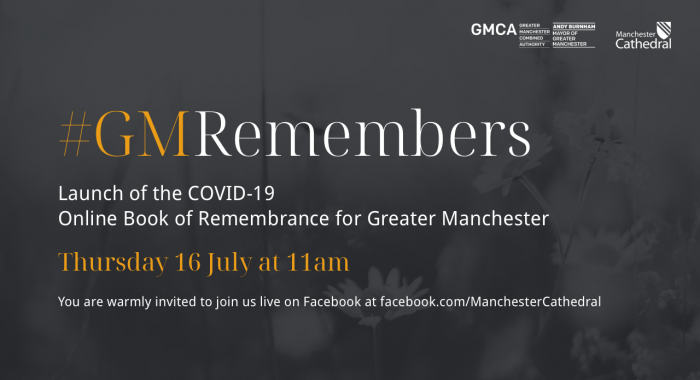
I often think of this when listening to the stories that the young women who I am supervising on the Greater Manchester Bereavement Service tell me. This was set up in the heat of the first lockdown, when people first began to die from Covid-19.  They are a team who spend their day on the telephone lines listening to the bereaved. Afterwards, I listen to them talk about what they have heard, how it affects them, and how we can help, as well as sometimes contacting other health professionals and agencies on behalf of our clients. I retired several years ago, but the General Medical Council wrote to me to tell me they had restored my license to practice, and hearing that I might be willing to return to work for a few hours a week, old colleagues from the social enterprise I helped to set up a decade ago asked me if I would return.

We hear from those who said goodbye to their husband or wife, or parent, or sibling, as they went into the ambulance, never to be able to see them again before they died. The older people who, despite more than 50 years living with the same person were unable to hold their hand as they slipped away and whisper their last words of comfort; and then have been left living in isolation unable to meet with friends or family to assuage their pain. That’s unimaginable for me, even after only a quarter of a century of marriage. Those for whom the opportunity to go through rituals of death- the funeral and the passing on of condolences from family and community, have been taken away. Their pain is palpable, heart-rending, and sometimes extraordinarily hard to bear. Some have lost more than one family member and feel unable to share their sadness with others grieving too, for fear of causing more distress.

            For most people grief is the normal expression of loss. It’s an acute sense of disbelief followed by a period of intense sadness, along with anger at what has happened, guilt as to whether you could have done more, and then a gradual re-engagement with a world from which the deceased person- the one you love- is missing. As when I finally came to terms with the sudden death of my own father, there comes a time when you remember the person you have lost as they really were, both wonderful and irritating, rather than as the idealised image you have taken inside you and dare not let go of for fear of finally losing them. I don’t think we ever really ‘get over’ the loss of loved one (never ask someone if it was difficult to get over their loss) it just ‘normally’ gets easier with each passing month and year. Some have been told they need ‘counselling’ but really want someone to hear their pain and be with them. It doesn’t have to be a professional but if they are already in touch with mental health services its extraordinary how many mental heal staff seem to think they ‘don’t do bereavement’. ‘It’s not in the IAPT manual’ we’ve been told several times. Where does it say you shouldn’t offer basic humanity and kindness? Some people need more than this- having had a complicated relationship with the person who is gone, or other complex problems in living. Then counselling can help.

But when grief is traumatic, as it has been for many people during Covid, grief may not progress as it usually does. It gets stuck- in a frozen state of disbelief, anger, depression or even wanting to join the dead- especially after bereavement by suicide. Then it can be even harder to get the right help. Those with a history of depression may need help before the magical often quoted ‘six months’ are up, and others develop PTSD and need it sooner rather than later too. Some need skilled therapy of the type that we don’t have very much of.  More like psychotherapy than counselling, and people trained to offer interventions that help those with prolonged or complicated grief

            In our team, we support people to get access to the right help. We support each other too, even though we all work alone at home (me in Orkney) and most of us have never met in person. There has been much talk of a ‘tsunami’ of mental health problems following the coronavirus epidemic. Many will be coming to terms with losses, of health as they suffer the long-term effects of Covid, loss of jobs, homes, and hopes for the future. Some will be those who found it hard to get the mental health care they needed for severe mental illness during Covid and must not be forgotten again now in the face of rising demand. And some, like those we hear from every day, have been overwhelmed by a torrent of grief and won’t make it through to the other side without our help. That’s nothing to be ashamed of and should not be diminished either. We have, thankfully, begun to have a more informed conversation about grief in our society. Much more will be needed.

My latest book: Finding True North: The healing power of place will be published on 29th April

Through a screen, darkly.

During lockdown, my life was conducted mostly on-line.

Whether by Skype, Zoom or the more clunky Teams, I managed, like many others, to participate in something like ‘normal’ life from my desk overlooking the garden, via the screen of my computer. To run training courses for some people and be a participant in others. To listen to a person reading from a book in Devon, an event I would never normally have been able to attend in Orkney. To take part in an international conference whilst wearing yoga pants and slippers- something that in the past might be a scene from a nightmare. To meet and supervise four people, who I’ve never met in person, and discuss the painful emotions experienced by people recently and sometimes traumatically bereaved, whilst being distracted by a young hare sunning himself beyond my window frame. 

            I know it’s easier if you’ve met before in person to relate on-line or by phone although some people seem to manage very well, especially when there is no alternative- or you are somewhere fairly inaccessible- like the Australian outback. There are many now who regularly meet their therapist through a screen. Others talk by phone, email or even MSN messenger. Perhaps you use an emoji in your text message to show you are crying, or maybe that’s an advantage for some- that no-one can see that you are. As someone said once to a therapist I interviewed, ‘I could pass you in the street and we wouldn’t know each other.’ When my lockdown anxiety was at its height I might have imagined anyone I met on my few trips outside could be the grim reaper posing as an acquaintance of mine- probably worse. (Now there is a psychiatric term for believing that people you know have been replaced by doubles…what is it? Capgras syndrome. I’ve definitely spent too long alone on social media the last few weeks). 

            But how real does it feel when you meet with a person through the screen? For a virtual G and T you don’t have to find both parking place and a seat in the bar where you can see your friend coming through the door. However, sometimes you get a weird glimpse of their face from an angle you wouldn’t normally see them, unless you were resting with your chin on the table between the two of you. You catch up on gossip, but you cannot hug one another like you usually do, and partners, children and animals suddenly appear to wave to you, or, in the case of cats, show no interest at all. Somehow the screen flattens out a person’s facial expressions- Zoom doesn’t zoom in for close ups like the TV does, and a voice may be irritatingly out of synch with an image. You are distracted by the state of your fringe and whether you should have eaten before or after meeting, when you would usually be laughing and joking over a meal and discussing whether to have a pudding. Somehow the amplitude of your expansive gestures is dampened down. Your emotions, everything that adds up to who you are is hemmed in by the edges of the world inside the screen and feels boxed in, diminished. It is much more of a fleeting experience than a personal meeting. Easy, yes, but perhaps less of an occasion for being so, even though those few minutes of connection can cheer you up immensely.

            When I carried out research into something called ‘telepsychiatry’ 20 years ago we had a contraption that looked something like a Breville sandwich toaster that you had to open up and connect to a specially fitted line, which could take BT several months to supply. I remember how the psychiatrists were perfectly happy to ‘have a go’ with seeing patients who lived some distance away, on the videophone, but they felt constrained by it too, as though they were talking to a person across a barrier like the traditional desk, rather than ‘being with’ them. Other members of the team refused to try it out exactly because they said ‘being with’ someone was a key part of how they developed their relationship with a patient. It wasn’t possible, they told us, to really get to ‘know’ someone through the video screen. Yet now, many of our lives are conducted in this way.

            So much of my relationship with my husband usually consists of us simply ‘being with’ each other, that our conversations on skype twice a day during lockdown were exhausting. We chatted, exchanged news, made each other laugh, depressed each other with the uncertainty of when it would all be over, but we never felt together in any meaningful way until he walked through the door just over a week ago. There are many kinds of transaction that can take place via skype or zoom that help those of us in far flung places to connect more easily with the world. They ensure those for whom there is no other choice can stay in contact. For me, however, relationships that are more than simple transactions will only really flourish if released, occasionally at least, from the frame of my computer screen into the real world. Otherwise they will forever languish somewhere in the darkness just beyond my reach.

Distress in the time of coronavirus

Recently I returned to work for a few hours a week, with the Greater Manchester Bereavement Support Service, which has been set up in the wake of the impact of coronavirus on the city I have loved and worked in for most of my life. However, I haven’t left Orkney. Like many others at the moment, I am working remotely and trying to cope with the sadness of lockdown, which bears much resemblance, for most of us, to grief. We miss our usual lives and contact with our friends, and the holidays we planned to take this year. But if we have a job we can do from home, and can afford the higher food prices, we might appreciate the relief from the daily commute. (Those home schooling as well as WFH may disagree here).

However, for others much less privileged than I am, Covid-19 is bringing its own much more severe stresses, loss of jobs, freedom, health and hopes for the future. Despite what was announced recently, mental health services have still been operating, but many service users and patients say on social media they haven’t been receiving the contact they previously had. Our Improving Access to Psychological Therapies (IAPT) service in Salford, of which I am still a non-executive director, is operating completely virtually but some people don’t want to talk about difficult emotions to a person they cannot meet face-to-face. My former colleagues in psychiatric services are still out in the community, trying to help the most in need through assertive outreach but there are others who are not being reached. Covid-19 is not an equal opportunities disease. Some communities such as ethnic minorities (not least doctors and nurses) are being hit very hard, and the poor will always suffer the most in any crisis.

Some say they are coping better with their mental health during lockdown, but many are not. A recent article in the Guardian  about a ‘tsunami’ of people presenting with new mental health problems has triggered the predictable debate about medicalisation of mental distress, and there has been discussion about how it’s quite normal to be afraid of coronavirus. Yes, it is. However, instead of getting hung up in the usual argument about what’s ‘normal’, can we at least acknowledge that people are suffering, some of them quite extreme and terrifying degrees of distress, and that they are asking for help?

When we have a loss in our lives, grief is a perfectly ‘normal’ human response, but what happens after that isn’t the same for everyone. Distress that is triggered by negative life events can spiral into something much more severe for people who are already vulnerable – because of early life experiences, lack of support, physical illness, the cumulative impact of previous losses and everything else that goes with poverty. If you have lost someone who is the centre of your universe during lockdown and you could not see them to say ‘goodbye’, to hold their hand for the last time, and even have a hug from your friends and family, you will likely be feeling bereft. You may even have thoughts that life isn’t worth going on with alone. Some people are experiencing these feelings just now and are beginning to ask for help as they are not ‘getting over it’ at the speed others that around them tell them is ‘normal’. They just want someone to listen to how it is for them.

I’ve been struggling at times as I’m alone in Scotland, and desperately in need of a hug from my husband who is in England. We are fortunate enough to be in the process of moving here, but he cannot be with me at present as he was in Yorkshire when the travel ban was announced. There are times when my mood slips, and the solitude I’ve come to enjoy slips back into a familiar loneliness from the past I thought I had overcome. Sleep is difficult, but the other advantages in my current life (especially the view from my desk window) are providing me with a cushion against relapsing back into depression. When some of us think of how we are coping, let’s acknowledge that life isn’t experienced in the same way by everyone. In the midst of this pandemic,  what some people are asking us for help with might not be ‘normal’ distress, and whatever it is, it hurts.


How support became a dirty word

When did the term ‘support’ become a dirty word? Has it slowly become tarnished or only recently tossed into the dustbin of healthcare?

When I was talking with a group of mental health workers a couple of weeks ago, we got on to discussing their concerns about the tremendous pressure there is to discharge people back to their general practitioner. Many of the service users they work with have ongoing severe mental health problems in need of considerable support. However, unless they are apparently still in receipt of identifiable ‘treatment’ they can no longer be under care from specialist services. Presumably treatment here refers mainly to a psychological therapy of some sort. I’ve also heard from people on twitter that even when medication has just been changed, they can still get sent straight back to their GP – before their psychiatrist can ‘support’ them through the first couple of weeks change in meds – something I always thought was important given the potential for concerns about side effects and other risks. Indeed, one person tweeted that their psychiatrist had been threatened with disciplinary action for failing to discharge patients. Who by, I find myself wondering? – but I know actually- those within the system who have no clinical responsibility, and no formal professional accountability other than financial. Yet this is a question about quality of care and safety, rather than cost.

But what happened to support itself as a therapeutic intervention in our health care system? Do we, as a society no longer value it? Of course we do. A support is something that helps to bear the weight- to give assistance- material or emotional. We still have people who are called ‘support workers’ but I  suspect that they too are expected to deliver some kind of ‘intervention’. Everyone else certainly is. Don’t get me wrong- in the past I witnessed people just getting a cup of tea and a chat when they might have actually benefited from formal  psychological therapy. I used to ‘support’ people to a point where they might be able to engage with it- be willing to actually go and talk to a therapist. And when they came back too- and tried to get on with everyday life. I guess that would be called ‘promoting recovery’ now- except you have to see the recovery team to get it, and it’s time limited. For many of my patients it was ‘supportive psychotherapy’ that kept them alive: engaging, listening, empathising, encouraging, promoting self-esteem, kindness, always providing hope. And caring. I suspect I would be ‘strongly discouraged’ from continuing to do that now unless I could provide a justification other than ‘to support’- even in taking medication.

It seems that what is done to us now as patients must be measurable, time-limited and provided in a transactional, instrumental manner that subtracts what is human from the equation. Especially the building of those life-saving relational bonds with someone you see regularly and who knows you. A person who recognises when you’re not your usual self. A person who phones when you don’t turn up when expected and calls round to check you are okay. And this denigration of support isn’t only happening in mental health care, but in physical health care too. As people develop more chronic illnesses, services are under increasing pressure to discharge.

It’s hard to put a value on ‘support’ but have we really thought through the consequences of devaluing it? Many of us value our independence, even as we grow older (and frailer), but self-management has its limits. Instead we have a creeping culture of a peculiar pseudopsychological theory of uncertain origin that denigrates anything potentially leading to ‘dependence’, and calls workers who demonstrate kindness and concern ‘rescuers’. Throughout our lives we are all dependent on others with whom we develop those powerful bonds that keep us going. They support us and keep us alive. Many of us take that for granted. Don’t allow them to throw away the support needed by others to survive.

And please, let’s not just take it lying down.

Defeating Descartes

Two weeks ago, I stopped taking the antihypertensive drug, amlodipine, which I had been prescribed 3 months earlier for high blood pressure associated with my polycystic kidney disease. Before then, my mood had reached the point where I had once again begun to feel that the world would be better off without me. I was also exhausted, aching all over and unable to walk any distance without pain in my legs. The crunch point of realisation something was really wrong came when, on arrival in Amsterdam, one of my favourite cities in the world, there was no sense of joy or excitement at being there. All I wanted to do was sit down, drink tea and look forward to getting home.

I wouldn’t have connected the plunge in my mood with taking the medication if I hadn’t known that certain antihypertensives can cause depression. I take my pills reluctantly. I was already on one for my high blood pressure and wasn’t keen to take another. Maybe it’s my way of denying the reality of chronic physical illness. My consultant, seeing my raised bp last time we met in the clinic, fixed me with his eye and assured me, ‘most of my patients are on 2 drugs.’ I wasn’t clear whether it was a reassurance or a challenge, but I gave in – and subsequent readings improved considerably. My ankles stayed the same diameter, (‘when they put me on that I had swelling up to my knees,’ a friend had informed me over dinner in Edinburgh), and I was also curiously calmer- I had stopped worrying about my health.

I first noticed a change a few weeks later. My joints were becoming stiff as though the arthritis promised to me by my family genes had finally caught up with me. Then, while on holiday the anxiety resurfaced again- with some force. I began to worry about everyday disappointments and focus on them -blaming them for how I was feeling.  Except that’s what they were. Not major life events but ripples on the surface of an otherwise much more settled flow of life than I’ve had for many years. Nothing at all in comparison with what so many people have to deal with daily- or what I’ve coped with and overcome before. I told myself I was simply jet-lagged. Only as time passed the exhaustion got worse, not better.

I have a history of recurrent depression but for the last year I’ve been ‘in remission’. There are several reasons why that might be- but one possibility is that the urinary infection which, in retrospect, had probably been there for a couple of years despite negative investigations, finally resolved after a rather grand finale performance- with copious bleeding, pain and then admission to hospital with sepsis. Since the treatment with the heavy-duty antibiotics required to save my life, those pesky unexplained symptoms have disappeared completely. My psychiatrist, who is an academic researcher in the field, thinks that the chronic inflammation caused by an infection may have had a significant impact on my mood- which was extremely fragile over the same time span, prompting some subsequent jokes about gentamicin as a cure for depression.  Can bodily inflammation lead to changes in the mind? Some think so- others vehemently reject a link between mind and body in mental ill health.

Earlier this year, when my essay In Defence of the Biopsychosocial Model  was published it was attacked from both sides- by the critical psychiatrists who reject the role of biology in mental illness (and suggested I had misunderstood what Engel’s model was actually about); and also by those writing in defence of people with a diagnosis of ME who reject psychosocial explanations of their illness. However, given my recent experience with the psychological side effects of medication for my blood pressure I am more than ever convinced of the importance of not separating mind and body. Was this not a ‘real’ mental experience because it was caused by blood pressure medication? It felt exactly like every other time I’ve been down, except I was also much more physically incapacitated too. But then, when I get depressed it is always an intensely bodily experience- the heaviness of limb, the feeling that there is a weight pressing down on my chest, the lack of energy and drive. Those familiar demons were all there- along with the guilt and self-reproach in spades for allowing ‘life’ to get me down again as my mind found endless problems about which to ruminate.

Except these problems were almost certainly not the cause of the depression. They were simply the foci my mind coalesced around in an attempt to make some sense of my mood.  The worries have receded into the background now I’ve stopped the amlodipine. The aches and pains are disappearing gradually too. I can go for a long walk again.

But I do wonder how many other people are waiting for therapy- or working through it without benefit- while struggling along with the same kind of symptoms I experienced. Many therapists don’t pay much attention to physical health problems and medication because they are trained, and work, in our Cartesian systems where mind and body are treated separately and retain their familiar disconnection. What potentially treatable physical causes for their problems are being missed aside from the common ones most professionals know about, such as thyroid disease?

Meanwhile we all remain at risk of falling through the ever present gaps, between services and professional ideologies, as we try to retain our health and sense of wellbeing.