The morals of medication

Is taking medication for depression the ‘easy option?’ I come across this viewpoint regularly on social media. Usually there is a suggestion alongside that therapy, which I completely agree is hard work, is somehow a purer way to recover. The right way.

The history of psychiatry is rich in references to morality. Is a person ‘mad’ or ‘bad’? Is there really something wrong in the brains of those society labels as bad? Is addiction an illness or simply a behaviour choice? Are we excusing bad behaviour by medicalising it?

Many people who consider medication for depression will find themselves wondering whether it is a ‘good’ thing to take it. When you are depressed it can be very difficult to decide what is the best thing to do, and decisions are taken not only on the basis of discussion with health professionals- moral judgments also play an important part.

  • How does taking antidepressants affect how I feel about me? Does it mean that I am weak?
  • Is it the easy option?
  • Shouldn’t I be able to sort myself out without them?
  • What will other people think- my family- my friends…will it change how they see me?

Alice Malpass and her colleagues identified two parallel journeys that the depressed person embarks on. The ‘medical’ journey goes something like this:

  • I have a duty to be well. Other people need me to be well.
  • If I recover then there won’t be any risk of being seen as ‘mentally ill’.
  • I can get back to my old self and be in charge of my life again.

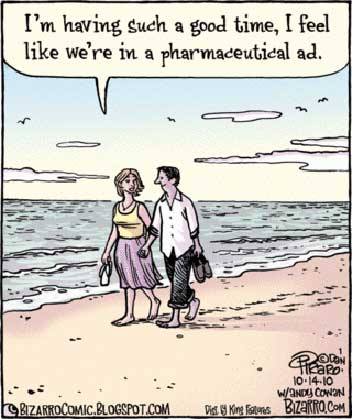
I’m sure I’ve used some of these arguments in conversation with patients. Any doctor who says they haven’t is not telling the truth- but to consider these are the only things of concern about medication is inherently simplistic and paternal, and reminds me of the cartoon of a couple walking along a beach, smiling and carefree, who say they feel so good they must be in a pharma advert.

In parallel the person is perhaps also on another journey- the ‘moral’ one.

  • I feel awful because I have to ask for help.
  • I feel even worse because I need to take tablets.
  • Is this person the real, authentic me? Am I now my old self or someone else? Or am I only this person because I am on tablets?
  • Am I hooked on these now?

Damien Ridge, who has analysed many interviews with people who are depressed talks not only about the lack of legitimacy for tablets, but also for what they are being prescribed for.

  • Is ‘depression’ real?
  • Shouldn’t I just ‘pull myself together’? Isn’t that what everyone else thinks?

There is a great deal of literature on whether ‘depression’ is ‘real’ or simply no more than unhappiness. And if it isn’t real, then the treatment for it cannot be legitimate either, little better than using street drugs- as one person in Ridge’s paper calls his tablets: ‘My dirty little habit’. I’ve spent my career arguing that to use the term depression is not simply medicalising misery but giving a name to a particular experience and quality of suffering which is not just unhappiness but a deep, dark, hopeless, despair. It has many causes, and it isn’t a single ‘phenomenon’ whatever DSM tells us. But it’s a state of mind that many people with different stories share in common. I experience it too. I have asked all of these questions of myself. I have watched colleagues who work in mental health look a little embarrassed when I get out the tablets at breakfast. Perhaps I do that simply to show I am not ashamed- but I do wish I could have lived my life without them.

All of the above supposes that antidepressants do actually work. Many people think they don’t, and others think they can do harm. You can find my views on these points elsewhere on this blog. I take them myself and they keep me reasonably well, but I have friends and colleagues for whom they have not worked- the medical journey is inherently optimistic- just like the pharma ads, but in reality life is far more complicated. And they are never sufficient on their own.

If doctors, and sometimes friends and family, try and influence you to focus on the ‘medical journey’ then others will try to steer your moral journey. It is really hard to focus on what is right for you when you cannot think clearly. When you are depressed, you are already struggling with guilt and shame and sometimes that can tragically end with the decision that the world is better off without you- that this is the right thing to do.

So I would only ask those who make even subtle comparisons between the easy way to ‘block out the pain’ with meds and the hard way of suffering through therapy to think before they write. It is only human to want to alleviate pain, and sometimes the tablets are the only thing that will do it. To infer that a person needs to suffer in order to be blessed is one of the ultimate moral judgments- and can be found in most religions.

Depressed or not, clinician or service user, expert or lay person-none of us have the right to sit in judgment over others.

My memoir: The Other Side of Silence: A Psychiatrist’s Memoir of Depression is available now.


Borderline Traits

A recent reviewer of my memoir about depression and psychiatry has noted that in describing the emotional mess of my early adult years and on-going struggles with low mood, I ‘courageously come close to defining traits of Borderline Personality Disorder’.

I really don’t mind her saying that- indeed part of me is actually surprised that she is the first person to do so. I purposefully included a description of my difficulty in relationships, mood swings and problems in trusting others alongside a description of similar problems in one of my own patients. I wanted to show not only the variety of ways that people can experience what we commonly call ‘depression’, but also how my own problems mirrored those of my patients, such that there was very little distance between us.

By this time, in my early thirties, I had already had quite a long period of psychodynamic therapy but was still having problems:

 I didn’t know how to begin to contain these frightening feelings when they took hold of me. There were times when I felt low in mood and physically exhausted, as though there was a weight bearing down on my chest, which prevented me from moving. On other occasions, it seemed as though anything and everything was possible. At those times I did seem to lose control and retreat from reality. It was then that the suicidal thoughts would return, although by then usually only fleetingly.

Nevertheless, I recognised only too well the persistent state of emotional chaos that Elizabeth Wurtzel described in her book, Prozac Nation. I particularly empathised with her when she talked about wanting a therapist who could help her to learn to be a grown-up and to show her how to live in a world where the phone company didn’t care that you were too depressed to pay the phone bill.   (From The Other Side Of Silence: A psychiatrist’s memoir of depression)

 I’m well aware that there are features of my personality and behaviour that could well be called ‘borderline traits’ and it’s interesting that no one else has mentioned this. Is it because I am a Professor of Psychiatry? Is this the kind of thing one shouldn’t  say to me?  Most people have been incredibly supportive about my honesty, but others- including one or two mental health professional colleagues, have seemed a little embarrassed by my openness. Some will have been on the receiving end of some of my irritability and anger in the past- which is always much worse when my mood is going down. If so, I can only offer my apologies, but might add that in my experience some mental health services can be less than sufficiently understanding of the emotional problems of those whom they employ.

As time goes by my views are changing, despite having written on the topic of Personality Disorder in the BMJ; and this largely because of my anger at the lack of access to appropriate therapy for people who need and deserve help, rather than abuse. I’ve always been aware that people like me who perhaps have ‘difficult’ personalities (I prefer to think there are also times when I can be very warm, creative and caring too) are often dealt a bad deal by mental health services, when they get depressed. Our difficulties with early attachments both make relationships difficult to cope with, and predispose us to longer periods of more severe depression and anxiety as well. I have considerable sympathy with the view put forward by Peter Tyrer that Borderline Personality Disorder is ‘neither borderline nor a personality disorder’. People given this label describe ‘symptoms’ for which they desperately seek help, and don’t demonstrate persistent and inflexible ‘traits’. Their problems are not necessarily lifelong (which I understand personality traits as being), and they can be helped to change over time.

My mood is still unstable at times, but not to degree it was before I had the right kind of therapy to help me comes to terms both my past with how to survive in the world. I also need medication to stop me from plunging down into prolonged despair- with all the associated physical symptoms of anxiety and depression.

People who have problems with their mood don’t fit into neat boxes. As I’ve argued before, diagnoses have their place in terms of research and predicting likely response to treatment, but they should be used alongside a plan that addresses their main presenting life problems, range of symptoms and underlying aetiological factors that may be maintaining the status quo. Some will call this a formulation, but it’s not simply a psychological one- it addresses all three of the key areas- biological, psychological and social.

We need to design the treatment around the person- looking at what they need, not excluding on the basis of a diagnosis that has become for many, a term of abuse. I know many will still want to use the term ‘borderline’ because it can help get access to the right kind of therapy; but we need to acknowledge that the difficulties some of us have with managing certain aspects of everyday life (without, for me, a little drama on occasions) are simply degrees of the extraordinary diversity of humanity- differences that we should learn to celebrate not abjure.

PS- my husband proofreads my blogs- and says life with me has always been a bit of a roller coaster at times- but he wouldn’t swap me for anything.


Authenticity

Oxford dictionary: Authentic – adjective: ‘relating to or denoting an emotionally appropriate, significant, purposive, and responsible mode of human life’.

My 60th birthday has come and gone. My body is beginning to fall apart but I still feel 16 inside. Life is a ‘work in progress’, or at least that is how it has always seemed for me. I get depressed from time to time and it’s such a truly awful experience that it’s hard to believe there can be any positives from suffering it, even if evolutionary biologists suggest there might be. But I recognise that its impact on my life has enabled me to begin to see more clearly what is really important : my relationships and my writing.

When you are someone with mental health problems it can be difficult to work out who is the real ‘authentic’ version of you. Even if people aren’t really talking about me, am I the oversensitive person who will always think they are? Or maybe that is one side of me, amongst many different faces. There are times still when I wonder whether the medicated me I’ve been for so long is the ‘real’ me, or are these tablets simply suppressing the person I truly am? When I worked in addictions people would ask me the same kind of questions.

‘Who will I be without the alcohol? Will I be able to live with myself? Will other people?’

‘Why am I so different when I’m drinking heavily? Yet sometimes that feels like the real me- the one who is trying to get out and cause havoc?’

One of my patients used to give me brutal feedback about the colour of my nail polish (I had a gothic period- which on reflection I’m still passing through) when she was going high. When she was well she would insist on apologizing when she really didn’t have to- she was just expressing another, very perceptive, part of herself that was usually kept in check.

When my mood is irritable and agitated, I can come out with the kind of comments that would be much better left unsaid- and certainly not shouted. From psychodynamic therapy I learned about the parts of me I was repressing, but they don’t have the best of social graces. In cognitive therapy I found ways to manage the way I ruminate about being me in this world. It’s far from a perfect fit, but who is to judge what is perfect?

Damien Ridge highlighted 4 different aspects of recovering from depression after talking to people who were, or had experienced it. (I am talking here about recovery in its original meaning as a personal journey not a service driven imperative).

  • Preventing depression from occurring in the first place
  • Limiting the impact of actual episodes of depression
  • Recovering from the effects of depression in the short and long term
  • Re-working the self so that is more functional or authentically felt

I haven’t succeeded in preventing episodes and, as one reviewer commented about my book, perhaps it would be fair to say my story illustrates well the limits of medicine. Neither talking nor tablets, separately or together, have provided a complete answer. My current doctor thinks I would have been in hospital over the last few years without the treatment I’ve had, and I think he is probably right. I can limit the impact of episodes now, and I’ve been able to live and work while experiencing bouts of depression.

I cannot always remember what the ‘depressed me’ is like until she wholly inhabits me once more. I can only say that being ‘her’ is not a good feeling in any way, it means feeling cut off from the rest of the world, unable to communicate, as though there is a thick ground glass screen between me and the rest of life. I can hear and see something of what is going on but I don’t feel any part of it, and it fills me with fear. I don’t want to be her, and so far I’ve managed to get away from her much of the time in the last 20 years, but has that been the right thing to do?

The writer Will Self, who is fiercely against taking tablets for depression has said that ‘from the stand point of the 20th century, to be melancholic is good mental health’. He has been able to employ his own personal experience of it to gain insights into extraordinary ways of viewing the world. Would I have had a different perspective on life if I had persisted in trying to cope in a different way? For instance by writing, painting my way out of depression or seriously learning how to meditate – or even, dare I say it, attempting to rediscover the faith I had as a teenager?

The problem I have is that it’s been nigh on impossible to open a book when I’ve been severely low, never mind sit down at a laptop and type. I would love to have been able to write my way out of depression, but it’s not possible for me. I can only work when I’m ‘well’ and I cannot help but see the world through the lenses of the treatment I have had- the ideas I have taken on board from therapy, and in particular the medication I still swallow every morning and evening. They certainly seem to alter my perception of the world in some way to make it a less hostile place.

For thirty years my major role in life was being a doctor. It both satisfied me and punished me. The thought that I might ever have to return to work again as a doctor fills me with anxiety, but I’m still registered with the General Medical Council. The alternative was being ‘erased’ which sounded like I had done something wrong, when I hadn’t. The act of giving up my work as a health professional stands in the way of what I’ve felt was my raison d’etre – helping other people.

Last month, more than 2 years after retiring, I shredded all the paperwork relating to my annual appraisals over the last 15 years (or whenever they began). There is no going back even though I miss that sense of being part of the ‘real’ world on the front line of health care. Now I have time to find out more about the person I really am and what I want to do next. There is some important unfinished business with my ‘self’.

“The privilege of a lifetime is to become who you truly are.” C.G Jung

My memoir on depression and psychiatry: The Other Side of Silence- A psychiatrist’s memoir of depression, is available now.


Children and young people first

There are some images from my six months as registrar in child psychiatry that stay with me.

It was the early 1980s and the social worker and I were visiting a young single parent living on the 9th floor of a tower block in Salford 6. She had just moved back to live with her parents after the breakdown of her relationship. As she opened the door we were greeted by her 6 year old daughter, a pretty little girl who danced towards us, twirling around in circles. Only she continued to twirl around, and around, and around the overcrowded space completely absorbed in in own world. According to her mother she spent much of the day performing an unearthly dance between the furniture and screaming loudly every time she was prevented from doing this. She had no words. I could see how much her mother and grandparents loved her, but their faces were lined with desperation. The young mother already had the air, and appearance of someone at least a decade older than her years.
“I’ve been told she’s autistic,” she said, starting to cry, “but I don’t know how to cope with her…I just can’t, and now my husband has left me.”

It wasn’t difficult to see what was needed was some intensive support for the whole family. It was then, as now, in short supply but that didn’t stop us trying to put it in place. In my time at the clinic in the old Royal Manchester Children’s Hospital in Salford (not the shiny new one at the Infirmary) I witnessed over and again the impact of serious mental health problems and difficulties on families already struggling to cope in unsuitable or substandard housing. And it reminded me, sometimes too often, of the impact that the problems of my younger brother, who developed obsessive compulsive disorder at the age of 7, had on my own parents’ physical and mental health.

As my friends will know, I’m not particularly ‘good’ with children (I have none of my own) so when I was on-call over the weekend I struggled to try and strike up conversations with silent teenagers in the paediatric ward, the day after they had taken an overdose. They usually went something like this:
‘Hello, my name is Doctor Gask. And your name is Jenny- is that right?’
Silence…no eye contact…a reluctant nod.
‘I really wanted to find out what happened to you- to see if we can help…is that okay?’
…’I suppose so.’
‘OK. So would you like to tell me what happened yesterday?’
More silence.
I soon learned, by watching the consultant I was attached to, a kind and extraordinarily astute child psychiatrist who was close to retirement, that direct questions were not the way to engage a young person in talking about their problems. If they turned up for a follow up appointment- and that often unfortunately depended on whether their parents saw the need for them to have any help, not only their own willingness to come, he would set about making a young person feel at ease, without actually appearing to make any effort at all. He would smile like a genial grandfather, and simply strike up a chat about things completely unrelated to the events that had brought them into hospital: their favourite pop stars (they were not called ‘bands’ then), hobbies, best friends and gradually build trust before moving onto the thorny question of why they had taken the tablets. After forty minutes or so he would be ready to ask: ‘So how would you like things to be different?’ followed by ‘I wonder how we can help you with that…should we try and look at that together?’

I realized quite soon into my six months working with children and young people that this wasn’t where I wanted to be for the rest of my career. I didn’t have the kind of skills and patience that the consultant had. I found it difficult to work with families where children whose apparently quite normal behavior did not meet the expectations of their parents. In particular I felt angry when parents failed to take up the offer of help because of their perception (perhaps rightly so) that we were suggesting the difficulties their children presented with had a great deal to do with their own life problems and parenting style.

However what I did learn, and has never left me, was the acute awareness of how the people I saw later in their lives with depression and anxiety, in their twenties, thirties and older, had first developed difficulties with their mental health in their youth. This was where their problems had begun.

I returned to work in Salford 20 years later and helped to set up a primary care based mental health team. Our base, at first, was in a building attached to the old Salford Royal Hospital where I had attempted and failed to strike up conversations on a Saturday morning. Only now the building, like many older hospitals, had been converted into luxury flats. As I discussed in supervision, with the Psychological Wellbeing Practitioners, the problems of the people being referred to us, I was acutely aware that the generation we had struggled to help back in the 80’s were the very people now presenting to the mental health services. What happens to us in early life- our relationships, experiences within our own families, continues to have an impact on our mental well-being for the rest of our lives.

Services for children and young people with mental health problems have never been well funded and now in the UK they have been cut more than ever before. What services do exist are withdrawn at school leaving age and very many of those who have succeeded in getting help fail to meet the ever more selective criteria of adult mental health services, unless they have been lucky enough to be seen in some of the newer services which don’t recognize this traditional cut-off point, which is completely unsupported by what we now know from research:

not only that adult mental health disorders are common in the population, but that most of them have their onset by adolescence. This period of life after puberty also sees a range of important organisational developments in the brain that last until the late 20s and usher in adulthood as might be defined from a developmental rather than a social or legal point of view.’

Yet this is exactly the period when adequate mental health care is perhaps most difficult to access.

I was recently asked in an interview (by Ruth Hunt) what my priority would be for funding when the new money promised for mental health care, too little once more, finally arrives. I didn’t hesitate. It has to be for children and young people, if we are going to begin to try and prevent the cycle of suffering. More families failing to cope and the next generation experiencing the same problems.
It has to be children and young people first.

My memoir about depression and Psychiatry: The Other Side of Silence is available now

Learning from Goldilocks

I’ve hesitated in writing about this topic, because I know things are extremely difficult in mental health services at the moment in this country. I don’t want to sound as though I think it is easy to do things differently. When teams are being cut it is very hard, and I am also retired now from clinical care so I am not in the firing line any more.

But what I’m going to talk about goes way back beyond the present problems- as long as I can remember. When I was younger, it pervaded the decisions I had to make when I saw a person in A&E who was unfortunate enough to live on the wrong side of the red felt pencil line in the on-call copy of the Manchester A to Z. It’s the problem that led one senior psychiatrist a few years ago to respond to me in a research questionnaire that no other speciality defines itself more adamantly by what it does not do than mental health. Its important to also say that I am not here referring to the awful burden staff carry when trying to find a bed for a person who needs admission; when they can spend all night phoning around the country. I know they are trying desperately to help the person who is in immediate need of care. I’m talking about what happens at the front line contact- when a person is referred by their GP, or seeks help- long before their problems have reached the point where admission is indicated.

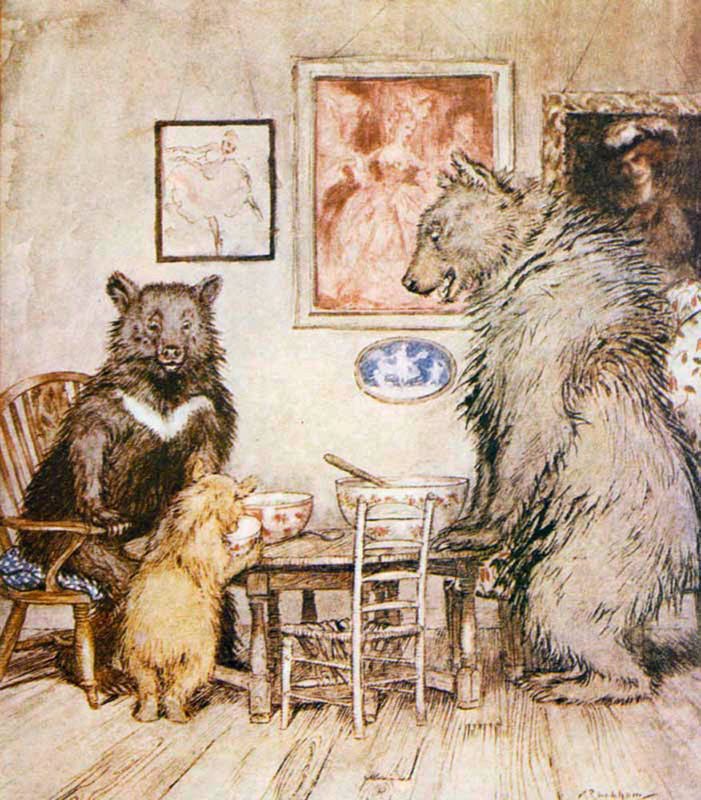
We talk a great deal about patient and service user centred care in health services, but what we deliver and receive is not always that. The `Goldilocks Principle’, which applies in many areas from climate study to economics, states that something must fall between certain margins, rather than reaching extremes. The earth is a Goldilocks planet as it falls within a planet’s habitable zone. So what does have this to do with health care? Well, in mental health care the situation is often the reverse of the Goldilocks story. Instead of one person and three bowls of porridge, which may or may not be right for them, we have the reverse. Three people and one bowl of porridge. A service often defined by what it will not offer rather than how it might help, with no other options available for the people who do not fit these criteria. The decision not to help the other two people is often accompanied by the statement ‘we are not commissioned to provide X,Y……’ This is not a new phenomenon. It existed beyond the current cuts, but they have made it worse.

Now, there may be so little on offer that even access to that single bowl of porridge is limited or absent. Or a person may be told that their health will have to deteriorate further before the service will accept them. ‘Go away and come back when you are just right, even though we all know that is going to make it even harder to provide the help you need in the long run.’ And I know this is not a new phenomenon in the inner city populations where the lack of opportunity for early, timely intervention means a person may only be offered help, even though their GP has tried and failed to get them care for some weeks, at the point beyond which they no longer believe that they need it. So they then receive it under the Mental Health Act.

But when we do get the opportunity to re-build services- and its difficult to have seen thirty years of changes without hoping that something will change again at some point for the better, we need to try and ensure that what is provided is not simply about matching the person to what is on offer. This is what results in the multiple assessments with different teams which service users find so difficult, demeaning and pointless. This doesn’t have to mean allowing a person to choose exactly what they want, like Goldilocks did. We know that has problems not only of cost-effectiveness but the risk of causing harm. It is about having a dialogue in which all views are considered.

On a personal level -It is about thinking- ‘How can I help this person to get what they need’? If I cannot help them- who can and how can I facilitate them to arrive there. If it isn’t available what can I do?

At a service level it is considering how, if the person doesn’t really require specialist care, how can we support their GP, and/or the third sector to provide that care- and if we are ill equipped to do that, how can we find out.

It is also about ensuring we are not ‘cherry picking’ those people who are easier to help to improve our outcomes but trying to meet the needs of the people we were commissioned to help.

At an organisational level it is not only about developing specialist skilled teams to deliver help for more service users with complex problems, but making sure these teams in turn provide the right support to generalists. This will help to ensure service users who need help for which services have not been clearly commissioned and ‘fall between the cracks’ can be offered appropriate care.

It also means fostering a culture of dialogue, trust, respect and cooperation to ensure that the worker who makes initial contact with a service user is not told that their assessment is of no value because they do not belong to a particular profession or work in a certain team.

At a commissioning level, it is about asking the question ‘what are we not doing?’ ‘what isn’t there that should be?’ and ‘what isn’t working?’ for people with mental health problems- who will be able to tell you very clearly. It may not be possible to provide it, but we still need to talk about it and work out what can be done rather than what cannot.

At the moment it may seem hard to achieve any of these things- but these are not new problems and they will not all be solved by more investment. A person should never be thought of as ‘just right’ for a service. The care that they are offered should be, like Goldilocks’s porridge, ‘just right’ for them. Only unlike in the fairy tale, we should also try and ensure that doesn’t come at the expense of others- the three bears.

Lacking motivation

A common reason, in my experience, why people don’t get taken on for therapy  (or are discharged prematurely) when they are referred to a therapist is that they are deemed to be ‘lacking in motivation’. The concept of ‘being motivated’ is something I’ve thought quite a lot about because when I’m depressed I have very little motivation to get out of bed. So what is meant when people who are depressed are lacking in motivation to undertake therapy? Why should we think more about it?

To get taken on for a talking therapy, you have to jump through quite a few different hoops, several of which you may not realize are actually there:

  • First you have to recognize that you might actually need some help. That’s a pretty major step. Stigma in our community makes it difficult for many people to come forwards and identify themselves as having a mental health problem. In some minority communities, simply doing this can damage your sister or brother’s marriage prospects.
  • Then you need to be able to access the system, through your GP or by self-referral. That assumes that you can leave your house (many people with disabilities cannot) and negotiate the various other barriers to getting a referral including feeling able to talk to your GP, or using the telephone to refer yourself. All these can be doubly difficult if you don’t speak English. Information about services isn’t always available in other languages. Talking to people on the telephone can be difficult if you are very anxious.
  • •Next you have to understand what it is that you are being referred to. You many have no idea that you are expected to turn up at the same time every week for several weeks. You may be a single parent, who lacks reliable childcare. If out of hours appointments aren’t available you may have to tell your boss you need the time off and why. Not everyone has control over how they spend their day like most professionals do.
  • You may have a great deal of emotional turmoil in your life- relationships in crisis, money problems, ill-health in your family. You are not sure how you can commit to something you don’t really understand and how this can be a priority. No-one may yet have explained how therapy is supposed to help you.
  • A letter arrives. It takes you a while to open it because you haven’t been opening the post. It’s all bills anyway, and seeing them just gets you more upset. You’ve been finding it harder and harder to get going in the morning. The letter says you have to ‘opt in’ to therapy, by a certain date. You tear off the slip and send it back. Just in time.
  • When the assessment appointment finally comes after several weeks or months, you have to cancel because your child is seriously ill. The service tells you that you can only cancel twice then you will go to the bottom of the waiting list again. You try and leave another message but only get the answering machine. Repeatedly. You begin to lose hope. Things are getting worse and you seem to have even less energy than before. You have started to feel that life isn’t worth living anyway.
  • You finally get to see the therapist who asks quite a few questions, but you still aren’t entirely sure what you are supposed to do, or how this is supposed to help you. You tell her that you are taking tablets, which have helped a bit, but your doctor hasn’t reviewed them because he is waiting to hear what the therapist thinks. She tells you that this is nothing to do with her but a question for your doctor. She asks to see you again before making a decision. She says there will be six-month wait anyway to see somebody. You start to think ‘what’s the point?’ you are feeling increasingly hopeless.
  • The evening before you are due to see her, your husband comes home to say he has been made redundant and the two of you spend the evening wondering how you are ever going to cope. The therapist has sent a text to remind you of your appointment but it’s the furthest thing from your mind at the moment. You forget to go.
  • Two weeks later you get a letter offering you one more appointment. If you don’t attend you will be discharged and they will assume you no longer want to come. That last part of the sentence worries you, because you know you really need help now. You are losing weight, you have no energy any more and the future looks bleak. You put the letter in the bin.

The therapist writes to your doctor and says you don’t seem motivated to attend at the moment, and sends you a copy.

There are many things that can contribute to a perceived ‘lack of motivation’. Not being willing to attend regularly (because of what that means in terms of who you have to tell and negotiate with); not able to understand what therapy is about and your role in it (because no-one has still really explained it); not prioritizing therapy because your life is in turmoil (a difficult ask for people who live life on the edge of an economic abyss) or simply feeling so hopeless and lacking in energy that you don’t manage to get there ( symptoms of severe depression).

The responsibility has been put back onto you. The therapist didn’t seem to want to talk about the problems you were facing in your life and your money difficulties. Only what you thought and felt about them. They didn’t address how ambivalent you feel about the whole enterprise or try to really engage you in a way you could respond to. They didn’t seem to understand how difficult you found it to make any decisions at all, never mind commit to ‘therapy’ and when you talked about how you had begun to think of harming yourself they did seem concerned but didn’t seem to know what to say.

You may think this tale is an exaggeration, but it is simply a reflection of what service users have told me many times about their experiences.

Once upon a time you had to be ‘Young, Attractive, Verbal, Intelligent and Successful’ to get into therapy. Now, above all, you have to be motivated. Have things changed?

My new book: ‘The Other Side of Silence: A Psychiatrist’s Memoir of Depression,’ is available now, and describes my own experiences of therapy.

‘Putting it on’

At the recent Cheltenham Book Festival, The chair of the mental health panel on which I was appearing to talk about my new book asked me perhaps the most difficult question that I’ve been asked so far.
‘So, there is a scene towards the end of your book where something quite shocking happens. Is it alright with you if we talk about it?’
I felt my chest tighten, as I knew exactly what he referred to. It was the moment in which I confronted my mentally ill brother about why he could not get out of bed. It was, I’m still terribly ashamed to admit, the moment that I hit him. I didn’t hurt him, at least not physically- but I did it, I had written about it, and now I was having to face that moment again- only this time in front of an audience.
‘Yes, you can,’ I replied, feeling my anxiety level rise even more, I knew I couldn’t avoid it.
‘So, can you explain how, given your profession as a psychiatrist, you raised your hand in anger and brought a stool, was it?- down on your brother who was clearly mentally unwell?’

It’s one of those moments when you are forced to really admit your thoughts and feelings. Why did I do it? What on earth was going through my mind? I remembered how upset, frustrated and annoyed I was that he seemed completely unable to help himself, whatever I tried to do to support him. He had spent three days in a room and could not get himself dressed. Instead many of his clothes had been torn up and lay on the floor around him. By that time neither of us were functioning in any rational way. I was no longer thinking as the trainee psychiatrist I was at the hospital down the road. I was an exhausted, tearful and desperate person trying to care for someone who seemed to be refusing anything I offered; And I knew what was going through my head: I really thought he was simply refusing to do anything for me; he was perfectly capable of it, he was just ‘putting it on’ to thwart me. In that moment I treated him like many others had in the past. I was acting as though his problems were not real.

In a recent article in the guardian a medical student also admitted ‘before working in psychiatry, I didn’t think mental health problems were real’. I’m sure that is what many people think- that those who complain of mental difficulties are probably just acting in some way, or are simply weak-willed. That certainly seems to be the prevailing view of those who think that people with mental illness can be forced to find work and financially sanctioned if they do not. Logically this can only work if you believe they have considerable control over most of their symptoms and problems-which infers that they must be, to some degree, ‘putting it on’ doesn’t it? If you are responding to voices or convinced of something that is labeled as delusional, your problems may become more real, but then you may simply invoke fear (‘these people should be put away’); or pity, (these poor people need some assistance) an emotional response I have seen in those mental health workers who are sympathetic to people with more severe mental health problems, but still appear to view them as simply the more unfortunate ones in society- much deserving of charitable help, fascinating in an academic kind of way, but not somehow as their equals- real people with lives, dreams and desires of their own.

And those of us with ‘common’ mental health problems, anxiety disorders, OCD (my brother’s problem) and depression? Well we are almost certainly believed to be responsible for our actions and quite capable of changing our behavior. This viewpoint is in many ways reinforced by the fact that many treatments require us to actively change our behavior and confront the very fears we are paralysed by. ‘Response prevention’ works in OCD (Obsessive Compulsive Disorder) but it is extraordinarily hard, at least initially, to stop yourself doing something- the very compulsive behaviour that has for many years relieved your anxiety. Similarly activating yourself in Behaviour Activation works in depression, but you may have to force yourself very hard to start doing it. Small goals are helpful at first, like simply being able to get out of bed; but even that can seem impossible. My brother couldn’t do it. He was stuck in his own loop of intense anxiety. Unfortunately therapists can sometimes be remarkably unsympathetic too- if you cannot comply you are sometimes labeled as ‘not motivated.’ The responsibility that the therapist has for helping to motivate you is disregarded.

I’ve learned a great deal since that awful moment in my spare bedroom thirty years ago. Some of it I found out quite soon when I confided in a colleague who was a clinical psychologist. He helped me to understand how my brother had, paradoxically, been able to get out of bed, dress and leave the house when I insisted, despite having been quite unable to do it for the previous few days. That didn’t mean he hadn’t been struggling- desperately trying to deal with the anxiety that manifested itself in obsessional behavior; but he was, temporarily at least, quite disabled by it. I’ve known that helpless feeling too in the times I’ve been unable to get out of bed, get dressed or open a book because I couldn’t find the energy or interest to even try. Sometimes, when I am well, I stop and wonder if I have been putting it on too, because if I can sit here and type a thousand words in an hour this evening, then there cannot be anything wrong with me surely? (despite the number of pills I’ve had to swallow today). One of the many reasons people with mental health problems are stigmatized is that they are not believed when they say how difficult it is to do normal everyday things. It’s patently obvious to anyone with common sense that they can just get on with it- can’t they? I know this is how people think, because I can honestly say that even with my expertise and own lived experience, there are times that I have thought this too. I’ve been there. Real empathy and the power to confront stigma that comes with it, means not only believing that isn’t so, but acknowledging the times you too haven’t wanted to understand why a person with mental health problems cannot do what you would prefer them to do, and why.

My book ‘The Other Side of Silence- A Psychiatrist’s Memoir of Depression, published by Summersdale, is out now.

The problem with resilience

‘Resilience’ is one of those words its hard to avoid at the moment. No one seems to be quite sure what it means, but one suggestion has been that it refers to a person’s ability to maintain or regain a state of mental health in the face of significant adversity or death; in which case it is a quality in which I am undoubtedly lacking. I am very sensitive to the ups and downs of life especially loss. I get anxious and depressed; I’ve had periods off work. I may have successfully survived a lifetime of work as a psychiatrist and an academic, but I’ve also had to use mental health services to keep afloat. Life in the NHS is challenging and I’ve not got through my career without some serious wounds to show for it.

Before the word ‘resilience’ achieved common usage, and its current prominent space on the buzz word bingo board of healthcare, I understood it broadly to be inversely related to the degree of vulnerability conferred by a combination of genetic heritage (see Goldberg & Goodyer)- which influences our temperament, personality and susceptibility to some types of mental health problems, early life experiences and social learning in childhood. If a group of people are exposed to the same degree and type of stresses most will cope, they will demonstrate resilience, but a minority will not. We all have differing degrees of it. Some will develop common mental health problems like depression and anxiety in response to traumatic events, and others less common ones, such as psychosis, but many others will get through relatively unscathed.

The General Medical Council (GMC) with whom I am still registered, although I no longer practice psychiatry, has recently decided that the current generation of doctors is less resilient than those in the past and students need to undergo resilience training in order to be tough enough for the job. I have a number of problems with this view:

  • As an excellent review of the topic by Balme and her colleagues in BMJ Careers recently stated ‘there are no consistent definitions, no standardized, valid or reliable measurements; and no robust studies into what resilience is, what the predictors of resilience are, and whether resilience is related to better patient care.’
  • So if you intend to screen for it please check out this first. If I were starting medical school now (and I still dream I haven’t yet passed my finals) I would want to know, as will others, exactly what it is I am lacking in (given that I tend to get depressed I will likely feel guilty and even more insecure) and whether being without it is going to be of harm to anyone but myself. We don’t screen out people with diabetes from being health professionals. Why should we even consider doing that with people who might be vulnerable to depression.
  • Because in an increasingly hostile working environment the reality is health care professionals are going to experience more mental health problems. They are human beings like the rest of us, although they are not encouraged to admit they need help, for fear of appearing weak. The culture is tough enough already.
  • Please don’t dress up this quality called ‘resilience’ as something for which they must take full responsibility (I have a problem because I lack resilience) rather than the NHS (I’m not very well because I do not work in a supportive and caring workplace). As Balme et al. point out resilience is always contextual – it’s a complex interplay between the person and their environment.
  • Please don’t assume that attending a few short workshops would increase my resilience much either. The evidence for the effectiveness of resilience training is patchy at best, and though there is a suggestion of some positive outcomes, these are mainly from self-report in studies lacking rigorous methodology. It might be more effective to address these problems I have in relating to the world and coping with stress much earlier in life before any thought of being a health professional is even a twinkle on the horizon.
  • What I would need is help to identify coping strategies like problem-solving. There is evidence that this works for people with depression, and those who self-harm in response to life stresses. I wish someone had taught this to me in childhood, it might have helped me earlier. I would need things I can rehearse to put into action at times when life gets tough. But I’m also going to need to be encouraged not feel too ashamed to ask for support and how to identify I might need it earlier rather than later, as so many health professionals who have consulted me have been unable to do. Fast and confidential access to help and support too, not having no choice but to consult a service that I work in, which happens to so many people now in mental health services in the UK.
  • And finally, please don’t assume that just because I’m not as tough as the GMC would perhaps like me to be, I would not be a good doctor. Since my book was published a month ago, I’ve heard from medical students who have feared for their future because they have experienced mental health problems at medical school, worried that they will not be strong enough to cope. Yet these very young people, who have experienced what its like to be a patient can bring a very special dimension to their work. Like me, they know what its like to be on the other side.

We all differ in our ability to deal with traumatic events and the stress of work, yet within that spectrum of abilities lies the potential for us to learn to listen, support and care for each other: as friends, colleagues, some managers and a insightful and proactive occupational health service did for me; supporting me through my sometimes difficult career.

My memoir about experiencing depression during my career in psychiatry is out now: The Other Side of Silence: A Psychiatrist’s Memoir of Depression ‘published by Summersdale.

I’m a psychiatrist and I live with depression

I am a psychiatrist, and I’ve had depression on and off for most of my adult life. I’m now retired from practice. I’ve written about depression in a book, and people are saying how brave I am to ‘come out’ and say it. Yet if I had written about having arthritis, or some other physical condition, no one would have described my ‘coming out’ in such terms. Why should it be such a surprise that a a person who worked as a consultant psychiatrist for almost 25 years, and has spent her life researching and teaching the subject, should have first hand experience of it herself? Probably because, in the health professions, the last thing we usually want anyone to know, particularly our colleagues, is that we too are vulnerable to exactly the same stresses and problems as our patients. We like to see ourselves as strong; indeed maintaining our position on the career ladder often seems to depend on that. There is stigma related to having depression, even though mental health workers profess that they are always ‘fighting’ it. Depression is something that others suffer from, not us.

It is exactly this ‘us’ and ‘them’ attitude that I set out to challenge in the book. It started off as a memoir of my own fairly extensive treatments for depression, both with medication and psychotherapy. However as I began to write it, the close parallels between my own experiences, and those of the people I had tried to help throughout my professional life just became more and more obvious to me. There certainly wasn’t a clear boundary between my own experiences and those of my former patients. We all had complex lives- experienced loss, grieved for those who have gone from our lives, felt lonely, wanted to be loved, and sometimes felt compelled to self medicate with alcohol to ease our distress. Some of us made the same mistakes in our relationships over and over again. Many of us wanted or even tried to end our lives. The stories I tell in the book are taken from my own work as a psychiatrist but have been extensively altered and merged to create people who are true to life, but not ‘real’ case histories. However my own story is very real indeed. It wouldn’t have been appropriate to have been so open when I was still practising- when people came to see me the focus was rightly on their problems not mine. When I was unwell I withdrew from seeing patients until I was recovered. I’ve never tried to hide my illness from colleagues. I’ve just never been quite so public about it.

So far, I’ve had some interesting reactions. As I mentioned above, I’ve been described as brave by some, but others are still clearly unsure what to say to me. When I’ve talked in the past about treatment, in particular the fact that I’ve taken antidepressants now for the last 20 years, I’ve certainly picked up from some of my colleagues that ‘this isn’t the sort of thing one talks about’. Why not? Isn’t this exactly what mental health professionals talk about every day? How can we challenge stigma in society if we cannot face up to our own tendency to stigmatise both our colleagues and, even now, our patients?

I have listened to junior members of staff describe people with depression who are not actively suicidal, or psychotic as the ‘worried well’. I’ve been told that depression is not a ‘severe’ mental illness warranting more investment of psychiatric and mental health nursing resources. I’ve read articles written by my colleagues, which describe it as ‘medicalising misery’. Only people who have never experienced the pain, despair and hopelessness could talk about depression in such terms. I’ve spent my life challenging such attitudes. I made it as far as being a Professor of Psychiatry, despite repeated episodes of depression. I know I’ve had better treatment than many people ever receive and my aim has always been to improve access to, and quality of care for depression. I’ve managed to live with depression and found ways of coping with it- though that has been far from easy. That is also what my book is about. I refuse to be ashamed of it.

Nobody should be.

My book, ‘The Other Side of Silence: A Psychiatrist’s Memoir of Depression’ is published this week by Summersdale.

Take up thy bed and Work

The first time I heard the term ‘worklessness’ I remember a shiver running down my spine- it was the way in which it was being used to describe an apparent ‘human condition’ in which there was a sense of this being a lifestyle choice. We were told that it meant not simply being ‘unemployed’ but not actively seeking and/or being available for work; but it was not applied to the idle rich or others members of society, myself now included, who have concluded that work is not particularly good for their health but do not need to claim benefits (although my University Pension, funded partly through the state is still a benefit). At a time when the drive towards viewing employment as the desired outcome for people with mental illness was beginning to take precedence over other more used-centred outcomes it was a prescient warning of changes about which we are now only too aware- the move to treat people with physical but also particularly mental health problems as essentially capable of taking up their own beds and walking to the Job Centre, regardless of their condition.

I’m very suspicious of terms that are used by governments to describe those who do not comply with what is expected of them in our societies. As a psychiatrist I have been accused of being an agent of the state on more than one occasion, but the role played by British psychiatrists is a long way from that which was played by Nazi psychiatrists in the Third Reich who colluded in ‘euthanasia’ or by the psychiatrists in the Soviet Union who were willing to label political dissidents with the diagnosis of ‘sluggish schizophrenia’- which resulted in the expulsion of their organization from the World Psychiatric Association. The use of diagnoses to both label and treat dissident citizens continues to this day- for example in the controversial treatment in China of the practitioners of the Falun Gong meditation movement who are deemed to be psychotic and undergo ‘treatment’. We have also recently seen the notorious collusion between psychologists in the USA and torture of detainees at Guantanamo Bay. Professionals who were willing to behave unethically in the service of the state for payment.

You may say these are extreme examples, but I think we should be concerned when political and social issues are described in terms which a) infer that the problem lies within the individual rather than society b) dresses this up in pseudo-psychological terminology and c) infers that there is a treatment, psychological and/or physical for this.

The report this week from Birkbeck College highlighted the way in which being unemployed is increasingly described in policy documents as a problem of the individual, who lacks motivation or the ‘right attitude’ to obtain a job. This is deemed to be ‘treatable’, although for a professional to engage in such enforced treatment, without which a person will lose his or her benefits has been described as ‘not only unethical but probably illegal’.

It’s difficult to see how a person with severe mental illness would be capable of acquiring the ‘right attitude’ when they are still struggling with the everyday tasks of life. Yet there are people in our government who clearly think this is possible, which is not only senseless but very, very scary. It reminds me of the attitude of some of the people I worked with over the years, who truly seemed to believe that mental illness is itself a ‘lifestyle choice’, which the person suffering not only had power over, but could choose to change if only they wanted to do so. An attitude which not only lacks basic empathy, but has a seductive simplicity which has emerged recently in the imperative to declare oneself ‘well’ and ‘recovered’, and has been around for many years in some so-called ‘self-help books which tell you that you can ‘climb out of your prison’ without any help in unlocking the door.

It’s a worrying trend in a society, which seems not only to care less than ever for those who have disabilities but to declare that a person has, within him or herself, the power to overcome their problems, if they choose to, and obtain a job with or without the aid of some motivational therapy. And what happens if they don’t take up their beds and work? The Rt Honourable Ian Duncan Smith would seem to believe they must work, because it is in itself a form of treatment. For as it famously said on the gates of Auschwitz, Arbeit macht frei ‘Work Sets You Free.’