Grief

With so many people experiencing loss and hardship at the moment its not easy to admit the depth of grief I have been experiencing over the last month.  I’m sure I’ve glibly told many people over the years how ‘grief is a normal human experience,’ but that doesn’t make it any easier to bear. It may simply be an everyday kind of emotional pain, but it washes over me in waves of acute sadness and despair. One moment I’m fine, the next I’m in tears; and it hurts physically too. There is a pain my chest right above my heart. But this grief is not for a human being, but for an animal companion, my cat Sophie.


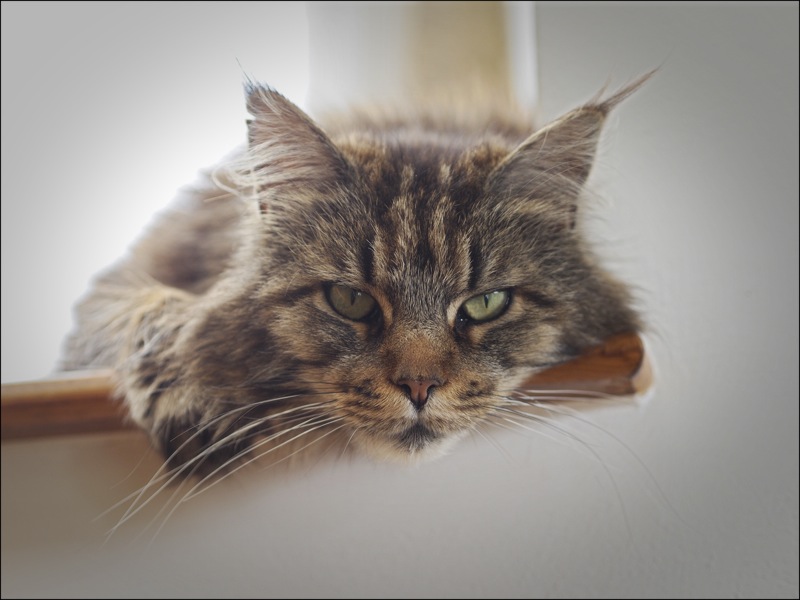
I’ve seen that wry smile on a colleague’s face when I tell them how it feels to lose a pet . Not that Soph was a ‘pet’, she was a fiercely beautiful but barely tamed Maine Coon cat who viewed the human race if not quite the enemy, certainly as all potential vivisectionists. But those who don’t understand how attached you can become to an animal are simply embarrassed by our tears; they don’t know what to say. Statements like ‘well you can always get another one can’t you?’ are unhelpful. Yes, I have another cat, but he isn’t her. He is different. I will probably have a few more in my life (or rather they will have me) but each one I have lost has left a unique shaped space behind in my heart that another will eventually fill- but not in quite the same way. Some colleagues of mine have written about the important part that animals play in providing support for people with long-term conditions. But we live in a society where older (and younger) people with mental health problems are regularly separated from their companions when they have to move into new rented accommodation due to the desperate state of our housing policy. I cannot imagine the pain of having to give up my companion animal. Perhaps I will have to one day.


Grief is something I know about. I treated many people in my career who were failing to grieve for someone, or something they had lost. It doesn’t have to be a person, it can be a career, a person, your health, or even your hopes for the future. The list is endless. The process IS normal but it can be frightening if you have never felt it before. It isn’t the same as depression although if a person fails to grieve properly depression may follow, and in the vulnerable, loss may trigger it. But it should not be medicalised as it has been in DSM-5 where two weeks of depressed mood following loss is taken to indicate depression. Two weeks? That’s crazy. Grief can take years, a lifetime to resolve. The key thing is the trajectory of the process and the severity of the symptoms. Is it gradually getting easier over time or unchanged in intensity? How low are you feeling? Have you had thoughts of suicide or wanting to join the dead person?  I failed to grieve successfully once when I lost someone very important.  I didn’t talk about it. I tried to work my way out of it at the hospital rather than go through it.  You cannot shut it out. You have to talk, remember …and weep.


Sophie was killed by a fox one night in August. She loved going out at night to hunt. She began her life as a pedigree puss and then heard the call of the wild. She escaped when she got very frightened as were taking her to a cattery and wriggled out of her harness. She would never travel in a cage. I missed her terribly but I always hoped she come back to us, and she did. She spent two years living rough before she finally trusted a lady enough to accept help, and was returned to us (due to her microchip) by the RSPCA. She would sit next to me on the sofa and purr loudly, demanding her share of my love. Her coat was soft and silky before she disappeared, but woolly and thick when she returned after two winters outside in Yorkshire. But she knew she was home and she embraced it with enthusiasm. She was a happy, healthy cat and she was only seven years old. It’s really hard to accept she could have survived so long on her own and then die now. But I couldn’t have kept her inside. That would have been unbelievably cruel.  Yet I still feel I should have been there to protect her. Grief isn’t just about sadness, but guilt and anger. And remembering.

I have some of her fur, and a library of pictures to remember her by. I can look at them now. It was very painful at first.

It’s getting a little easier each day.  That I’ve been able to write this is a sign I’m coming through it.

But I’ll always miss her.


On not being immortal

When I was a medical student, I remember one ward round when we were gathered around the bed of a patient who was breathless and coughing up blood. She admitted to being a heavy smoker. The surgeon gave her his usual stern ticking off about the dangers of cigarettes, and then we all trooped back to the doctor’s office where he took the patient’s chest x-ray out of the envelope and pushed it up onto the light-box on the wall.

“Look at the mass there he said,” pointing to dense shadow in the left lung, “almost certainly a carcinoma.”

And then he calmly took a packet of Senior Service cigarettes out of the pocket of his white coat and lit one up, puffing away as we discussed the prognosis. You have to understand this was the Stone Age.  People did still smoke in hospitals, even doctors. But some things haven’t changed. I think many doctors still have a peculiar belief in their own immortality. That knowing all about disease not only gives you power over it but makes you immune to it. It begins at medical school. Many medical students aren’t even registered with a GP where they go to university. They alternate between being sure they have every disease they learn about and denial of their own susceptibility. And it carries on. Doctors generally don’t smoke now, but we still abuse ourselves in other ways, notably with alcohol. We are tough and macho, don’t admit to weakness, and rarely follow the advice we give our patients, yet expect them to wholeheartedly agree with us.

Last year I had to come to terms with the fact that I’m not going to be immortal after all. I don’t mean that in the sense of transcendence of my soul.  I’ll keep out of that argument for the moment.  Rather I am not going to live forever, and life might get quite a bit harder for me physically in the future than it is now. To add to the anxiety, depression and hypothyroidism, I was diagnosed with progressive kidney disease.

Okay, so I know I will not live forever. Of course I won’t. Indeed would I really want to? There have been times when I’ve been so depressed that I’ve wanted to end my life somewhat sooner. The thing about depression for me, unlike physical illness, is that it feels like if I were to die from it, it would be because I wanted to. I have control. Even though I know rationally, as a psychiatrist, that what I perceived I wanted would be strongly influenced by my mental state at the time.  But there is, I think, a part of all of us that secretly hopes we can cheat fate and carry on forever (only while enjoying of course the perfect health of youth). When I was a young child, the idea of dying seemed so impossibly far away as to be almost irrelevant to being alive. Then my grandfather died followed by my father, both at ages not so different from where I am now. When people close to you die, death became a real possibility for you too.

People who have chronic illness are more likely to experience depression and anxiety, and the more chronic illnesses you have the greater your risk. In the last research project I worked on in Manchester, we attempted to offer psychological therapy to people with diabetes and/or heart disease who were also depressed. What was striking was how few of these people were actively receiving help despite the fact that all them had been screened for depression on an annual basis as part of the payment incentive system for GPs in the UK. Some of them had never discussed their mood or suicidal ideas with their doctor. They didn’t want to, they were embarrassed or they didn’t see the point, so they suffered in silence. It can feel stigmatizing having chronic illness, and having a mental health problem as well just doubles the stigma.

So it turns out I have a genetic disorder of the kidneys that I’ve had for many years, but didn’t know about before, and which is going to get worse as I get older, at a rate as yet undetermined. There is a good chance I will eventually need to have dialysis. Despite feeling fitter than I have for years, it is as though my body has let me down. Something is happening inside me over which I have no right of determination. Like many people with chronic illness I feel my useful life has now become shorter, so I’m beginning to speed up my rate of travel, picking up again those things I started to do many years ago but dropped because of my career, and aiming to achieve a few of them while I’m still quite healthy. Not quite a bucket list but something similar. It has increased my level of anxiety but I don’t feel depressed about it yet because I’m still in control, trying to keep myself fitter than I have since – well ever.

Or maybe it’s because I’m just being tough…. and I still believe I can win.

A diagnosis of anxiety

On one of those occasions when I peep around the screen at what my GP is typing I see a diagnosis of ‘anxiety with depression’ at the top of the screen. I’m not sure how I feel about that. I suppose I’ve always thought about my problems as being more to do with depression than anxiety. But regardless of the idiosyncrasies of the recording system that GPs use (for the uninitiated, the Reed codes used in British General Practice don’t much conform to DSM or ICD), I think it’s probably right. In my life, low mood comes and goes, while anxiety has been pretty pervasive at the times when it hasn’t progressed to frank agitation.

This all comes to mind recently because the National Institute for Health and Care Excellence (NICE) just published its quality standard for anxiety disorders. It has information on all the different disorders neatly laid out- with specific pathways for Generalised Anxiety disorder, Panic disorder, Obsessive Compulsive Disorder, Post-traumatic Stress Disorder etc. At the same time there has been the usual and continuing debate about the validity of diagnosis in psychiatry in the twitter sphere, in which I occasionally participate.

My problem with NICE guidance is that there are so many different pathways for the different diagnostic categories of what are called Common Mental Health Disorders– which consist of all the anxiety disorders plus depression. Some mental health professionals disparaging call these ‘minor’ mental health problems and the people who suffer with them the ‘worried well’. I’ve unfortunately heard psychiatric trainees use those terms.

Warning: don’t ever use these terms in my presence, I can’t be responsible for the consequences.

If you add in the other common mental health problems in the community, use of drugs and alcohol which many use to self-medicate for these ‘minor’ problems, you have a complex bundle of guidelines for a large section of the community (around 15%) who mostly get their mental health care from primary care. In common with the main classification systems, NICE treat all these as distinct diagnoses. If only life were so simple.

The problem is that in the real world they all overlap, co-occur and change around over time much in the way that my own symptoms have done since adolescence. ‘Anxiety and depression’ is the commonest mental health problem that GPs see. Mixed in with that may be some phobic symptoms, panic attacks, obsessional symptoms along with other features which suggest post-traumatic stress such as hypervigilance. Add to this the common ‘co-morbidity’ with drugs and alcohol, and the difficulty some people with these problems additionally have in social relationships which equates to some degree of personality difficulty, we have the potential to label a person with multiple diagnoses. At the other extreme we could say, these ‘disorders’ are all part of the same problem. You are suffering from something called ‘life’.

My view is somewhere in the middle, but I struggle with it. I’m a supporter of the need for psychiatric diagnosis and anyone who doubts the need for it should first read Robert Kendell’s classic book The Role of Diagnosis in Psychiatry. But to say that doesn’t mean we’ve got it right, or that the same system is appropriate in all settings. In my work with WHO, I’ve helped towards developing the ICD-11 system for primary care, which is a good deal simpler than anything DSM can ever think up. However what is key for me is that a diagnosis is only a construct,

as Kendell puts it:

‘thoughtful clinicians are aware that diagnostic categories are simply concepts, justified only by whether they provide a useful framework for organising and explaining the complexity of clinical experience in order to provide predictions about outcome and to guide decisions about treatment.’

Clinically I have found the NICE stepped care model useful: severity of symptoms is the key to what intervention is likely to be helpful. But my approach to helping people has been to start with their life, their problems and hopes and concerns and help them to work out goals for how they would like it to be different. To work towards this by both finding out exactly what they are experiencing, and have been through, and then use a range of therapeutic tools from medication, psychological and social interventions in an essentially transdiagnostic way according to what is likely to help, both from the evidence base and their own past experience and preferences. This has been how I’ve supervised step 2 workers in Improving Access to Psychological Therapy (IAPT) in Salford where I worked for several years, to deliver care for people who might have ‘anxiety and depression’ in some kind of admixture, but had complex life problems. I’ve utilised a very simple set of ‘working’ diagnoses which can easily change over time.

I think we do underestimate the importance of anxiety, but it’s not just that we fail to recognise anxiety disorders. Anxiety pervades all of the common mental health problems except for in those people who experience depression without it. There is a significant genetic component which I can easily identify in my own family. Anxious symptoms in the presence of both bipolar and unipolar depression tend to make the outlook worse and suicide more likely.

Recently, since I gave up the day job, I’ve been feeling much less anxious. This was (unhelpfully) commented on by a colleague whom I hadn’t seen for a while who decided to mime how agitated I used to be at times. I have to admit that I was (strangely) usually worse when in his company. However this coming week I have to have more investigations for my physical health and the familiar churning stomach, sweating and tension have returned once more. Hopefully, after tomorrow, I will be able to return to the combination of exercise and mindfulness which I have recently found helpful in managing my ‘anxiety’.

Fingers crossed.

The healing power of the sea

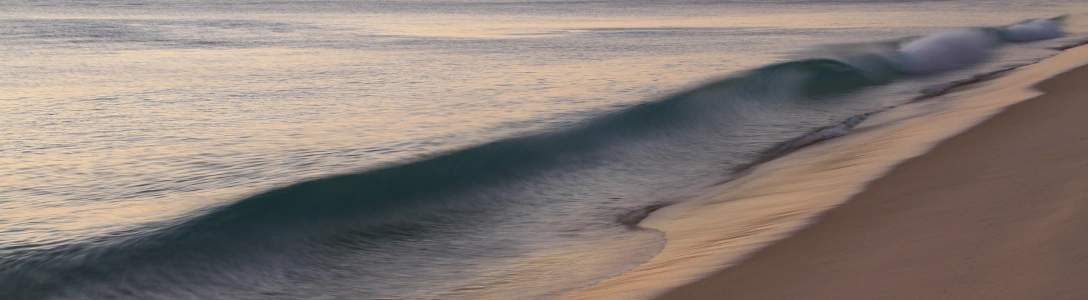
I’m on the coast of North Yorkshire this week weathering a storm. I can hear the waves lashing the sea wall below my window. It’s different from the storm I would be facing if I were still at work, having to face the reality of providing care for people with mental health problems when services are being so constrained. While I listen to the windows rattling and watch the water rising up the slipway at high tide I find myself dipping into twitter every now and then. I can sense my blood pressure rising as I follow the debate about whether it is actually possible to achieve parity of esteem with physical care for people with mental health problems when everything is being cut. In some ways I miss work, particularly for the sense of being able to make a difference and for the contact with my patients. In other ways, for the constant anxiety it evoked in me for so many years, I don’t miss it at all. I’m still writing, and involved in research and teaching but I have control over what I do each day. That sense of having control over your life is important when you experience depression.

The sea can be both a source of fear, and of great comfort. I grew up next to it, and it evokes powerful memories of my childhood. My father was an excellent swimmer, but however hard he tried he never succeeded in teaching me. I was simply too anxious to take my feet off the bottom. I didn’t entirely trust he would not let go of me, yet now those times when I sat on the beach and watched him powerfully crawling through the waves off the Lincolnshire coast are some of the fondest memories I have of him.  I was born a couple of years after the great flood, which devastated the East of England. Since then I’ve travelled all over the world but have always felt the need to dip my toes in the water of whatever ocean I find myself beside. It’s like touching base with the past.

I cannot begin to imagine what it is like to be swept away in a tsunami, have your home battered by tidal waves or lose your husband when a fishing boat goes down with all hands. I’ve stood in the waves on Copacabana beach in Rio, and felt the warm tropical current try and drag me down into the depths. I’ve been unable to go into the shallows in Queensland for fear of being attacked by box jellyfish and sharks. The ocean is immense, merciless and can be so destructive, and yet it connects us all together. It has a power over which we can have no control; we have to accept it.

When times are bad the sea has a way of helping me to get my problems into perspective. I came here once, to the place I am now in Yorkshire, when an intense relationship that meant everything to me had broken down. Listening to the sound of the waves pounding the walls below as I lay in bed, with only the moonlight shining through the curtains illuminating the room, both resonated with my mood and helped me to understand how life goes on whatever happens.

Some years ago when I was on a beach in the Pacific Rim Park on Vancouver Island in Canada, I saw a woman meditating whilst sitting on a driftwood log next to the ocean. Since then, I’ve always taken the opportunity to use the sound of the waves to help me to clear my mind and relax whenever I am in earshot of the sea.  Next time you are there, whatever the weather happens to be, find somewhere to stand or sit awhile that is sheltered from the wind (or rain). Focus on your breathing as you would in any kind of meditative practice, but listen intently, with your eyes closed, to the sound of the waves ebbing and flowing and crashing to the shore. Try and carry on for at least ten minutes or longer if you can. When I make time to do this, it gives me a wonderful sense of wellbeing. For me it’s a kind of meditation in which I connect directly with nature. I suspect it’s a similar feeling to that achieved by mindfulness practice, but I am only just making time now to learn more about that. I will write more on that topic soon. In the meantime I am returning home with the sound of the sea, not in a shell in my pocket as I did as a child, but in my soul instead.