
Relapse and rewind

It’s fortunate that my other half and I share the same acerbic sense of humour.

‘When you aren’t well you start to talk all the time, and about 80% of it is rubbish, ’ he told me, ‘and you’re doing that now.’

It was at this point that I was finally able to admit that my mood, up and down since last autumn, had taken a major nosedive since New Year. The problem is that when I’m going down, I don’t generally recognise it until quite late, and I’m not always willing to listen to advice to ‘slow down’. This time, along with the usual symptoms of depression I’m so familiar with, I experienced the worst constant physical symptoms of anxiety I have ever felt; resulting in panic when I lost my bearing in Manchester’s Arndale Centre and I couldn’t immediately find the way out. This time, nothing would relieve the anxiety apart from alcohol. What my other half was referring to was the emotional and verbal expression of my anxiety. The constant seeking of reassurance and ruminating out loud about life problems, in a way that probably drives those around me crazy too.

However given my history of recurrent depression, it’s no surprise really that I’ve had another relapse. I had hoped that since retirement I somehow wouldn’t experience the same stresses I used to. And I’d been pretty well for a couple of years at least. But I was wrong. Losing my animal companion and several major family and health stresses I won’t go into here were enough to tip the balance again. It was back.

It’s the beginning of March now. For a while I panicked when I simply switched on the desktop computer. Now I can write again. I burst into tears in the middle of my last blog but I forced myself to get it finished. I have this feeling that if I can’t write then somehow I couldn’t live. Maybe it isn’t right, but I kind of believe that. For the last couple of weeks I’ve gradually been feeling better and the constant anxiety is subsiding to its usual level. I don’t feel like something awful is going to happen imminently and I’ve stopped thinking about death (I was having passive thoughts that life wasn’t worth living again). I heard birdsong the other day as I walked up the garden path and I realised I hadn’t taken any notice of the birds in the garden or their choruses or the bulbs shooting up for…well I’m not sure; because depression creeps up insidiously.

Why is my mood lifting?

Perhaps it just would do anyway. Spring is on the way. I’m bound to feel better…except for me it doesn’t happen that way. Even after the events that precipitate it are all past, my downturn goes on and on, thought not as low or for as long as when I was off medication altogether.

I can only make sense of it as a combination of the following and as you might expect from me, it’s a biopsychsocial combination of remedies:

  • I found a way to talk about my worries and fears about the future with my partner. It wasn’t easy but we managed to resolve some practical things I was concerned about.
  • I was able to utilise some of the practical coping skills for managing my rumination I learned from cognitive therapy and I started to use the guided mindfulness CD I had always been ‘too busy’ to listen to. I tried to stop myself from fighting against my mood, and simply accept that I was feeling terrible: bleak sad and empty. Paradoxically once I do that, I’ve learned, it is always a little easier to move forwards.
  • I forced myself to keep going out even though I wanted to shut myself in the house and never come out again. I’ve met many people in my career who have done just that. I had to ‘feel the fear and do it anyway.’
  • I was able, too with support, to put aside some of the impossible self-imposed deadlines I place on myself. I have to remember that my ‘Rules for Living’ are nigh impossible to live up to. Instead I set myself somewhat simpler goals like going out for a walk, and doing some washing. Small achievements which then helped me to move forwards.
  • I agreed to a change of medication. I wasn’t happy about it. I’m now on multiple tablets for my various conditions, but at the point I was at, it was worth a try. I cannot bear the thought of being sedated by medication and fully understood all my patients who refused to take medication that numbed their thinking. My mind has to be clear but when I’m very low I can’t frame the words and sentences either. I try to get to somewhere in the middle. I just cannot do it without pharmaceutical aid.
  • I sought and accepted the support of friends, real life and on line.

My other half did his part by being there for me, as he always is, even if I am talking rubbish, and arriving home one evening with a present of Lindt chocolate bunnies. Chocolate has antidepressant properties too, I tell myself as I bite the head off one of them. He tells me he knows I am getting better because I’ve started to talk about it all in the past again now. I think I’m getting better too, but I wont really know until I can look back and recognise how much I’ve improved.

That’s the nature of the beast.
Surviving Christmas

Like many people I’ve never found Christmas easy to bear, yet I still find it strangely odd to admit to that. After all, it is so eagerly anticipated by many, especially the young. I make very little preparation and only do a little shopping at the last minute. I send few cards and hardly receive any now. I try and pretend Christmas day is ‘just like any other day’ except I have to cook a ‘traditional’ dinner, and every other year I cook for my mother in law too, which can be stressful. We watch a lot of television, and then, by halfway through Boxing Day, I simply cannot wait for it to be over. I want normal life just to begin again.

In the out-patient clinic, I would spend quite a bit of time before Christmas discussing with each person what their plans were for Christmas, especially those who were facing it on their own. What was he or she going to spend their time doing? Who could they contact if they needed to talk to anyone for support? What were our plans if there was a crisis? Then in the few days before New Year I would catch up with those people who needed urgent review or support and repeat the task for New Year’s Eve. Sometimes people would ask me if I was looking forward to the holiday and I would usually tell a little white lie, and say that I was, if only for the ‘rest from work and the chance to spend some time at home’.

I guess my problems with Christmas stem from unhappy memories of time spent in close quarters with a family who wanted to be able to enjoy themselves, but somehow, whether due to lack of money or simple intolerance of each other’s failings, never managed to get along. My father would take away the only lifeline we had on a day of enforced closeness by insisting on switching off the television and listening to ‘his’ music (twenties and thirties jazz- which I kind of appreciate now, but didn’t then) on the radiogram with the rest of us keeping him company in silence. I never really understood why he did this. It seemed to be a way of making a point about who was in control of the household, but in retrospect it seemed a peculiarly passive aggressive act. This would trigger an almighty argument between everyone, which generally continued until bedtime. By early afternoon on Boxing Day I was able to excuse myself from the misery without any further ire. By my teenaged years I was in the pub that evening and everything was, to my relief, almost back to normal. I just had to listen to how other people spent their Christmases. As a child you always imagine every else’s family is just like your own. Then you find out they are not. They are just strange in different ways.

The first time I realised I was going to spend Christmas on my own I felt quite ashamed to tell anyone. What does it say about me, I thought, that there was no-one who wanted to spend the ‘happiest’ time of the year with me? (I’m a miserable sod?) Yet I know now I was neither particularly abnormal nor very unusual. I was estranged from my family. The man my mother took up with after my father’s death was even more difficult to spend Christmas with. He would sit beside the fire in silence brooding over his broken marriage. There wasn’t even the relief of Fats Waller singing Aint Misbehavin’. I stopped going home altogether. Then I got divorced…and depressed again. And then I was completely alone.

What I learned was that there are ways to manage Christmas on your own, but you need to be prepared. I refused offers to go to friend’s houses as I didn’t want to be part of someone else’s celebrations, or to accept invitations out of what I, possibly wrongly, perceived as pity. I wanted to have my own special time for me…just for it not to be particularly Christmassy. Apart from a perverse enjoyment in belting out certain Christmas carols I don’t do ‘festive’ at all.

So the first year alone, I took myself to Paris for 4 days, and ate a Parisian Christmas meal alone in a Greek Restaurant on the Left Bank, which was open on Christmas Eve. Finding food on Christmas day was much harder, so it was fresh bread from the bakers, which at least open every day in France, in my little hotel room. One of those with faded wallpaper that goes all the way over the ceiling. I didn’t have any TV in English, but I had the streets of Paris to walk. It was ideal for occupying my mind.

The following year I decided I really must go somewhere where food would be easier to obtain over the holiday so I returned to France, driving all the way there in an old mini. I hadn’t had my licence very long, and it was scary. At one point I found myself trying to negotiate the roundabout at Hyde Park Corner as I didn’t want to go on the M25 to get to Newhaven where I took the ferry to Dieppe; but it was an adventure. I had a puncture and had to seek help at a garage. My schoolgirl French wasn’t really up to the task, and half a dozen men stood around looking at me quizzically. Yet when I said I was from Manchester someone said’ ah Manchester United!’ (apologies to City fans) and my little red car was whisked away and speedily repaired. I ate and drank well, and again walked for miles, this time around the small town of Honfleur, in Normandy. I found the grave of a relative who died just after D-Day and left flowers for him. I sat on the seawall at Deauville looking out to sea, watching Parisians trouping down the boardwalk with their dogs, and felt relieved of the burden of my expectations of Christmas.

I spent three Christmases alone, in succession. I was fortunate I could afford to travel away; it made it easier to bear for me, but many do not have this luxury. I don’t think I could have easily tolerated watching everyone else enjoying Christmas around me while I sat within my four walls. So I was really pleased to see there is recognition that many people, especially those who, like me, were and are estranged from their families of origin, will spend Christmas alone, in their own homes, and that there is advice available to help them cope with it.

I wish I’d had it then. I eventually perfected the art of eating alone in restaurants without drawing attention to myself, feeling conspicuous to the other guests or being openly pitied by either them or the waiting staff.

However that is probably another story.

Grief

With so many people experiencing loss and hardship at the moment its not easy to admit the depth of grief I have been experiencing over the last month.  I’m sure I’ve glibly told many people over the years how ‘grief is a normal human experience,’ but that doesn’t make it any easier to bear. It may simply be an everyday kind of emotional pain, but it washes over me in waves of acute sadness and despair. One moment I’m fine, the next I’m in tears; and it hurts physically too. There is a pain my chest right above my heart. But this grief is not for a human being, but for an animal companion, my cat Sophie.


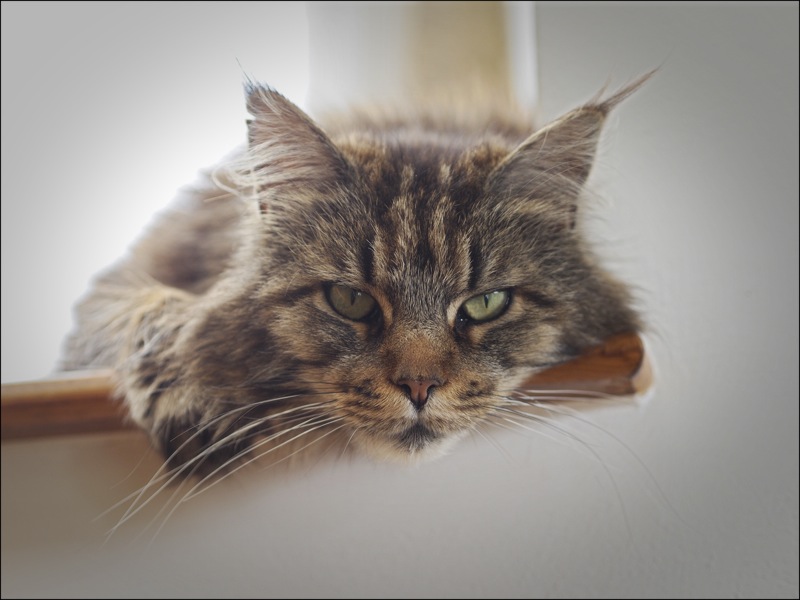
I’ve seen that wry smile on a colleague’s face when I tell them how it feels to lose a pet . Not that Soph was a ‘pet’, she was a fiercely beautiful but barely tamed Maine Coon cat who viewed the human race if not quite the enemy, certainly as all potential vivisectionists. But those who don’t understand how attached you can become to an animal are simply embarrassed by our tears; they don’t know what to say. Statements like ‘well you can always get another one can’t you?’ are unhelpful. Yes, I have another cat, but he isn’t her. He is different. I will probably have a few more in my life (or rather they will have me) but each one I have lost has left a unique shaped space behind in my heart that another will eventually fill- but not in quite the same way. Some colleagues of mine have written about the important part that animals play in providing support for people with long-term conditions. But we live in a society where older (and younger) people with mental health problems are regularly separated from their companions when they have to move into new rented accommodation due to the desperate state of our housing policy. I cannot imagine the pain of having to give up my companion animal. Perhaps I will have to one day.


Grief is something I know about. I treated many people in my career who were failing to grieve for someone, or something they had lost. It doesn’t have to be a person, it can be a career, a person, your health, or even your hopes for the future. The list is endless. The process IS normal but it can be frightening if you have never felt it before. It isn’t the same as depression although if a person fails to grieve properly depression may follow, and in the vulnerable, loss may trigger it. But it should not be medicalised as it has been in DSM-5 where two weeks of depressed mood following loss is taken to indicate depression. Two weeks? That’s crazy. Grief can take years, a lifetime to resolve. The key thing is the trajectory of the process and the severity of the symptoms. Is it gradually getting easier over time or unchanged in intensity? How low are you feeling? Have you had thoughts of suicide or wanting to join the dead person?  I failed to grieve successfully once when I lost someone very important.  I didn’t talk about it. I tried to work my way out of it at the hospital rather than go through it.  You cannot shut it out. You have to talk, remember …and weep.


Sophie was killed by a fox one night in August. She loved going out at night to hunt. She began her life as a pedigree puss and then heard the call of the wild. She escaped when she got very frightened as were taking her to a cattery and wriggled out of her harness. She would never travel in a cage. I missed her terribly but I always hoped she come back to us, and she did. She spent two years living rough before she finally trusted a lady enough to accept help, and was returned to us (due to her microchip) by the RSPCA. She would sit next to me on the sofa and purr loudly, demanding her share of my love. Her coat was soft and silky before she disappeared, but woolly and thick when she returned after two winters outside in Yorkshire. But she knew she was home and she embraced it with enthusiasm. She was a happy, healthy cat and she was only seven years old. It’s really hard to accept she could have survived so long on her own and then die now. But I couldn’t have kept her inside. That would have been unbelievably cruel.  Yet I still feel I should have been there to protect her. Grief isn’t just about sadness, but guilt and anger. And remembering.

I have some of her fur, and a library of pictures to remember her by. I can look at them now. It was very painful at first.

It’s getting a little easier each day.  That I’ve been able to write this is a sign I’m coming through it.

But I’ll always miss her.


Strategies for Living

In the last few weeks, while I’ve been largely alone in Orkney, I’ve been aware of having to cope with my mood and thoughts from day to day and reading about how people with mental health problems cope on Twitter and support each other.

I’ve also been reminded of something I read many years ago.

At the turn of the millennium, the Mental Health Foundation carried out some service user research and produced a report called ‘Strategies for Living.’ Over 400 people had completed Knowing our own Minds – a user-led survey of alternative and complementary treatments and therapies in mental health and Strategies for Living reported the findings from interviewing 71 people with experience of mental health problems in depth. This was a really positive piece of work, which highlighted the particular activities and experiences which people with mental health problems found helpful in coping with their everyday lives: from on-going survival strategies, such as the need for financial security to crisis strategies such as making contact with friends or professionals, ways of controlling symptoms such as taking medication, having therapy, taking exercise or using a Walkman (yes it is a few years old) to distract from hearing voices, to ‘healing strategies’ through religion and spiritual beliefs to complementary therapies.

Relationships with others were key. Several common themes could be identified:

• Acceptance
• Shared experience… shared identity
• Emotional support… ‘being there’
• A reason for living
• Finding meaning… and purpose
• Peace of mind… and relaxation
• Taking control… having choices
• Security… and safety
• Pleasure

Mental health services were largely absent from the accounts that people offered although some individual professionals clearly offered a great deal of valued support

Why am I reminded of this now?

How we cope from day to day is a very personal phenomenon. There are of course some common strategies that people find helpful and these were the ones reported in Strategies for Living.

However there are also some other ways of coping that were not reported in here. The strategies that people do not always want to admit to. I know some of these intimately. Despite growing up in a household of heavy smokers, I’ve never tried a cigarette, but I watched my father consume 40 a day as his own personal way of keeping life at bay. Excessive drinking is something I’ve always suspected I could sink into and I’ve consciously tried to cut down in recent months. It isn’t always easy. I spent some of my career working in alcohol services and I know how hard it can be to withdraw from alcohol and other substances. But there are other ways too that we cope with how we feel: eating, or not, over exercising, self-harm and self-injury , spending every night out on the town or shutting ourselves away completely from the world to the point that we feel completely isolated and ultimately brooding about strategies for dying rather than living. Suicidal thoughts are themselves a coping strategy. Knowing there is a way out when it all gets just too much.

My concern with much of the self-help literature, some of which sits on my own bookshelf unopened, is that it makes various assumptions:

  • We actually want to change, and stop using the sometimes self-destructive ways of coping we find helpful in day to day survival.
  • We can find the resources to be able to do that.
  • We have the material resources and social capital to be able to adopt some of the positive strategies people suggest to us, such as time, money and a place to live to start off with.

Its difficult to adopt new ways of coping until you have acknowledged what you will lose in giving up the other strategies, the ones health professionals would prefer you to unquestionably ditch. Such positive ways of coping cannot be prescribed (such as in the advice to ‘go home and have a warm bath and a cup of tea’ that currently seems beloved of some crisis support teams- actually I didn’t  see these even mentioned in Strategies for Living either). Health professionals need to start from where we are at now. What have we found helpful in the past? What do we do now to cope? What is difficult about changing ? And avoid being judgmental if they want us to be honest.

The problem with feeling depressed is that it involves rumination. Indeed in some cultures it is considered to be a problem of ‘thinking too much’. We become aware of our thoughts, and struggle to cope with them minute by minute. I certainly have some obsessional features to my thinking, and I’m aware that if the day doesn’t go ‘right’ in some often hard to clarify way, I can feel as though everything has gone ‘very wrong’. I have to mentally restart the day in some way. These thoughts can be painful and repetitive and I seek ways to avoid them. Distraction is probably the most effective way I’ve found and I deeply resent that some psychologists I’ve met seek to denigrate such an effective coping strategy as a ‘safety behaviour’ in CBT speak. Hell- give me a break- it’s what I find helpful!

There are many different strategies for living and quite a few for dying.
Help me to find the ones that fit me best to help me survive.
Don’t advise, lecture or proselytize.