Do self-help books work?


Having just returned from the USA where all bookshops have extensive sections on ‘self improvement’, and ‘self-help’ is big business, I couldn’t help thinking Bridget Jones had the right idea when she tossed them all into the bin. As a lifelong cynic I find the wilder claims made by some authors completely beyond the pale. I simply don’t believe that reading a book by a well know hypnotist can make me rich, thin or universally loved, but I do know that selling this promise has certainly made him wealthy.

So when I got home to Yorkshire I scanned my bookshelves to see how many I could find. There were a few more than I suspected, including two celebrity endorsed books on nutrition and fitness, a book for the ‘highly sensitive person’ (how to thrive when the world overwhelms you); a guide to help people who live with a person diagnosed with borderline personality disorder (I’ve absolutely no idea why I bought that- but perhaps it was a present for my other half). Similarly there was an aging copy of ‘Do I Have to Give Up Me to be Loved by You?’ with a photograph of the idyllically happy couple who authored it on the back. Where and when did I get that? Under one of the piles on my study floor I later found a copy of ‘Organising for the Creative Person’ … clearly ineffective.

However, to be serious, I can understand why self-help books are so popular:

  • A book is cheaper than therapy- and easier to obtain.
  • A book provides not only information, but hope, inspiration and things that you can practically do to solve my problems.
  • There is a vast choice of different books on offer. When one doesn’t work you can always try another.
  • The answer to your problems- all in one book?

I didn’t write my memoir as a ‘self-help’ book, but I’ve heard from readers who have found it helpful in explaining what depression is and how it can be treated. I hoped my story would provide some insight and hope for others living with depression, but it doesn’t contain much direct advice or strategies for coping. I just don’t have a simple, straightforward solution that will fit everyone who gets depressed. My explanation is more complicated… that everyone has their own experience of depression, and the parts played by psychological, biological or social factors not only differ between us, but change throughout our lives. Nevertheless some bookshops include my book in the ‘personal development’ section and maybe that is one place it fits.

The books that really trouble me suggest:

  • There is a single, simple answer to your problem
  • What has happened to you is essentially your own fault and there are things you should do to overcome this.
  • Strategies that may actually be harmful- such as stopping all prescribed medication because the author hasn’t personally found it helpful- and failing to tell you to discuss it first with your doctor, or get some informed advice about how to withdraw gradually.

And if you cannot get any benefit from the strategies that are suggested then this can lead you to blame yourself (if you are not doing that already) and feel even worse. Many of the things that cause us problems are not under our control, so we might feel even more helpless because we cannot change them.

But can they really help? There is remarkably limited research into this question. Self-help books really do seem to be effective for some people, but most of the published evidence is from those that apply ideas taken from cognitive behaviour therapy. ‘Guided’ self-help where the book is used in conjunction with brief sessions from a therapist, in which you can discuss what you have read, ask questions and generally be supported through the process of change, is more effective than simply reading a book on its own. Information alone isn’t enough- support is also important in helping people to help themselves.

Self-help is also more likely to work if you are highly motivated to seek help, and positively choose it, not have it prescribed to you- which was clearly found to be a problem in the recent study of computerised CBT prescribed to people with depression, in which I played a minor part. And a person with more severe depression simply may not have the drive and energy to find that motivation- which is one of the reasons I find the exhortation to ‘Climb Out of Your Prison’ (the title of a bestseller in the genre) so problematic, even though this idea clearly has currency for some. I’ve previously written on this blog about the crass insensitivity of handing information and leaflets out to people with severe mental health problems and those who are in crisis.

What one person will find a helpful idea will be an anathema to others. The social scientist Bergsma, writing in the Journal of Happiness Studies (yes, it exists) suggests that self-help books ‘offer a strong antidote against learned helplessness… but perhaps for readers that do not suffer from it.’ And current health policy supports the idea that we should all be responsible for ourselves, however unwell we happen to be, rather than dependent on the state.

Books can provide information and inspiration, but they can only point to possible directions in which to travel. According to Susan Krauss Whitborne, writing in Psychology Today the prospective reader might do 5 things:

  • Check out the author’s credentials- who are they? How are they qualified to write on the topic- and that doesn’t mean they have to an academic reputation or be famous.
  • Think of the book as your therapist: work done by Rachel Richardson and her colleagues at the University of York suggests that a successful self-help book establishes a relationship with you, gives you hope, confidence and anticipates you will find it difficult to keep going at times. Just like a good therapist.
  • Look critically at the quality of the writing. Is it going to ‘engage you, enrage you or just bore you to tears?’
  • Decide if the book will motivate you.
  • Don’t be afraid to give it a critical reading.

I have just remembered there are several more bookshelves in Scotland – and that’s where the latest ones are…on mindfulness.

If you ever hear that I am writing a self-help book, please remind me to re-read this blog.

My memoir ‘The Other Side of Silence: A Psychiatrist’s Memoir of Depression’ is available now.
The morals of medication

Is taking medication for depression the ‘easy option?’ I come across this viewpoint regularly on social media. Usually there is a suggestion alongside that therapy, which I completely agree is hard work, is somehow a purer way to recover. The right way.

The history of psychiatry is rich in references to morality. Is a person ‘mad’ or ‘bad’? Is there really something wrong in the brains of those society labels as bad? Is addiction an illness or simply a behaviour choice? Are we excusing bad behaviour by medicalising it?

Many people who consider medication for depression will find themselves wondering whether it is a ‘good’ thing to take it. When you are depressed it can be very difficult to decide what is the best thing to do, and decisions are taken not only on the basis of discussion with health professionals- moral judgments also play an important part.

  • How does taking antidepressants affect how I feel about me? Does it mean that I am weak?
  • Is it the easy option?
  • Shouldn’t I be able to sort myself out without them?
  • What will other people think- my family- my friends…will it change how they see me?

Alice Malpass and her colleagues identified two parallel journeys that the depressed person embarks on. The ‘medical’ journey goes something like this:

  • I have a duty to be well. Other people need me to be well.
  • If I recover then there won’t be any risk of being seen as ‘mentally ill’.
  • I can get back to my old self and be in charge of my life again.

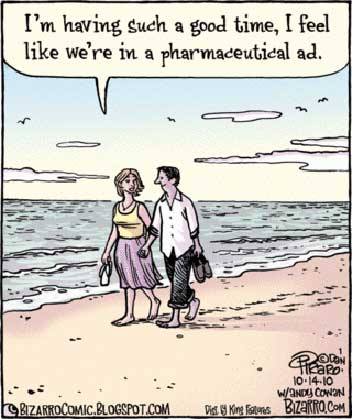
I’m sure I’ve used some of these arguments in conversation with patients. Any doctor who says they haven’t is not telling the truth- but to consider these are the only things of concern about medication is inherently simplistic and paternal, and reminds me of the cartoon of a couple walking along a beach, smiling and carefree, who say they feel so good they must be in a pharma advert.

In parallel the person is perhaps also on another journey- the ‘moral’ one.

  • I feel awful because I have to ask for help.
  • I feel even worse because I need to take tablets.
  • Is this person the real, authentic me? Am I now my old self or someone else? Or am I only this person because I am on tablets?
  • Am I hooked on these now?

Damien Ridge, who has analysed many interviews with people who are depressed talks not only about the lack of legitimacy for tablets, but also for what they are being prescribed for.

  • Is ‘depression’ real?
  • Shouldn’t I just ‘pull myself together’? Isn’t that what everyone else thinks?

There is a great deal of literature on whether ‘depression’ is ‘real’ or simply no more than unhappiness. And if it isn’t real, then the treatment for it cannot be legitimate either, little better than using street drugs- as one person in Ridge’s paper calls his tablets: ‘My dirty little habit’. I’ve spent my career arguing that to use the term depression is not simply medicalising misery but giving a name to a particular experience and quality of suffering which is not just unhappiness but a deep, dark, hopeless, despair. It has many causes, and it isn’t a single ‘phenomenon’ whatever DSM tells us. But it’s a state of mind that many people with different stories share in common. I experience it too. I have asked all of these questions of myself. I have watched colleagues who work in mental health look a little embarrassed when I get out the tablets at breakfast. Perhaps I do that simply to show I am not ashamed- but I do wish I could have lived my life without them.

All of the above supposes that antidepressants do actually work. Many people think they don’t, and others think they can do harm. You can find my views on these points elsewhere on this blog. I take them myself and they keep me reasonably well, but I have friends and colleagues for whom they have not worked- the medical journey is inherently optimistic- just like the pharma ads, but in reality life is far more complicated. And they are never sufficient on their own.

If doctors, and sometimes friends and family, try and influence you to focus on the ‘medical journey’ then others will try to steer your moral journey. It is really hard to focus on what is right for you when you cannot think clearly. When you are depressed, you are already struggling with guilt and shame and sometimes that can tragically end with the decision that the world is better off without you- that this is the right thing to do.

So I would only ask those who make even subtle comparisons between the easy way to ‘block out the pain’ with meds and the hard way of suffering through therapy to think before they write. It is only human to want to alleviate pain, and sometimes the tablets are the only thing that will do it. To infer that a person needs to suffer in order to be blessed is one of the ultimate moral judgments- and can be found in most religions.

Depressed or not, clinician or service user, expert or lay person-none of us have the right to sit in judgment over others.

My memoir: The Other Side of Silence: A Psychiatrist’s Memoir of Depression is available now.


Borderline Traits

A recent reviewer of my memoir about depression and psychiatry has noted that in describing the emotional mess of my early adult years and on-going struggles with low mood, I ‘courageously come close to defining traits of Borderline Personality Disorder’.

I really don’t mind her saying that- indeed part of me is actually surprised that she is the first person to do so. I purposefully included a description of my difficulty in relationships, mood swings and problems in trusting others alongside a description of similar problems in one of my own patients. I wanted to show not only the variety of ways that people can experience what we commonly call ‘depression’, but also how my own problems mirrored those of my patients, such that there was very little distance between us.

By this time, in my early thirties, I had already had quite a long period of psychodynamic therapy but was still having problems:

 I didn’t know how to begin to contain these frightening feelings when they took hold of me. There were times when I felt low in mood and physically exhausted, as though there was a weight bearing down on my chest, which prevented me from moving. On other occasions, it seemed as though anything and everything was possible. At those times I did seem to lose control and retreat from reality. It was then that the suicidal thoughts would return, although by then usually only fleetingly.

Nevertheless, I recognised only too well the persistent state of emotional chaos that Elizabeth Wurtzel described in her book, Prozac Nation. I particularly empathised with her when she talked about wanting a therapist who could help her to learn to be a grown-up and to show her how to live in a world where the phone company didn’t care that you were too depressed to pay the phone bill.   (From The Other Side Of Silence: A psychiatrist’s memoir of depression)

 I’m well aware that there are features of my personality and behaviour that could well be called ‘borderline traits’ and it’s interesting that no one else has mentioned this. Is it because I am a Professor of Psychiatry? Is this the kind of thing one shouldn’t  say to me?  Most people have been incredibly supportive about my honesty, but others- including one or two mental health professional colleagues, have seemed a little embarrassed by my openness. Some will have been on the receiving end of some of my irritability and anger in the past- which is always much worse when my mood is going down. If so, I can only offer my apologies, but might add that in my experience some mental health services can be less than sufficiently understanding of the emotional problems of those whom they employ.

As time goes by my views are changing, despite having written on the topic of Personality Disorder in the BMJ; and this largely because of my anger at the lack of access to appropriate therapy for people who need and deserve help, rather than abuse. I’ve always been aware that people like me who perhaps have ‘difficult’ personalities (I prefer to think there are also times when I can be very warm, creative and caring too) are often dealt a bad deal by mental health services, when they get depressed. Our difficulties with early attachments both make relationships difficult to cope with, and predispose us to longer periods of more severe depression and anxiety as well. I have considerable sympathy with the view put forward by Peter Tyrer that Borderline Personality Disorder is ‘neither borderline nor a personality disorder’. People given this label describe ‘symptoms’ for which they desperately seek help, and don’t demonstrate persistent and inflexible ‘traits’. Their problems are not necessarily lifelong (which I understand personality traits as being), and they can be helped to change over time.

My mood is still unstable at times, but not to degree it was before I had the right kind of therapy to help me comes to terms both my past with how to survive in the world. I also need medication to stop me from plunging down into prolonged despair- with all the associated physical symptoms of anxiety and depression.

People who have problems with their mood don’t fit into neat boxes. As I’ve argued before, diagnoses have their place in terms of research and predicting likely response to treatment, but they should be used alongside a plan that addresses their main presenting life problems, range of symptoms and underlying aetiological factors that may be maintaining the status quo. Some will call this a formulation, but it’s not simply a psychological one- it addresses all three of the key areas- biological, psychological and social.

We need to design the treatment around the person- looking at what they need, not excluding on the basis of a diagnosis that has become for many, a term of abuse. I know many will still want to use the term ‘borderline’ because it can help get access to the right kind of therapy; but we need to acknowledge that the difficulties some of us have with managing certain aspects of everyday life (without, for me, a little drama on occasions) are simply degrees of the extraordinary diversity of humanity- differences that we should learn to celebrate not abjure.

PS- my husband proofreads my blogs- and says life with me has always been a bit of a roller coaster at times- but he wouldn’t swap me for anything.


Authenticity

Oxford dictionary: Authentic – adjective: ‘relating to or denoting an emotionally appropriate, significant, purposive, and responsible mode of human life’.

My 60th birthday has come and gone. My body is beginning to fall apart but I still feel 16 inside. Life is a ‘work in progress’, or at least that is how it has always seemed for me. I get depressed from time to time and it’s such a truly awful experience that it’s hard to believe there can be any positives from suffering it, even if evolutionary biologists suggest there might be. But I recognise that its impact on my life has enabled me to begin to see more clearly what is really important : my relationships and my writing.

When you are someone with mental health problems it can be difficult to work out who is the real ‘authentic’ version of you. Even if people aren’t really talking about me, am I the oversensitive person who will always think they are? Or maybe that is one side of me, amongst many different faces. There are times still when I wonder whether the medicated me I’ve been for so long is the ‘real’ me, or are these tablets simply suppressing the person I truly am? When I worked in addictions people would ask me the same kind of questions.

‘Who will I be without the alcohol? Will I be able to live with myself? Will other people?’

‘Why am I so different when I’m drinking heavily? Yet sometimes that feels like the real me- the one who is trying to get out and cause havoc?’

One of my patients used to give me brutal feedback about the colour of my nail polish (I had a gothic period- which on reflection I’m still passing through) when she was going high. When she was well she would insist on apologizing when she really didn’t have to- she was just expressing another, very perceptive, part of herself that was usually kept in check.

When my mood is irritable and agitated, I can come out with the kind of comments that would be much better left unsaid- and certainly not shouted. From psychodynamic therapy I learned about the parts of me I was repressing, but they don’t have the best of social graces. In cognitive therapy I found ways to manage the way I ruminate about being me in this world. It’s far from a perfect fit, but who is to judge what is perfect?

Damien Ridge highlighted 4 different aspects of recovering from depression after talking to people who were, or had experienced it. (I am talking here about recovery in its original meaning as a personal journey not a service driven imperative).

  • Preventing depression from occurring in the first place
  • Limiting the impact of actual episodes of depression
  • Recovering from the effects of depression in the short and long term
  • Re-working the self so that is more functional or authentically felt

I haven’t succeeded in preventing episodes and, as one reviewer commented about my book, perhaps it would be fair to say my story illustrates well the limits of medicine. Neither talking nor tablets, separately or together, have provided a complete answer. My current doctor thinks I would have been in hospital over the last few years without the treatment I’ve had, and I think he is probably right. I can limit the impact of episodes now, and I’ve been able to live and work while experiencing bouts of depression.

I cannot always remember what the ‘depressed me’ is like until she wholly inhabits me once more. I can only say that being ‘her’ is not a good feeling in any way, it means feeling cut off from the rest of the world, unable to communicate, as though there is a thick ground glass screen between me and the rest of life. I can hear and see something of what is going on but I don’t feel any part of it, and it fills me with fear. I don’t want to be her, and so far I’ve managed to get away from her much of the time in the last 20 years, but has that been the right thing to do?

The writer Will Self, who is fiercely against taking tablets for depression has said that ‘from the stand point of the 20th century, to be melancholic is good mental health’. He has been able to employ his own personal experience of it to gain insights into extraordinary ways of viewing the world. Would I have had a different perspective on life if I had persisted in trying to cope in a different way? For instance by writing, painting my way out of depression or seriously learning how to meditate – or even, dare I say it, attempting to rediscover the faith I had as a teenager?

The problem I have is that it’s been nigh on impossible to open a book when I’ve been severely low, never mind sit down at a laptop and type. I would love to have been able to write my way out of depression, but it’s not possible for me. I can only work when I’m ‘well’ and I cannot help but see the world through the lenses of the treatment I have had- the ideas I have taken on board from therapy, and in particular the medication I still swallow every morning and evening. They certainly seem to alter my perception of the world in some way to make it a less hostile place.

For thirty years my major role in life was being a doctor. It both satisfied me and punished me. The thought that I might ever have to return to work again as a doctor fills me with anxiety, but I’m still registered with the General Medical Council. The alternative was being ‘erased’ which sounded like I had done something wrong, when I hadn’t. The act of giving up my work as a health professional stands in the way of what I’ve felt was my raison d’etre – helping other people.

Last month, more than 2 years after retiring, I shredded all the paperwork relating to my annual appraisals over the last 15 years (or whenever they began). There is no going back even though I miss that sense of being part of the ‘real’ world on the front line of health care. Now I have time to find out more about the person I really am and what I want to do next. There is some important unfinished business with my ‘self’.

“The privilege of a lifetime is to become who you truly are.” C.G Jung

My memoir on depression and psychiatry: The Other Side of Silence- A psychiatrist’s memoir of depression, is available now.


Children and young people first

There are some images from my six months as registrar in child psychiatry that stay with me.

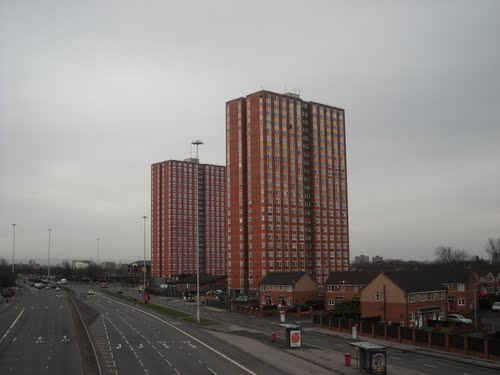
It was the early 1980s and the social worker and I were visiting a young single parent living on the 9th floor of a tower block in Salford 6. She had just moved back to live with her parents after the breakdown of her relationship. As she opened the door we were greeted by her 6 year old daughter, a pretty little girl who danced towards us, twirling around in circles. Only she continued to twirl around, and around, and around the overcrowded space completely absorbed in in own world. According to her mother she spent much of the day performing an unearthly dance between the furniture and screaming loudly every time she was prevented from doing this. She had no words. I could see how much her mother and grandparents loved her, but their faces were lined with desperation. The young mother already had the air, and appearance of someone at least a decade older than her years.
“I’ve been told she’s autistic,” she said, starting to cry, “but I don’t know how to cope with her…I just can’t, and now my husband has left me.”

It wasn’t difficult to see what was needed was some intensive support for the whole family. It was then, as now, in short supply but that didn’t stop us trying to put it in place. In my time at the clinic in the old Royal Manchester Children’s Hospital in Salford (not the shiny new one at the Infirmary) I witnessed over and again the impact of serious mental health problems and difficulties on families already struggling to cope in unsuitable or substandard housing. And it reminded me, sometimes too often, of the impact that the problems of my younger brother, who developed obsessive compulsive disorder at the age of 7, had on my own parents’ physical and mental health.

As my friends will know, I’m not particularly ‘good’ with children (I have none of my own) so when I was on-call over the weekend I struggled to try and strike up conversations with silent teenagers in the paediatric ward, the day after they had taken an overdose. They usually went something like this:
‘Hello, my name is Doctor Gask. And your name is Jenny- is that right?’
Silence…no eye contact…a reluctant nod.
‘I really wanted to find out what happened to you- to see if we can help…is that okay?’
…’I suppose so.’
‘OK. So would you like to tell me what happened yesterday?’
More silence.
I soon learned, by watching the consultant I was attached to, a kind and extraordinarily astute child psychiatrist who was close to retirement, that direct questions were not the way to engage a young person in talking about their problems. If they turned up for a follow up appointment- and that often unfortunately depended on whether their parents saw the need for them to have any help, not only their own willingness to come, he would set about making a young person feel at ease, without actually appearing to make any effort at all. He would smile like a genial grandfather, and simply strike up a chat about things completely unrelated to the events that had brought them into hospital: their favourite pop stars (they were not called ‘bands’ then), hobbies, best friends and gradually build trust before moving onto the thorny question of why they had taken the tablets. After forty minutes or so he would be ready to ask: ‘So how would you like things to be different?’ followed by ‘I wonder how we can help you with that…should we try and look at that together?’

I realized quite soon into my six months working with children and young people that this wasn’t where I wanted to be for the rest of my career. I didn’t have the kind of skills and patience that the consultant had. I found it difficult to work with families where children whose apparently quite normal behavior did not meet the expectations of their parents. In particular I felt angry when parents failed to take up the offer of help because of their perception (perhaps rightly so) that we were suggesting the difficulties their children presented with had a great deal to do with their own life problems and parenting style.

However what I did learn, and has never left me, was the acute awareness of how the people I saw later in their lives with depression and anxiety, in their twenties, thirties and older, had first developed difficulties with their mental health in their youth. This was where their problems had begun.

I returned to work in Salford 20 years later and helped to set up a primary care based mental health team. Our base, at first, was in a building attached to the old Salford Royal Hospital where I had attempted and failed to strike up conversations on a Saturday morning. Only now the building, like many older hospitals, had been converted into luxury flats. As I discussed in supervision, with the Psychological Wellbeing Practitioners, the problems of the people being referred to us, I was acutely aware that the generation we had struggled to help back in the 80’s were the very people now presenting to the mental health services. What happens to us in early life- our relationships, experiences within our own families, continues to have an impact on our mental well-being for the rest of our lives.

Services for children and young people with mental health problems have never been well funded and now in the UK they have been cut more than ever before. What services do exist are withdrawn at school leaving age and very many of those who have succeeded in getting help fail to meet the ever more selective criteria of adult mental health services, unless they have been lucky enough to be seen in some of the newer services which don’t recognize this traditional cut-off point, which is completely unsupported by what we now know from research:

not only that adult mental health disorders are common in the population, but that most of them have their onset by adolescence. This period of life after puberty also sees a range of important organisational developments in the brain that last until the late 20s and usher in adulthood as might be defined from a developmental rather than a social or legal point of view.’

Yet this is exactly the period when adequate mental health care is perhaps most difficult to access.

I was recently asked in an interview (by Ruth Hunt) what my priority would be for funding when the new money promised for mental health care, too little once more, finally arrives. I didn’t hesitate. It has to be for children and young people, if we are going to begin to try and prevent the cycle of suffering. More families failing to cope and the next generation experiencing the same problems.
It has to be children and young people first.

My memoir about depression and Psychiatry: The Other Side of Silence is available now

Lacking motivation

A common reason, in my experience, why people don’t get taken on for therapy  (or are discharged prematurely) when they are referred to a therapist is that they are deemed to be ‘lacking in motivation’. The concept of ‘being motivated’ is something I’ve thought quite a lot about because when I’m depressed I have very little motivation to get out of bed. So what is meant when people who are depressed are lacking in motivation to undertake therapy? Why should we think more about it?

To get taken on for a talking therapy, you have to jump through quite a few different hoops, several of which you may not realize are actually there:

  • First you have to recognize that you might actually need some help. That’s a pretty major step. Stigma in our community makes it difficult for many people to come forwards and identify themselves as having a mental health problem. In some minority communities, simply doing this can damage your sister or brother’s marriage prospects.
  • Then you need to be able to access the system, through your GP or by self-referral. That assumes that you can leave your house (many people with disabilities cannot) and negotiate the various other barriers to getting a referral including feeling able to talk to your GP, or using the telephone to refer yourself. All these can be doubly difficult if you don’t speak English. Information about services isn’t always available in other languages. Talking to people on the telephone can be difficult if you are very anxious.
  • •Next you have to understand what it is that you are being referred to. You many have no idea that you are expected to turn up at the same time every week for several weeks. You may be a single parent, who lacks reliable childcare. If out of hours appointments aren’t available you may have to tell your boss you need the time off and why. Not everyone has control over how they spend their day like most professionals do.
  • You may have a great deal of emotional turmoil in your life- relationships in crisis, money problems, ill-health in your family. You are not sure how you can commit to something you don’t really understand and how this can be a priority. No-one may yet have explained how therapy is supposed to help you.
  • A letter arrives. It takes you a while to open it because you haven’t been opening the post. It’s all bills anyway, and seeing them just gets you more upset. You’ve been finding it harder and harder to get going in the morning. The letter says you have to ‘opt in’ to therapy, by a certain date. You tear off the slip and send it back. Just in time.
  • When the assessment appointment finally comes after several weeks or months, you have to cancel because your child is seriously ill. The service tells you that you can only cancel twice then you will go to the bottom of the waiting list again. You try and leave another message but only get the answering machine. Repeatedly. You begin to lose hope. Things are getting worse and you seem to have even less energy than before. You have started to feel that life isn’t worth living anyway.
  • You finally get to see the therapist who asks quite a few questions, but you still aren’t entirely sure what you are supposed to do, or how this is supposed to help you. You tell her that you are taking tablets, which have helped a bit, but your doctor hasn’t reviewed them because he is waiting to hear what the therapist thinks. She tells you that this is nothing to do with her but a question for your doctor. She asks to see you again before making a decision. She says there will be six-month wait anyway to see somebody. You start to think ‘what’s the point?’ you are feeling increasingly hopeless.
  • The evening before you are due to see her, your husband comes home to say he has been made redundant and the two of you spend the evening wondering how you are ever going to cope. The therapist has sent a text to remind you of your appointment but it’s the furthest thing from your mind at the moment. You forget to go.
  • Two weeks later you get a letter offering you one more appointment. If you don’t attend you will be discharged and they will assume you no longer want to come. That last part of the sentence worries you, because you know you really need help now. You are losing weight, you have no energy any more and the future looks bleak. You put the letter in the bin.

The therapist writes to your doctor and says you don’t seem motivated to attend at the moment, and sends you a copy.

There are many things that can contribute to a perceived ‘lack of motivation’. Not being willing to attend regularly (because of what that means in terms of who you have to tell and negotiate with); not able to understand what therapy is about and your role in it (because no-one has still really explained it); not prioritizing therapy because your life is in turmoil (a difficult ask for people who live life on the edge of an economic abyss) or simply feeling so hopeless and lacking in energy that you don’t manage to get there ( symptoms of severe depression).

The responsibility has been put back onto you. The therapist didn’t seem to want to talk about the problems you were facing in your life and your money difficulties. Only what you thought and felt about them. They didn’t address how ambivalent you feel about the whole enterprise or try to really engage you in a way you could respond to. They didn’t seem to understand how difficult you found it to make any decisions at all, never mind commit to ‘therapy’ and when you talked about how you had begun to think of harming yourself they did seem concerned but didn’t seem to know what to say.

You may think this tale is an exaggeration, but it is simply a reflection of what service users have told me many times about their experiences.

Once upon a time you had to be ‘Young, Attractive, Verbal, Intelligent and Successful’ to get into therapy. Now, above all, you have to be motivated. Have things changed?

My new book: ‘The Other Side of Silence: A Psychiatrist’s Memoir of Depression,’ is available now, and describes my own experiences of therapy.

I’m a psychiatrist and I live with depression

I am a psychiatrist, and I’ve had depression on and off for most of my adult life. I’m now retired from practice. I’ve written about depression in a book, and people are saying how brave I am to ‘come out’ and say it. Yet if I had written about having arthritis, or some other physical condition, no one would have described my ‘coming out’ in such terms. Why should it be such a surprise that a a person who worked as a consultant psychiatrist for almost 25 years, and has spent her life researching and teaching the subject, should have first hand experience of it herself? Probably because, in the health professions, the last thing we usually want anyone to know, particularly our colleagues, is that we too are vulnerable to exactly the same stresses and problems as our patients. We like to see ourselves as strong; indeed maintaining our position on the career ladder often seems to depend on that. There is stigma related to having depression, even though mental health workers profess that they are always ‘fighting’ it. Depression is something that others suffer from, not us.

It is exactly this ‘us’ and ‘them’ attitude that I set out to challenge in the book. It started off as a memoir of my own fairly extensive treatments for depression, both with medication and psychotherapy. However as I began to write it, the close parallels between my own experiences, and those of the people I had tried to help throughout my professional life just became more and more obvious to me. There certainly wasn’t a clear boundary between my own experiences and those of my former patients. We all had complex lives- experienced loss, grieved for those who have gone from our lives, felt lonely, wanted to be loved, and sometimes felt compelled to self medicate with alcohol to ease our distress. Some of us made the same mistakes in our relationships over and over again. Many of us wanted or even tried to end our lives. The stories I tell in the book are taken from my own work as a psychiatrist but have been extensively altered and merged to create people who are true to life, but not ‘real’ case histories. However my own story is very real indeed. It wouldn’t have been appropriate to have been so open when I was still practising- when people came to see me the focus was rightly on their problems not mine. When I was unwell I withdrew from seeing patients until I was recovered. I’ve never tried to hide my illness from colleagues. I’ve just never been quite so public about it.

So far, I’ve had some interesting reactions. As I mentioned above, I’ve been described as brave by some, but others are still clearly unsure what to say to me. When I’ve talked in the past about treatment, in particular the fact that I’ve taken antidepressants now for the last 20 years, I’ve certainly picked up from some of my colleagues that ‘this isn’t the sort of thing one talks about’. Why not? Isn’t this exactly what mental health professionals talk about every day? How can we challenge stigma in society if we cannot face up to our own tendency to stigmatise both our colleagues and, even now, our patients?

I have listened to junior members of staff describe people with depression who are not actively suicidal, or psychotic as the ‘worried well’. I’ve been told that depression is not a ‘severe’ mental illness warranting more investment of psychiatric and mental health nursing resources. I’ve read articles written by my colleagues, which describe it as ‘medicalising misery’. Only people who have never experienced the pain, despair and hopelessness could talk about depression in such terms. I’ve spent my life challenging such attitudes. I made it as far as being a Professor of Psychiatry, despite repeated episodes of depression. I know I’ve had better treatment than many people ever receive and my aim has always been to improve access to, and quality of care for depression. I’ve managed to live with depression and found ways of coping with it- though that has been far from easy. That is also what my book is about. I refuse to be ashamed of it.

Nobody should be.

My book, ‘The Other Side of Silence: A Psychiatrist’s Memoir of Depression’ is published this week by Summersdale.

Nothing like the common cold

Everyone disapproves of stigma, and yet that doesn’t seem to have had an impact on the way in which mental health professional themselves continue to stigmatize those with mental health problems. At this point I can hear all the professionals reading this saying ‘but I don’t do that,’ and indeed you (singular) may not. Yet those of us within the professions who have been mentally ill have experienced it. Mental illness is still something that happens to other people, but not to people like us.

A good friend of mine, Maureen Deacon, died this spring. She had been a Professor of Mental Health before taking her retirement, and I first met her more than thirty years ago when she was the ward sister in the Professorial Unit at Withington Hospital in Manchester and I was a Senior Registrar in the ward downstairs from hers. We had several friends in common and kept in touch over the years. I also knew her partner very well. In the early 1990’s Maureen persuaded me to recklessly join her on an overland bus journey from Manchester Piccadilly to Leningrad as it then was, which took 4 days in each direction. I remember someone getting on and asking if it was the Blackpool bus, and we all shouted ‘No, Leningrad’ to the interloper’s complete bemusement. You bond with someone when you both eat nothing but hummus and pitta: the only food you have brought with you for the journey, day in, day out. We hadn’t seen so much of each other in the last few years but we continued to meet every now and then for dinner and chat with our respective partners and to see each others’ feline companions.

Maureen had been unwell with cancer for some time. I wasn’t able to attend her funeral because I was in Orkney then, but I know she wanted everyone to dress in bright colours for her farewell, and not come in black. She was always very upbeat, hard-working, utterly reliable and a great friend. I also knew she had been depressed, both before and after her diagnosis with cancer. She never said much about it, but we talked briefly on occasions about what it felt like and taking antidepressants. She knew I had been unwell on occasions too. So it was a shock for me to read in the paper she completed just before her death, and published this month in the Journal of Psychiatric and Mental Health Nursing, that she had experienced six episodes of depression, and had seriously considered suicide during at least one of these. I’m ashamed I never picked up how bad things had been for her, but as she said in this personal account of her experience ‘I was an expert at hiding it.’

She wrote :‘being depressed is worse than having advanced cancer’ and at that time she had a life-limiting illness. She was acutely aware of the stigma that depression carries. This, she said, had two aspects. The self-stigma that is experienced by those of us who get depressed:

“…I tend to see my mood disorder as a character flaw-evidence of my weak and neurotic nature. Currently this is reinforced (for me) by the interest in mental health and resilience, clearly something I’m missing, in some sense at least. Secondly there is the guilt and worthlessness hat comes along for me with depression experience: ‘I should not feel like this I have a blessed life, a partner who loves me, a lovely home…’”


But also the stigma that depression carries, perhaps more so than ever, within mental health services in the UK. Even severe depression is not deemed to be serious enough for mental health nurses, working with Community Mental Health Teams, to be involved in the care of, except if the person is suicidal- and even then only for a limited amount of time. Depression, Maureen said, has been called one of the ‘coughs and colds of psychiatry’ and I’ve called out junior doctors for referring to anyone not under the care of mental health services who is anxious or depressed as the ‘worried well’. This kind of language doesn’t help the mental health professional in their company, quietly keeping their own counsel or indeed anyone with depression to feel any better about themselves. Diminishing their experience does not speed their recovery and discourages them from seeking help. When I was well such attitudes made me angry, but when I was unwell it certainly deterred me for a long time from publicly admitting I had any problems at all.

During my time as a consultant I saw and treated many nurses with mental health problems- students, mental health nurses, general nurses, ward sisters. After the case of Beverely Allitt, the nurse who murdered several children in a paediatric ward, I remember trying to help a seriously depressed young woman who was petrified that having treatment for depression would mean she was thrown off the general nursing course. There seemed, from her point of view, to be very little distinction being made between having treatable mental illness and potential psychopathy by her course directors. This was her understanding, but I would not be surprised if she was right. I’ve met health service managers with similar difficulty in grasping what mental illness actually is, how it affects a person, and how a person who suffers from it is more at risk of harm from others than vice versa. I’ve also seen mental illness treated very differently from physical illness by some managers. I was asked for information about a ward sister who was an in-patient on my ward through the inter-organisational route, following conversations between hospital managers, which was a blatant attempt to breach my patient’s confidentiality. Would this have happened ifshe had been receiving care for a physical illness? When I personally made my first very tentative visit back to unit I was working on when I had been off sick with severe depression, I received a letter from the Personnel manager a couple of days later, saying ‘You looked well. I hope this means you are returning to work soon?’

As Maureen said in her paper:

‘the sheer terror of work colleagues knowing I was unwell was enough to get me moving. Ironically, on the two occasions I was persuaded to take sick leave, I got better much more quickly’.

Reading her account fills me both with admiration…and regret. How I wish we had been able to talk more about how she was feeling, but she didn’t feel able to, and I never picked up the cues.

I will always miss her quiet wisdom and common sense.

Her conclusion was that, to really understand stigma as mental health professionals we have to get away from thinking mental illness is something that happens to other people . Not to us who are always resilient, invulnerable, immune to stress, and as a result far too ashamed to admit when we experiencing something which I can assure you is far from having something like a common cold.

Reference

Deacon M. Personal Experience: being depressed in worse than having advanced cancer. Journal of Psychiatric and mental Health Nursing, 2015,22,457-459.

Two units under

According to my other half, I am one of those people who are permanently short of two units of alcohol. I’m undoubtedly better company when slightly I’m under the influence- I’m more sociable and relaxed. I can engage in conversation without feeling self-conscious when I’m with people I don’t know well, or haven’t seen for a while. Life just flows more easily. Two units a day, you say, that isn’t very much, its 14 a week, that’s just on the ‘safe limit’ for women. So why have I been trying to reduce the amount that I drink?

Since my early 20s I’ve been aware that I have an ambivalent relationship with alcohol. Most of the time we remain on reasonably good terms, but when my mood is low, or I’m under stress the booze likes to get one up on me. Like many people, when I was working full-time, I began to rely a little too much on my liquid friend. Days began to be measured on a new scale of severity- the number of bottles of Stella Artois I needed to feel relaxed after a weekday in the real world. One bottle (330ml 2 units) was a normal dosage, two bottles (4 units) for a tough day and 3 bottles (6 units- thankfully not very often) for a bloody awful day, plus a very strong Martini on Friday night to decompress and sometimes again on a Saturday, and wine (3-4 glasses) over the weekend. Mostly I drank just about up to the limit. Sometimes, and increasingly so as time went by, I exceeded it.

Okay, I can hear you saying, ‘what are you worried about, I know loads of people who drink a lot more than that!’ You may even do so yourself. I’m not asking you to consider it that is of course your choice. But it’s not only the amount you consume (although most diseases related to alcohol haven’t been informed there are ‘safe’ limits, the risk just gets greater the more you drink) it’s the nature of the relationship you have with booze. It’s addressing why you sometimes feel the need to rely on a friend whose apparent affability, social and legal acceptability masks the risk it poses for those of us who have the potential to depend on it, not just emotionally but physically too if we drink long and hard enough. Earlier this year, when I was experiencing, for a while, the most severe physical symptoms of anxiety I have ever known, when my chest was permanently tight and my hands shaking, there was only one substance easily accessible that took those symptoms away, and it usually took one of my husband’s martinis which is a fairly lethal combination of gin and vodka (plus Lillet Blanc and a twist of lemon if you are interested) to help me feel anything like calm. Mindfulness exercises didn’t touch it. Exercise was difficult as I felt exhausted most of the time and too anxious to venture out much. I’m quite sure diazepam would have worked too, but I’ve spent so many years trying to help people withdraw from it I wouldn’t wish to take it. I remember one of my patients who was depressed and couldn’t sleep said to me. ‘I didn’t want to take any pills, so I just decided to try alcohol, it’s a natural remedy isn’t it? Well no, it’s about as natural as anything that’s been processed by a brewery or distillery can be I suppose. And the Distiller’s Company also gave us thalidomide too. Not that I am any way comparing alcohol with that particular drug, but we know it also can cause terrible damage to the unborn. Alcohol is acceptable, available and costs comparatively less than it used to when you buy it in bulk at the supermarket or in Happy Hour.

When I worked as a consultant in a substance misuse service I saw so many young men whose problems with alcohol had begun in their teens, when they drank to self-medicate for social anxiety, unable to approach a member of the opposite sex when completely sober. The problem is alcohol doesn’t only relax you, it lowers your inhibitions in other ways. You are more likely to put yourself at risk, for example by having unsafe sex or walking home in the snow with insufficient clothing after a night out risking hypothermia, when you are drunk. Alcohol has a curious relationship with mood disorders that mental health services in the UK (but not in Australia) still don’t pay enough attention to. People with bipolar disorder can drink excessively when they are high and when they are low. Those of us with depression use alcohol to numb the pain of being alive, but the side effect is that we then feel much less inhibited about trying to harm ourselves or end our lives. When I was a student I discovered the advantages and disadvantages of drinking to oblivion. I was in danger of becoming the person we all remember who seemed to go that little bit further than everyone else, and we much later heard was not only emotionally but physically dependent on booze and on their way to destroying their career. Medicine is noted for its relationship with alcohol. There even used to be a bar in the doctors residence in Manchester when I was a junior doctor. I’ve glibly asked students at interview what they do to relax, because ‘medicine is an emotionally taxing profession’, and heard them list all their sporting and musical activities knowing full well how many of us fall back on the nightly Stella because it’s the easy, instant option.

So, of late, I’ve been considering this relationship much more honestly than I have in the past. I’m aware I have within me the potential to spend far too much time with this erstwhile friend and be lead seriously astray, but I’m still ambivalent. l so love the feeling of being intoxicated, at least until I wake in the early hours next morning. But I rarely allow things to go that far now. I’ve been staying alcohol free for longer and longer, particularly when I’m in Scotland. I don’t drink alone in the house, and I can no longer have anything at all when I’m out due to the new drink driving laws. I hope they are having an effect on the overall amount people consume, but we still need legislation on minimum pricing. I learned as a medical student that national consumption was governed by cost and availability. Why is more research required?

I still enjoy the occasional drink but I’m beginning to know, and like, my persona who is always two units under a little better and helping her find other ways to manage her anxiety. It’s a healthier option for me, in the longer term, giving alcohol the brush off.

(Still) taking the tablets

Not so long ago, I asked my current doctor how he thought I would have been over the last 20 years if I hadn’t stayed on antidepressants continually. He said he thought I would have had at the least a period of in-patient care. When I asked my other half, who has known me for nearly 30 years, and remembers life before and after I had medication his response was simple.

‘You would be dead.’

Since I last somewhat reluctantly shared my views on antidepressant medication a year ago, (before that I’d kept my head below the parapet) there has been a continuing debate about them both on twitter, where I’m quite active, and in the media. My blog was paired with an article written by a fellow psychiatrist who has very different views from my own, who told the Daily Mail she wouldn’t take antidepressants even if she were suicidal. I was pleased our contrasting views went out together. Others have questioned me directly with comments such as ‘I can understand why you take them if they’ve helped you, but why do psychiatrists still prescribe them when they don’t work?’ and a little more personally: ‘well you would say they help because you’re a psychiatrist.

When I joined twitter, I expected there would be primarily a view that medication was unhelpful and shouldn’t be prescribed. I guess that’s because that’s the message that the media often seems to prefer. There are several eminent mental health professionals who share this view and write about it frequently. Many of them are involved in the Council for Evidence Based Psychiatry and are active on social media. In fact, what I found, as well as people who share their views, was a substantial section of people who were willingly to talk of how medication has helped them. Some of them, like me, have also had psychological therapies, but many others have unfortunately not been able to access them.

NICE (the National Institute for Health and Clinical Excellence) is about to start a new review of the evidence, but its current advice is that antidepressants should not be used in milder depression, should be offered as option in moderate depression, and should be used in addition to psychological therapy in severe depression. That’s why I prescribed them when I was still practicing and most other psychiatrists and GPs, still do. But unfortunately the difficulty in accessing psychological therapy makes it hard in practice to follow the NICE guidance as we should. Many people do not get offered evidence-based treatment. If this happened in cancer it would be a national scandal, yet untreated depression, as we know too well, not only causes great suffering but can also be lethal. There are people who wouldn’t benefit from antidepressants who end up on them unnecessarily and only experience the side effects. There are others who feel there is no other choice open to them without a long wait. In severe depression, treatment which doesn’t also include psychological therapy is incomplete. Medication alone is never the solution.

I’ve stayed on tablets because, as my doctor and husband agree, I don’t think I could have managed to live the life that I’ve been fortunate to have, if at all. It’s been a productive one, but it hasn’t been easy. I’ve still had relapses: I was unwell earlier this year again and am now recovering. I didn’t cope with work stress well at all, although latterly Cognitive Behaviour Therapy helped me to find new ways to manage that; and I know that I still react badly to loss events. I have a family history of mental illness, and one first degree relative was hospitalized. My early life almost certainly contributed to my susceptibility. I’ve written at much greater length about this in my memoir, which will be published this autumn. However I haven’t been as low or completely unable to function as I was prior to taking medication. Psychotherapy helped me earlier in my life, but couldn’t prevent me having more severe episodes in my mid-thirties. Each time I’ve relapsed, my medication has been changed. Sometimes things have been added in. I’m on a combination now once more. I know there will be people who will say my recoveries are due to the placebo effect, which can be very powerful, but last time, as previously, I’ve begun to recover in the time scale predicted by the evidence. This time it was around 3 to 4 weeks. It certainly was not immediate, in fact as sometimes happens, my mood continued to deteriorate after I started the new treatment.

Medication has some truly vile side effects; I’ve experienced many of them and still do. I’ve had withdrawal symptoms too. Some people cannot tolerate them, and others feel much worse. Fluoxetine made me so agitated I had to stop it. In young people that effect can lead to increased self-harm. Medicines can help, but they can also be dangerous too. Its always about balancing the risks and potential benefits.

To suggest I would only say medication was helpful because I’m a psychiatrist devalues my experience as a service user. Perhaps it’s not easy to be seen as both at the same time. But I know others have found medication helpful too so I’m not alone. When writers suggest antidepressants shouldn’t be used, those of us who have benefited find that very scary. We know we are not weak because we need to take them, but sometimes it can feel like others honestly think this of us. All I am asking is that those who don’t want to take them respect the choice of those who do and continue to allow people who may possibly benefit (and have potential problems on them too) to make a fully informed choice. As I said previously I have never forced anyone to take them.

I have been suicidal, and I chose to start taking an antidepressant. At that point I was still sufficiently ambivalent about death to try anything that might help.

I’m still here.