We need gender-sensitive mental health care

My medical education, more than 40 years ago, was centred around the male body as the normative human being.  

As the American feminist and legal activist Catherine Mackinnon wrote only a few years later in Difference and Dominance: on sex discrimination:  ‘A male body is the human body; all those extra things women have are studied in ob/gyn’. That was at a time when there was no imperative even to include women in randomised controlled trials of treatment, and they were excluded for many more years because the impact of their pesky hormonal fluctuations got in the way of standardising groups and making comparison between subjects. 

My psychiatry education was similarly centred around the normative male patient, even though so many of the patients I cared for were female. I learned nothing of the impact of hormones and the different effects of psychotropics on the male and female bodies. The psychiatric equivalent of ‘ob/gyn’ became perinatal psychiatry.

 Mackinnon wrote:

…’man has become the measure of all things. Under the sameness standard, women are measured according to our correspondence with man, our equality judged by our proximity to his measure. Under the difference standard, we are measured according to our lack of correspondence with him, our womanhood judged by our distance from his measure. Gender neutrality is thus simply the male standard, and the special protection rule is the female standard, but do not be deceived: masculinity is the referent for both.’

This came to mind last week, when I was speaking to an audience in Manchester, discussing the difference between suicide rates in men and women, and hearing how being a woman is almost viewed as ‘protective’ in comparison to being a man, because men, who take their lives at three times the rate of women, are the reference point. Then again, this week, when reading Emma Pryce Jone’s fantastic piece for World Suicide Prevention day in Australia last month about how all the suffering of those who are ‘othered’ is somehow disregarded in public education around suicide: 

…‘the phrase’ don’t suffer in silence’ is central to messaging around men’s suicide, but for many women that is precisely what defines womanhood: suffering in silence.’ 

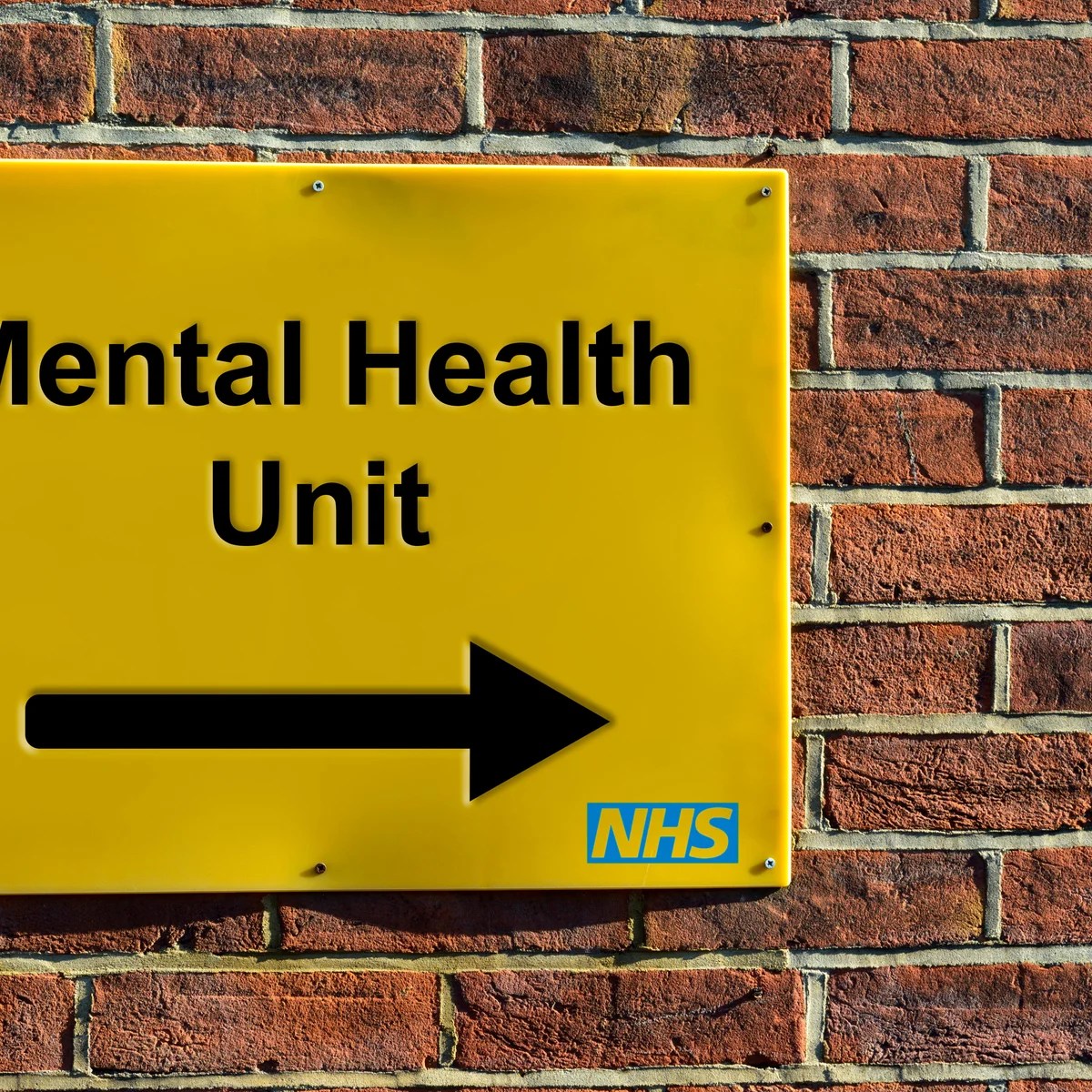
When researching and writing Out of Her Mind the gender neutrality of not only mental health research but also care provision itself, and the reporting of mental health issues in most of the media, soon became apparent. It was sometimes very difficult to get sex/gender breakdowns from government documents of even simple things like who was on a waiting list for psychological therapies. Reports in the press and on TV of suicides and abusive care in mental health units and the extent of sexual assault taking place in our hospitals usually feature photographs or film of young women (for example the Panorama programme about the unit in Manchester, or the young people’s unit in Glasgow) yet whether, or how much, this might be a gendered issue is not discussed. Agenda Alliance’s research with young women, Pushed Out Left Out their final Girls Speak  demonstrated in 2022:  

…when statutory services, and some non-specialist youth services, assume so called “gender-neutral” or “gender-blind” approaches, this leads to the specific and gendered needs of young women being overlooked and underestimated. Ultimately, there is nothing neutral about “gender-neutral” policy that fails to consider the distinct needs of girls and young women.’

This is true of so much of mental health care from the lack of attention until recently of the failure to provide adequate period products in wards to the disregard of the sexual health needs of women with severe mental illness.

Gender neutrality is a concept that attempts to remove the notion of being male or female from a person or entity. It also encourages people, regardless of their sexual orientation or identity to feel accepted, hence the adoption of gender-neutral language in recent years. But it is problematic when applied across the board to something like the provision of mental health care. Care must be informed by knowledge and understanding of gender differences and how they relate to childhood and adult life experiences, social, cultural and realities of family life, the experience and course of illness and treatment needs and responses. Some places have already begun to consider this – for example the Republic of Ireland. In contrast, women were barely mentioned in the last mental health strategy where I live in Scotland. 

We need not only gender sensitive research, with sex/gender disaggregation of data, but gender sensitive mental health care and we need it now.

It’s long overdue. 

Out of Her Mind: How we are failing women’s mental health and what must change is on sale now.

Antidepressants are a feminist issue

It’s 35 years now since I first took antidepressants, and I’ve been on them continuously for 31, the last 25 years or so on an SNRI (Serotonin and Noradrenaline Reuptake Inhibitor). So, it can be more than a little disturbing to reflect that just like my mother (who took Ativan and Valium long-term) I’ve ended up on psychotropic medication for much of my life. Particularly when I read an article Are antidepressants a feminist issue? published 3 years ago by Halima Jibril in Dazed Magazine, which cites NHS data from 2021/2 that 5.5 million women in England and Wales were prescribed antidepressants compared to 2.8 million men. That’s twice as many. Its woman who are much more likely to be taking them. 

Women are more likely to get diagnosed with depression than men, but there are several reasons for this, many of which I’ve discussed in a previous blog. Jibril also mentions the issue of over-medicalisation of distress, which has been a key theme in feminist critiques of psychiatry over the decades. It’s been suggested that not only are women’s emotions pathologized, but also that medication is used as a tool of control. Both have been true in the past, and in some places they still are. My profession has yet to acknowledge the full extent of its past and continuing poor treatment of women. However, if you are a person who believes there is no such thing as ‘depression’, as many do, it seems logical you are unlikely to believe there is a place in the world for antidepressants. 

I recognise depression to be real and very disabling in its severe forms. I’ve suffered from it much of my life and I’ve met and tried to help many other women, patients and friends, who have too. So, I’ve no doubt we have been the key market for antidepressants, just as we were in the past with benzodiazepines: 

Jan, ‘single and psychoneurotic’ because ‘she had never found a man to match up to her father,’ as the ideal candidate for Valium. [from an advert Archives of General Psychiatry 1970]

My mother didn’t fit this description, but she suffered with chronic anxiety. Something I inherited.

Many of us have benefited from antidepressants. I wouldn’t have been able to engage with some of the psychotherapy I received unless I had recovered sufficiently first by taking the pills. Nice recommends a combination of therapy and medication for severe depression. However, we do know much more now about antidepressants than when I began to use them in the early 90s. We’ve learned about the problems they can cause – particularly difficulties in withdrawing which can be severe for some people and also sexual dysfunction – including PSSD (Post SSRI sexual dysfunction). 

Women respond better to SSRIs than they did to the older Tricyclic Antidepressants (which I took at first), and younger women respond better than postmenopausal women. Hormonal fluctuations affect how our bodies metabolise them.  However, women have also been found to experience more severe sexual side effects from some antidepressants than men do. I’d like to know much more about sex/gender differences in both how we respond to and experience withdrawal from antidepressants, given that they are taken much more commonly by women. 

We still don’t know enough either about the impact on younger women of beginning and continuing on medication for long periods in their lives. Having started pills at 35 after the failure of therapy to prevent a severe relapse, I know how difficult it is for me to answer the question, ‘Who am I really?’ The person I was before I took the medication, whose mood fluctuated sometimes to extremes, or the person I am now, calmer, more level, able to focus (I’ve never experienced emotional blunting although I know some people do) but also not quite the person I was. Is this me or is it the medication? I’ve managed to cut my duloxetine dose in half without too many problems (I am well familiar with brain zaps) but what would happen if I tried to cut further given the length of time that I’ve taken them? I share Awais Aftab’s measured opinion on what we know, and don’t yet know, about withdrawal. We cannot be complacent. 

However neither can we be complacent about how many women are being prescribed antidepressants. It isn’t a decision women take lightly but I know from my own time in practice how antidepressants are prescribed when therapy, if it were available, would be effective. I also know that some, like me, would benefit from medication when therapy and other options, just don’t work. They were far from my first choice in my early life. However, alternative treatments – including any kind of therapy without waiting for months – but particularly, longer-term psychodynamic therapy for women who have experienced early trauma and therapy for depression associated with PTSD related to domestic violence, are all difficult to access quickly if at all in the UK unless you pay. The specific issues facing women who experience depression, either in terms of better access to care other than pills, or politically in the multiple problems in our misogynistic society that make women more likely to get depressed, are not being adequately addressed.

                  Depression is real. As women we need to campaign not only for changes in society to help prevent it, but demand access to more effective and a wider range of treatments for it, when it happens, than simply a prescription. 

My latest book Out of Her Mind: How we are failing women’s mental health and what must change is available now.

Walking with dinosaurs

It’s been quite a week for the grandees of my profession. 

First they’ve been sharing their views on why today’s resident doctors shouldn’t strike and then telling us why we should return to limiting the number of women who should go into medicine.

It’s embarrassing belonging to the same professional generation as those recently sharing these views. I started medical school in 1974 in Edinburgh and qualified in 1979, so I’ve been a doctor for 46 years this year, although I retired from my full-time job as an academic psychiatrist in 2013. Professor Sikora, who has been a doctor for more than 50 years told the Telegraph he was appalled at doctors striking. The sub-heading of the piece is Money buys you neither love or happiness. I cannot tell if that is a direct quote as the rest is behind a paywall. However, I can tell you that when you are poor, money helps.

I very much doubt that I would have gone to medical school today. I come from a working-class family. No-one had been near a university or had ever wanted to. My father worked repairing seaside amusements, and my mother in a radio factory. It was a real step up when she got the job at the Coop greengrocers counter. She always borrowed to get through the week. Everything in the house was bought on tick. I had a full grant for every year except my first, when my parents had to contribute £50, and my fees were all paid. I lived frugally but well. Better than friends whose wealthy parents didn’t fulfil their parental contribution. After I left university, having found house jobs (FY1 now) near Edinburgh, I moved down to England. I had low-cost hospital accommodation when I needed it, hot meals at night, free parking, and no debt. We (I was married by then) were able to get a mortgage immediately, although my ex-husband’s salary took precedence. I bought my own home without difficulty when we divorced. I worked long hours, and it was tough but as a consultant I had great secretarial support. I suspect that has all gone now too, though managers seem to still have PAs?

I met those with views about women in medicine like Dr Meirion Thomas, during my career. I think I was supposed to feel grateful that at least I had been allowed to graduate in the first place, unlike the Edinburgh Seven, heroines of my alma mater, who were unable to, despite out-performing  the men. The consultant orthopaedic surgeon in Falkirk Royal Infirmary would not speak directly to me because I was a woman. All instructions were relayed via the ward sister. The postgraduate tutor in the general hospital where I became a consultant expressed similar views to our medical students even in the 1990s. 

There were times I thought about emigrating (to Canada) but I stayed. There was a cohort of us in my generation from the working class, who, after the second world war, benefited from free first-class education from secondary school through university. Despite the valiant efforts of those trying to widen access only 5% of those entering medical school still come from the lowest socioeconomic group. If I was making that journey today, I personally could not have coped with having to work throughout my degree, as many now do, nor the huge amount of debt afterwards.  We also know the NHS has never been a good employer. I not only treated many employees, some episodes of my own severe depression were triggered by my interactions with management. I gave evidence against one Chief Executive at an inquiry into his behaviour, which didn’t help my career at the time. Seeing resident doctors being asked to pay for their accommodation when on-call (see recently on social media) suggests to me that concern for their welfare remains low in many places.

I never went on strike during my career, because I never needed to, but if I were working today as a resident doctor, I have no doubt that I would. I would also have considered emigrating to anywhere that would value my skills and treat me with more respect – and pay me better. If there are now more women doctors than men, so be it. Get more men to apply to medical school. When and if women have children is up to them. The NHS must change to support them. They are the future, and if they drop out, leave medicine, or leave the country, they will be gone. We cannot have dinosaurs still telling them they shouldn’t be here. 

I support striking doctors unreservedly. 

Professor Linda Gask

My latest book Out of Her Mind: How we are failing women’s mental health and what must change is published by Cambridge University Press

What is happening to the mental health of young women?

Society seems to have great difficulty in talking about the mental health of women just now. That’s problematic when the latest figures show the gender gap between men and women remains and is especially stark for young girls and women. The proportion of all those aged 16-24 with a common mental health condition rose from 17.5% in 2007 to 25.8% in 2023-4. However, the proportion of young women reporting a mental health condition is now the highest on record, at 36.1% in comparison with 16.3% of men. This news went almost unregistered by the media in Britain at the end of June.

It’s just girls isn’t it?

The authors of the latest iteration of the Adult Psychiatric Morbidity Survey (2023-4) say in their Conversation article, ‘Mental health in England really is getting worse. One in five adults are struggling.’ They also challenge the claim of overdiagnosis. “The APMS has been conducted with consistent methods over decades, using the same robust mental health assessments with large, random samples of the population. This means the results are largely not affected by changes in levels of mental health awareness or stigma, and changes in levels of diagnosis or service contact.”  These data are epidemiological estimates based on official criteria. (Helpfully the survey also shows self – diagnosis rates too for comparison, and these are higher).

So what is happening for young women? And why do we seem to find it so hard to discuss it? 

We know this is a worldwide phenomenon and in many countries suicide rates are increasing more rapidly in young women than in men. A recent Australian study reported an annual prevalence of nearly 50% for mental disorder in young women. Socioeconomic factors play a significant part in why both men and women develop mental health conditions – debt, unemployment, chronic ill-health, homelessness – but women are more likely than men to be in precarious work, to be reliant on benefits to survive, be single-parents and unpaid carers. Poverty matters, and if you add in intersectional factors such as being from an ethnic minority and/or LGBTQA+ risks to mental health multiply. Women are also more likely to have faced early traumas such as sexual abuse and then must deal with sexual harassment and gender-based violence in their everyday lives.  If in doubt, look at the pages of Everyone’s Invited which spells out the experiences of many young women very clearly. We have rising levels of misogyny, which is rightly leading us to question what is happening to young men and what needs to change for them. But this fails to take into account what happens to those who experience and survive the damage caused by the behaviour of boys and men, and the harm this is causing to the psychosocial development of young women. Gender based violence and abuse alongside being in poverty creates a web of adversity and mental ill-health in women’s lives.

Growing up now as a girl is very different from how it was for me in the 1960s and 70s. The pressures in terms of getting an education, feeling good about your body image, navigating sex and relationships and discovering and developing an identity are considerable and amplified by social media, which I’m so relieved I never had to contend with. 

Women are more often seeking help for anxiety, depression, eating disorders and self-harm but their mental health issues are not being considered through a gender specific lens. The menstrual cycle plays an important part in the mental health and well-being of young women but has been largely disregarded in the past in mental health care. We still need to know, for example, much more about the interactions between ovarian hormones and early life trauma in women. The APMS reveals that more men are getting access to care than they previously did. However, waiting times for psychological therapy remain long, the majority on those lists are women and the therapy provided will most likely not be tailored to the specific needs of women who have experienced trauma and violence. It is all too easy, as a young woman, to receive a diagnosis of Borderline Personality Disorder when you have been subject to repeated abuse and trauma.

 Is it surprising that new claimants for disability benefits in the UK are more likely to be younger, for mental health related problems and to be women? Limiting access to those benefits will increase poverty and continue the cycle of despair and adversity. Instead, we must rethink the way we support women and girls. Many will need access to a tailored, person-centred, biopsychosocial assessment, designed around their needs and preferences but its most definitely not a problem to be solved with more medication. To stem the increasing problems young women are facing demands that society recognises it, talks about it and has the political will to address the serious challenges young women currently face such as gender-based violence and misogyny. As women we are expected to not complain too much, ‘put up and shut up’ and if we do need help, ask for it ‘appropriately’ which doesn’t include harming ourselves, even though our needs often go unnoticed anyway. We often are accused of exaggerating or faking it. There is a continuing pattern of raising concerns about women’s mental health and society failing to act.

Isn’t it time we listened to young women, believed what they are telling us about their lives and talked about it rather than just let each new report drift by and disappear into the ether?

Then let’s get together and do something about it. 

My latest book: Out of Her Mind: how we are failing women’s mental health and what must change, is on sale now.

Reflections on reading Unshrunk by Laura Delano

Forty years ago, Carol Gilligan, the veteran feminist psychologist wrote about how young women may lose their ‘voice’ during adolescence as they navigate the pressures of society. We women resist these pressures to disengage from our honest voices but are told that we must repress our anger and questioning selves and conform to societal norms if we are going to succeed in the world. We are told that it is wrong to resist.

Laura Delano’s world was a privileged one, but it was a life which nevertheless came with quite firm expectations. At the age of 13 she looked in the mirror and began to question what was happening to her in this somewhat gilded existence. ‘I had no idea who that girl was anymore. All I knew was that she was someone else.’  

The tragedy of the next couple of decades is that, instead of having an opportunity to try and voice these thoughts, feelings and fears through conversations over time with a therapist skilled enough to both engage and work with her (she is sadly declared too serious a case for the one she does see), Delano is diagnosed with bipolar disorder by a psychiatrist at the age of 14 and given the bleak prognosis that she will need to take medication for the rest of her life. She is started on both Depakote (a mood stabiliser) and Prozac. This leaves her feeling betrayed, alone and ‘in a battle to protect myself’

Reading about what happened left me feeling both full of compassion for her  and anger that a fellow shrink could ever consider this to be good psychiatric practice. But that is only the beginning of this shocking story of multiple diagnoses and dangerous polypharmacy.

Oddly, I wasn’t surprised by the experiences Delano describes with each subsequent psychiatrist because I’ve read some similar accounts in recent years, notably Rachel Pruchno’s moving account of trying to help her daughter obtain good mental health care for bipolar disorder. I’m not going to pass any judgement on the diagnosis of bipolar that Delano received other than in my opinion coming to any such conclusion in one so young should take much more time and caution. Its also stunning how it sounds as though the diagnosis first provided is then taken as read – something that I was taught never to assume. Diagnoses are only working hypotheses which change over time, and as Allen Frances says, should be written in pencil. However, further additional diagnoses and medication are added to the list over the following years. 

The period that Delano spends at McLean Hospital in the unit for Borderline Personality Disorder is however, for me, the most disturbing. It’s hard not to see this as some sort of place where it feels like attempts were made to overcome her resistance and get her to ‘behave’, in order perhaps to restore the ‘promise’ for society that she once showed as a New England debutante. I know many therapists will disagree but it’s a diagnosis some of us intensely dislike – rooted in a misogynist perception of how women and girls behave when extremely distressed, and here there are so many of them, collected together and regularly judged as to their ‘progress’. 

The polypharmacy is chaotic and dangerous. I have some skin in the game here, both as a (now retired) psychiatrist and as a patient. I’ve prescribed many of those drugs but also taken quite a few of them too. I know about the side effects – the weight gain caused by Seroquel, the terrible thirst and tremor of lithium (I was never able to discontinue the thyroxine after lithium damaged my thyroid gland), the constant gut problems and the difficulties of coming off SSRIs and SNRIs. I’ve had episodic depression throughout my adult life, which at times has proved difficult to shift but I benefited from excellent care from colleagues in whom I trusted, and medication did help me to survive and thrive, even lithium. 

One reviewer of this book has criticised it as a study in ‘black and white’ thinking. But I’m old enough to remember the change from ‘black’ to ‘white’ that came about in American Psychiatry, when it shifted from reliance on psychoanalytic interpretation to declaring the dawn of ‘decade of the brain’ accompanied by a hefty dose of psychopharmacology. Psychiatrists treating Delano seem to keep these modalities quite separate too. Never wanting to ‘see’ the whole person in the round – a young woman getting minimal benefit from treatment and experiencing what is desperate and suicidal anguish – to find out what she really needs.

However, Laura Delano did ultimately resist the ‘psychiatricization’ of her life and triumphantly survived to found the non-profit Inner Compass Initiative which helps people withdraw from medication. It probably goes without saying that I don’t share her view that psychiatry is the main problem though I’ve met people over my career, and some of my personal friends, for whom it certainly has been a significant part of it and who have only thrived when away from it completely. I believe it can do great harm but can also do much good too. In my professional and personal experience mental illness not only exists but can benefit from medication and psychotherapy. Some will say, of course I would say that, but I do also acknowledge the importance of the existence of the ‘other’, outside of psychiatry and mental health care, to whom people can turn if they need to, for advice, support and advocacy. 

I have known people who have been diagnosed with severe mental illness who have been able to come off all medication and live a drug free life, and others for whom this was quite impossible. I still take duloxetine to stay well and often wonder what I would be like if I didn’t. The medication free me is a person I’ve not known for many, many years. But having reduced the pills considerably I know that last few milligrams will be hard to withdraw from given the decades for which I’ve taken it. Support is vital, and, even if we disagree, ‘inside’ and ‘outside’ psychiatry might benefit from working together for the very sake of those we are trying to help. 

Laura Delano fought to rediscover her voice. 

Even if you disagree with what she has to say, it is indeed a powerful one.

*Laura Delano Unshrunk : How the mental health industry took over my life and my fight to get it back. Monoray 2025.

My latest book Out of Her Mind: How we are failing women’s mental health and what must change is published by Cambridge University Press and is a PROSE award winner (American Association of Publishers) in the USA.

Addendum to ‘Three times more common in women.’

I promised I would reply to the comments on this blog which were posted on X, mostly by psychotherapists working in the USA, so, after a holiday and an intensive week of public events (conducted from my desk in Orkney whilst wearing my slippers) here we are.

In response to Mark Ruffalo’s comments about the ‘Borderline Wars’ which prompted the discussion I can only say that debate does continue, as does research and psychiatric science is always evolving and modifying our views of the world – as it should do.  My views have changed over my career in response to listening to the stories of many, many women who have received the diagnosis, but I still found the observations and insights provided by reading the great psychoanalytic researchers in the field very helpful in my work. Although I disagree with Peter Tyrer’s view that diagnosis of personality disorder should be broadened – in fact I’d much prefer to limit it very considerably – his work on ICD-11 brought together world experts in the field and they arrived at somewhat of a compromise to still include the ‘borderline pattern specifier’. He notes in a recent review in World Psychiatry:

‘The features of borderline personality disorder are not traits, but symptoms and fluctuating behaviours, and – like many symptomatic conditions – improve steadily over time. When borderline symptoms are examined in factor analytic studies, they are scattered over a range of both personality and other mental disturbance and have no specificity’. All attempts to find a borderline trait have failed. While borderline symptoms appear coherent when examined in isolation, they disappear into a general personality disorder factor when modelled alongside other personality disorder symptoms.’

            I’d recommend this open access article to anyone interested in a different perspective on ‘borderline’. I realise it contrasts with that held by many therapists, especially in the USA (hence the inclusion of the ‘borderline pattern specifier’).

            I’ve questioned why the diagnosis is more common in women. I certainly agree that more men get diagnosed with anti-social personality disorder, and many of them are indeed in prison. But I suspect some men are also more likely to get diagnosed with cPTSD instead? Do we know? Women with the diagnosis of BPD are also overrepresented in the prison population too, (including some that are frankly misdiagnosed – which is certainly a major problem as I’ve discussed in the blog). Women are more likely to seek help for mental health problems, but I do think we need to consider, (as someone commented but I can no longer find their post!) how much the criteria used to diagnose BPD reflect emotions and behaviours that are more associated with women in extreme distress.  I also really appreciated the comments about the menstrual cycle, which affects and colours just about all mental health problems that women experience, not just those given a diagnosis of BPD.

It’s very difficult for me to know how different care is for those diagnosed with Borderline Personality Disorder across the Atlantic. Reading Laura Delano’s book Unshrunk includes a description of her care under John Gunderson at McLean Hospital and has been fascinating in many ways (review to come). Such residential care with intensive therapy has, as far as I’m aware, pretty much disappeared now from the UK, but I’d be interested to hear whether this is true.

 Awais Aftab, in his review of Out of Her Mind, has said, in response to my views about BPD that:

 ‘In a system where such attitudes are pervasive, it is easy to see how one would conclude that misogyny is baked into the very concept of BPD. Working as a psychiatric clinician in an entirely different health care system in a different country with a different patient population whose experiences with the diagnosis are more favorable, I can afford to say in return that it is more complicated than that.’

I really appreciate his different perspective but would like to know what happens to those in the USA given this diagnosis, especially women, without access to the kind of expertise that families or good health insurance can purchase. And elsewhere around the world too.  What do they think of the care that they receive?  

Listening to women’s experiences has been key for me, which is why why Out of Her Mind is so full of women’s stories.

Three times more common in women

Women are three times more likely to be diagnosed with borderline personality disorder (BPD) than men. That fact alone should give you pause for thought. 

Yet when I read the endless academic papers and discussions about the proposed causes of and treatment for BPD, (sometimes still called emotionally unstable personality disorder or EUPD), especially those from the psychoanalytic community in the USA, the question ‘why?’ never seems to arise. It is a ‘complex interplay of genetics, biological factors, trauma, abuse, neglect and pathology of attachment’. But isn’t that true, more or less, for many of us with mental health problems? I say this as someone who has in the past been told I have ‘borderline traits’ (by someone who was reviewing my first book, The Other Side of Silence, on Amazon).  My personality has certainly been influenced by all of these factors, as have those of a great many of us. That doesn’t mean I think we all have personality disorders (which is the direction that ICD-11 has taken us in). Rather like if ‘everything is trauma’ then it follows that nothing probably is, for me the same is true of personality disorder. We are all complex individuals and some of us are far more capable of managing interpersonal relationships than others, depending on many things but particularly the interplay between our early experiences, temperament (which is inherited) and (sometimes traumatic) life events. But that shouldn’t make us ‘disordered’.

Forty years ago when I was training in psychiatry, and hoping to become a psychoanalytic psychotherapist, I was first introduced to the ideas of the great American psychoanalytic thinkers, Heinz Kohut, Otto Kernberg and John Gunderson. I do appreciate their massive contribution to understanding and working with people who have great difficulty in relating functionally to themselves and others. I listened to the legendary British psychotherapist Anthony Ryle in the spring sunshine in garden at a society for psychotherapy research meeting in Ravenscar sometime in the late eighties as he diagrammatically reformulated borderline personality disorder, with his ‘broken egg’ diagram and realised how I had felt many times as though I was stuck between the sharp edges of the egg shell not only as a therapist, but also as a person and a patient. Because I was in therapy too over several years, trying to manage my own difficulties with a persistent depression that was undoubtedly influenced by that complex biopsychosocial morass of factors that both moulded my personality, and resulted in my problems with my mood and my relationships.  For decades I was professionally and personally aware of the overlap between ‘borderline’ symptoms and many other diagnoses, particularly mood disorders. If aspects of our personality contribute to us both experiencing and having difficulty recovering, we need psychotherapy and should be able to get this without being diagnosed with personality disorder. Something I wrote to the NICE guideline committee about with no success.

But, even though later, as a clinical academic general psychiatrist (I decided against becoming a psychotherapist and went into academia) I wrote and taught about personality disorder, I was aware that ‘borderline’ was diagnosis that I almost never personally used. In later years I’ve found the words of George Vaillant the veteran American psychiatrist particularly cogent, ‘The beginning of wisdom is never calling a patient borderline.’ In his paper Vaillant, who followed people up over many years for his research into personality, talks about ways to help those who use problematic defence mechanisms to cope. People who had experienced difficult lives. He calls their defences ‘immature’ but they are very common ways of coping, and I have met them often in my work in mental health, amongst my colleagues as well as my patients. Vaillant says: ‘I believe that almost always the diagnosis “borderline” is a reflection more of therapists’ affective rather than their intellectual response to their personality-disordered patients’, the powerful impact of the countertransference – that the patient has on the therapist. He also talks, as do others such Peter Tyrer, of the considerable symptom overlap with other diagnoses. In British psychiatry “Borderline’ has become an insult applied to many women too often without any adequate assessment of what their problems might be. This now applies to the umbrella term ‘complex emotional needs’ which Hat Porter and their colleagues rightly call a new pseudo-diagnosis that ‘risks further legitimising the personality disorder construct and broadens its scope, therefore widening the prejudice, discrimination and neglect associated with the label.’

I’ve spoken to some who find the diagnosis useful to understand their way of relating to the world, and sadly to obtain therapy (accepting it seems to be required by some therapists). But I have met so many others in the world, during my research for Out of Her Mind, and on Mad Twitter who have not, and have suffered terribly – even been excluded from care altogether.

            But why is it so commonly applied to women? First of all, I’ve no doubt that many women given this label are misdiagnosed and may have PTSD, bipolar disorder, Premenstrual Dysphoric Disorder or be neurodivergent, but have simply not been listened to. Secondly, people who get the label BPD are overwhelming likely to have experienced complex trauma and have experienced childhood adversity which we know is more common in women. How many women who are subject to repeated sexual violence end up with this label? And, as Jay Watts say in her recent paper ‘who gets to be a victim’ determines whether the cPTSD (complex posttraumatic stress disorder) diagnosis is given (which I’ve witnessed in practice), or BPD. Sometimes it’s even both. cPTSD was intended as a kinder label but “Paradoxically, the introduction of cPTSD has reinforced the seeming validity of BPD, as direct comparison often does.” Helping someone doesn’t require acceptance of the label. Therapies researched for BPD do work for cPTSD and perhaps it’s time we took a transdiagnostic approach, working in collaboration with the patient to consider with them what is needed to help them, be it help with emotional dysregulation, mentalisation, processing trauma, or other ways of coming to terms with living in the world. I benefited greatly from psychodynamic therapy so I am biased, but I do know that the sense that my therapist believed in me, and didn’t see me only as a ‘difficult woman’ was crucial.

Yet, mental health professionals seem to find it a label they want to continue to apply especially to ‘difficult’ women, including those who fail to recover from depression or eating disorders as fast as they ‘ought’ to do and especially those who self-harm. I have sympathy with the feminist view that the ‘symptoms’ of BPD are remarkably like the way that women simply cope with extreme emotions. That it is inherently misogynist.  In some ways ‘complex emotional needs’ echoes this – how many women have been told they are ‘too needy?’ I was, many times, in my younger days. 

We must begin to consider in greater depth how women with serious mental health problems which are not ‘psychotic’ (which tends to be the focus of care) are being assessed, diagnosed and helped, or not in mental health systems. Just because ‘this is how we’ve always done it’ or ‘we have specialist units set up for excellence in BPD’ are not good enough reasons to avoid change (except of course for accountants). 

Read about my latest book: Out of Her Mind: How we are failing women’s health and what must change

Why aren’t we talking about what’s happening to women in mental health care?

It was utterly shocking to read Scout Tzofiya Bolton’s description in the Guardian a week ago of how she was re-diagnosed from having bipolar disorder to having a diagnosis of emotionally unstable personality disorder (EUPD), and, excluded from care then ended up in prison.

                  And yet, sadly, wasn’t. 

Because many women and girls have told me similar stories during my research for Out of Her Mind. 

We know it’s remarkably easy to be given this diagnosis. Women are three times more likely to be given it, and some are very clear about how easy it is to receive it. Challenging a doctor’s views, as Scout did, is one way. 

When I was training in psychiatry ‘borderline’ or ‘EUPD’ wasn’t a recognised diagnosis but difficult women were usually labelled as having ‘hysterical personality disorder’ until they received sufficient time and care to be able to tell their story to someone who would really listen. It can take years to get a diagnosis of bipolar disorder, especially if you are a woman perceived as behaving ‘outrageously,’ and you can be rediagnosed easily too, as Scout’s story demonstrates.

 However, we don’t seem to be any better now than we were 40 years ago at listening to women with complex problems and finding out what is needed to help them. Now we have the diagnosis of borderline personality disorder and undoubtedly, as clinical psychologist Jay Watts says, some with this diagnosis are suffering from missed bipolar disorder, are autistic or have premenstrual dysphoric disorder. The vast majority have experienced trauma, if not before they came into mental health care, certainly afterwards. I’ll discuss the issue of complex post traumatic stress disorder cPTSD versus BPD in another blog, but I’ve made no secret of my desire to put ‘borderline’ in the bin – and that is a change of opinion from my experiences of listening to women.

What we do know is that a  majority of those with this diagnosis who take their lives when under mental health care are women.  Not only are they unlikely to get an adequate assessment but they have great difficulty accessing appropriate psychological therapy. We hear about them quite frequently now at inquests and/or there are investigations into the quality of their care, after which we are told that ‘lessons will be learned.’  

Surely, in mental health care, and society too, we should be paying more attention to this? Yet when I recently shared my views in a psychiatry teaching session, several (male) colleagues told me I was mistaken. It was a helpful diagnosis – for them. And I felt like I was once more being a ‘difficult’ woman. That’s familiar.

We also know that women are regularly victims of  sexual violence in mental health care, though without the fact that the majority of victims are women being mentioned. 

Many women who end up in in-patient care have already experienced trauma of one form of another.  In mental health care, be it from the lack of respect, kindness and compassion from staff that women described to me (and was clearly visible in the BBC Panorama report) or the risk of sexual violence, women are being retraumatised every day.

                  All-in-all its not so very different now for women in hospital from what I described in The Other Side of Silence of my experience as a new consultant in an old asylum in 1990. I didn’t name the hospital, but everyone who knows me can guess where it was. We closed those places, but the culture sadly hasn’t changed.

In the focus on men’s mental health in the last decade, we have failed to pay attention to what’s been happening to women in the mental health system. I know that many of these problems happen for men too, but being ‘gender neutral’ is not helping to address the very specific problems that women are facing.

We need a women’s mental health policy. 

And if that’s at the risk of offending men, well so be it. Something has to change.

My book: Out of Her Mind: How we are failing women’s mental health care and what must change, is out now.

Making sense of psychiatry

A review of ‘Conversations in Critical Psychiatry by Awais Aftab. Oxford University Press 2024.

Reading Awais Aftab’s masterful interviews with prominent commentators on psychiatry is rather like returning to when I was first trying to make sense of what psychiatry is all about. Moving from one placement to another as a young trainee I was confused by the different models of mental illness applied, biological, psychological, social and, yes, even existential and sometimes (I thought) too ferociously adhered to, by the consultants with whom I worked. They all broadly worked to the ‘biopsychosocial model’ but each clearly had his (and they were all men just then) favourite lens through which to try and make sense of what a patient was experiencing, and how best to help them. 

                  I’m critical of much psychiatric practice but I’ve never identified with the British version of ‘critical psychiatry’, finding it rather like having to adopt a complete ideology that will only consider hypotheses that are self-confirmatory. But it was refreshing to find a much wider range of thinkers who inhabit the borderlands of psychiatry, psychology and philosophy.

I was reminded of everything that really fascinated me in my own training. The knowledge about descriptive psychopathology conferred by the older consultants who looked beyond the restrictions of modern ideas and introduced me to the classical descriptions from old german texts that sometimes fitted so much better with what the patient was conveying to me (usually involving long German words such as my own favourite ‘Sensitiver Beziehungswahn’). And the weekly case conferences where biological, psychological and social perspectives on formulation were fiercely debated and questioned. Together these demonstrated for me the need for both nosological (referring to how we classify mental experiences) andexplanatory pluralism (how we understand them).  Additionally. a strong grounding in social psychiatry resulted in my interest in working with primary care where there really are no absolute certainties when a person first presents to a health professional and a pragmatic approach is essential. 

This acquired knowledge didn’t ‘fit together’ into a coherent logical whole of checklists like DSM-5. We now seem to have lost the awareness that psychiatry is an ‘imperfect community’. Aftab’s conversation with psychologist and philosopher Peter Zachar about the conversations around the ‘bereavement exclusion’ in version 5, which caused controversy at the time because of fears about medicalisation of grief clearly demonstrates this. It reminded me of those students who would simply list the DSM symptoms when asked, ‘What do you think it feels like to experience depression?’ 

The need for pluralism and pragmatism reverberates through most of Aftab’s interviews which were initially published in Psychiatric Times and have been brought together in a book by Oxford University Press. They explore current controversies in psychiatric theory and care and in particular the history and philosophical underpinnings of psychiatry . Awais employs a ‘critical’ lens, but he doesn’t define it, instead ‘approaching the notion as a tool to explore the rich multifaceted space of psychiatric critique’. There are 27 interviews with many leaders of the field, some of whom I knew of already such as the British Critical Psychiatry group (Duncan Double, Joanna Moncrieff and Sami Timini). Some whose work has informed my own thinking such as Allen Francis (‘diagnoses should be written in pencil’) and Paul McHugh whose book with Slavney, The Perspectives of Psychiatry, has been helpful in making sense of how a particular person’s distress or mental illness develops.

There are others to whom I was delighted to be introduced to in this way such as Sanneke De Haan talking about Enactive Psychiatry. De Haan sees psychiatric disorders as disorders of sense-making, of the way that we make sense of ourselves and the world around us. Her interview provides a different way of making sense of how body, mind and world interact.  ‘All living beings engage in some basic sort of sense-making… it remains an embodied and embedded capacity.’  

That really resonated for me.

I have yet to read Robert Chapman’s book The Empire of Normality but their critique of Szaszian views (‘it undermines and gaslights those who do find a medicalized approach helpful’) has encouraged me to do so! 

The views of Dainas Puras, the psychiatrist and human rights advocate whom I briefly met many years ago on a journey to Lithuania, have not been well-received by many psychiatrists. However, the interview with him helped me to understand much more about how and why he has arrived at his conclusions about ‘liberating global mental health care from coercive practices.’ Aftab writes how he has struggled too with the United Nation’s Convention on the Right’s of Person’s with Disabilities but 

‘…simply invoking the necessity of involuntary care in our present circumstances doesn’t render our current practices just or ethical, especially if we are not also trying to improve them.’(p20)

Particularly notable for me was the conversation with Nev Jones (who has herself experienced psychosis) where she movingly describes how: 

‘…at multiple points I felt heartbroken hearing other individual’s stories and the extent to which they felt they could not open up, had never even tried to describe so much of their experience to clinicians, or had long ago given up trying. Many of these were folks who had been in the public mental health system for decades; who had worked with dozens and dozens of different clinicians and social workers. The areas of misunderstanding or silencing or invisibilization took different forms, and I listened to this and really this is what informed my initial research.’ (p63)

I should like to have heard more from others who have used services themselves, particularly those created from a critical standpoint – but I suspect that would have required another volume.

                  Ultimately, Aftab himself, in an interview with Richard Gipps and Nev Jones, shares his own views and I agree with him that much of the ‘diagnostic reification, eclecticism, reductionism and over-reliance on psychopharmacology and neglect of iatrogenic harm’ we see is related to a failure to address the underlying concepts of psychiatry in our training. What do we really mean by a diagnosis? By ‘normal’ and ‘disordered’? What does it all mean? 

                  We need to encourage those training to be psychiatrists to not only be more thoughtful but listen to as many patients’ stories as they can and read widely, even the work of those they are convinced they will disagree with. 

That’s only how we will begin to make sense of psychiatry.

On writing a book about women’s mental health

For the last 5 years I’ve been working on a new book about women, mental health and feminism, addressing two big questions – how are we failing women’s mental health? and what needs to change?

                  Over the last decade, we’ve been rightly concerned about men’s mental health. Men continue to take their own lives at 3 times the rate of women. However, women are suffering too, and the size and nature of the mental health problems and illness they experience seems to get lost beyond that desperate headline. Just as women’s physical health is much more than about our reproductive system, the mental health crisis we currently face is much more than about perinatal mental illness. Girls and women are twice as likely to experience depression and anxiety, ‘common’ mental health problems and intersectional factors such as race, LGBTQ+ and disability, along with poverty, simply magnify this difference further. Girls and women are much more likely to self-harm than boys and men, experience 2 to 3 times more post-traumatic stress disorder, more commonly have eating disorders and are 3 times more likely to be given the diagnosis of borderline personality disorder, a diagnosis that I argue (controversially still for some) should be finally consigned to the bin. Young women are presenting with more anxiety and depression than ever before and since the pandemic there has been a considerable increase in their distress and requests for help from services than have been unable to cope. Some of those who have been failed by ‘mental health care’ in our hospitals and community services are tragically dying too.

                  Why is this happening to women?

                  Has feminism failed?

I have no doubt that what happens to women in our society plays a huge part. Women not only experience more sexual abuse in childhood, but they are also subject to greater intimate partner violence as adults than are men. There is an epidemic of male violence towards women in our society and it is happening too within our mental health services. Misogyny and sexual harassment are rife. Women are more likely to be single parents, working in low paid, precarious jobs, and be forced to live on benefits.  And it is clear that when women who experience trauma cannot get the understanding and help they need, they alone can become the problem, rather than helping to address the circumstances that contributed.

Women who discovered during the pandemic that their jobs were considered of less value than those of men, so they could return to full-time childcare, certainly felt failed by feminism. The silenced women in the street of Afghanistan must surely feel the same too.

In the 1980s when I started training in psychiatry there was a real resurgence in feminist interest in mental health. In ‘Out of Her Mind’ I’ve explored what has changed since then. Most recently some feminist writers have denied the reality of ‘depression’ and accused psychiatrists of simply labelling the impact that trauma has on women as mental illness. In my view that denies the reality of what many women are experiencing and can be perceived as another form of gaslighting. Instead of repeating the mantras of the past about the evils of psychiatry, even though I can and do acknowledge horrendous things have happened and still do, to women in mental health care, we must also focus down on the experiences of individual women, here and now. What needs to change?

Listening to this woman’s story has always been my starting point. What has happened to her? What is she experiencing? What does she need now to help her move forwards? 

As a psychiatrist I work from a biopsychosocial perspective, and looking through biological, social and psychological lenses, identify what increased her vulnerability to mental illness, and what has stresses in her life have caused it to occur right now. However, we must add a fourth lens to these three, the political. What part does her status as a woman in this society, particularly if she is also subject to intersectional inequalities, play in her experience of emotional distress and mental illness? 

What can all this tell us both about what might help her? 

                  I began to write this book while not only researching but most of all listening to many stories from women not only in the UK but elsewhere too, as well as interviewing expert commentators. Those stories add to the many I have collected in my own mental filling cabinet during the years when I was working as a psychiatrist. The book is framed as a narrative of how I returned to my own feminist roots as a doctor who spent so much of working life both working with and trying to help women. Everyone whose story and/or opinion is included in the book gave permission and had the opportunity to comment on/make changes to text that was finally included – over 120 people. I’m immensely grateful to those who gave me their time. 

You can purchase the book here its called ‘Out of Her mind’

A final note I’ve donated a large proportion of the advance I received from the publisher, Cambridge, to three charities: WISH, Self-Injury Support and Southall Black Sisters. They continue to help, daily, those who are facing sometimes incredibly challenging problems.