
Learning from Goldilocks

I’ve hesitated in writing about this topic, because I know things are extremely difficult in mental health services at the moment in this country. I don’t want to sound as though I think it is easy to do things differently. When teams are being cut it is very hard, and I am also retired now from clinical care so I am not in the firing line any more.

But what I’m going to talk about goes way back beyond the present problems- as long as I can remember. When I was younger, it pervaded the decisions I had to make when I saw a person in A&E who was unfortunate enough to live on the wrong side of the red felt pencil line in the on-call copy of the Manchester A to Z. It’s the problem that led one senior psychiatrist a few years ago to respond to me in a research questionnaire that no other speciality defines itself more adamantly by what it does not do than mental health. Its important to also say that I am not here referring to the awful burden staff carry when trying to find a bed for a person who needs admission; when they can spend all night phoning around the country. I know they are trying desperately to help the person who is in immediate need of care. I’m talking about what happens at the front line contact- when a person is referred by their GP, or seeks help- long before their problems have reached the point where admission is indicated.

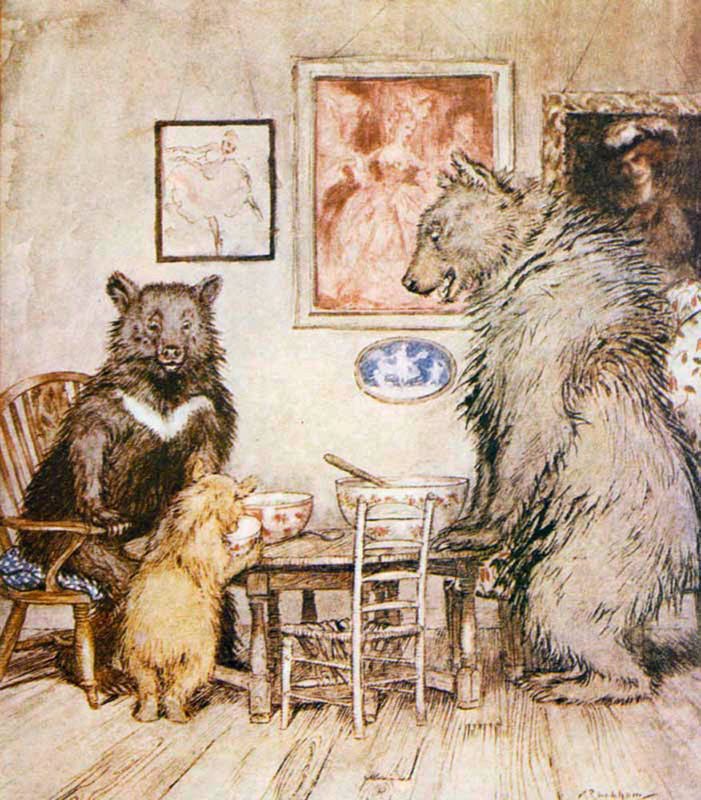
We talk a great deal about patient and service user centred care in health services, but what we deliver and receive is not always that. The `Goldilocks Principle’, which applies in many areas from climate study to economics, states that something must fall between certain margins, rather than reaching extremes. The earth is a Goldilocks planet as it falls within a planet’s habitable zone. So what does have this to do with health care? Well, in mental health care the situation is often the reverse of the Goldilocks story. Instead of one person and three bowls of porridge, which may or may not be right for them, we have the reverse. Three people and one bowl of porridge. A service often defined by what it will not offer rather than how it might help, with no other options available for the people who do not fit these criteria. The decision not to help the other two people is often accompanied by the statement ‘we are not commissioned to provide X,Y……’ This is not a new phenomenon. It existed beyond the current cuts, but they have made it worse.

Now, there may be so little on offer that even access to that single bowl of porridge is limited or absent. Or a person may be told that their health will have to deteriorate further before the service will accept them. ‘Go away and come back when you are just right, even though we all know that is going to make it even harder to provide the help you need in the long run.’ And I know this is not a new phenomenon in the inner city populations where the lack of opportunity for early, timely intervention means a person may only be offered help, even though their GP has tried and failed to get them care for some weeks, at the point beyond which they no longer believe that they need it. So they then receive it under the Mental Health Act.

But when we do get the opportunity to re-build services- and its difficult to have seen thirty years of changes without hoping that something will change again at some point for the better, we need to try and ensure that what is provided is not simply about matching the person to what is on offer. This is what results in the multiple assessments with different teams which service users find so difficult, demeaning and pointless. This doesn’t have to mean allowing a person to choose exactly what they want, like Goldilocks did. We know that has problems not only of cost-effectiveness but the risk of causing harm. It is about having a dialogue in which all views are considered.

On a personal level -It is about thinking- ‘How can I help this person to get what they need’? If I cannot help them- who can and how can I facilitate them to arrive there. If it isn’t available what can I do?

At a service level it is considering how, if the person doesn’t really require specialist care, how can we support their GP, and/or the third sector to provide that care- and if we are ill equipped to do that, how can we find out.

It is also about ensuring we are not ‘cherry picking’ those people who are easier to help to improve our outcomes but trying to meet the needs of the people we were commissioned to help.

At an organisational level it is not only about developing specialist skilled teams to deliver help for more service users with complex problems, but making sure these teams in turn provide the right support to generalists. This will help to ensure service users who need help for which services have not been clearly commissioned and ‘fall between the cracks’ can be offered appropriate care.

It also means fostering a culture of dialogue, trust, respect and cooperation to ensure that the worker who makes initial contact with a service user is not told that their assessment is of no value because they do not belong to a particular profession or work in a certain team.

At a commissioning level, it is about asking the question ‘what are we not doing?’ ‘what isn’t there that should be?’ and ‘what isn’t working?’ for people with mental health problems- who will be able to tell you very clearly. It may not be possible to provide it, but we still need to talk about it and work out what can be done rather than what cannot.

At the moment it may seem hard to achieve any of these things- but these are not new problems and they will not all be solved by more investment. A person should never be thought of as ‘just right’ for a service. The care that they are offered should be, like Goldilocks’s porridge, ‘just right’ for them. Only unlike in the fairy tale, we should also try and ensure that doesn’t come at the expense of others- the three bears.

The problem with resilience

‘Resilience’ is one of those words its hard to avoid at the moment. No one seems to be quite sure what it means, but one suggestion has been that it refers to a person’s ability to maintain or regain a state of mental health in the face of significant adversity or death; in which case it is a quality in which I am undoubtedly lacking. I am very sensitive to the ups and downs of life especially loss. I get anxious and depressed; I’ve had periods off work. I may have successfully survived a lifetime of work as a psychiatrist and an academic, but I’ve also had to use mental health services to keep afloat. Life in the NHS is challenging and I’ve not got through my career without some serious wounds to show for it.

Before the word ‘resilience’ achieved common usage, and its current prominent space on the buzz word bingo board of healthcare, I understood it broadly to be inversely related to the degree of vulnerability conferred by a combination of genetic heritage (see Goldberg & Goodyer)- which influences our temperament, personality and susceptibility to some types of mental health problems, early life experiences and social learning in childhood. If a group of people are exposed to the same degree and type of stresses most will cope, they will demonstrate resilience, but a minority will not. We all have differing degrees of it. Some will develop common mental health problems like depression and anxiety in response to traumatic events, and others less common ones, such as psychosis, but many others will get through relatively unscathed.

The General Medical Council (GMC) with whom I am still registered, although I no longer practice psychiatry, has recently decided that the current generation of doctors is less resilient than those in the past and students need to undergo resilience training in order to be tough enough for the job. I have a number of problems with this view:

  • As an excellent review of the topic by Balme and her colleagues in BMJ Careers recently stated ‘there are no consistent definitions, no standardized, valid or reliable measurements; and no robust studies into what resilience is, what the predictors of resilience are, and whether resilience is related to better patient care.’
  • So if you intend to screen for it please check out this first. If I were starting medical school now (and I still dream I haven’t yet passed my finals) I would want to know, as will others, exactly what it is I am lacking in (given that I tend to get depressed I will likely feel guilty and even more insecure) and whether being without it is going to be of harm to anyone but myself. We don’t screen out people with diabetes from being health professionals. Why should we even consider doing that with people who might be vulnerable to depression.
  • Because in an increasingly hostile working environment the reality is health care professionals are going to experience more mental health problems. They are human beings like the rest of us, although they are not encouraged to admit they need help, for fear of appearing weak. The culture is tough enough already.
  • Please don’t dress up this quality called ‘resilience’ as something for which they must take full responsibility (I have a problem because I lack resilience) rather than the NHS (I’m not very well because I do not work in a supportive and caring workplace). As Balme et al. point out resilience is always contextual – it’s a complex interplay between the person and their environment.
  • Please don’t assume that attending a few short workshops would increase my resilience much either. The evidence for the effectiveness of resilience training is patchy at best, and though there is a suggestion of some positive outcomes, these are mainly from self-report in studies lacking rigorous methodology. It might be more effective to address these problems I have in relating to the world and coping with stress much earlier in life before any thought of being a health professional is even a twinkle on the horizon.
  • What I would need is help to identify coping strategies like problem-solving. There is evidence that this works for people with depression, and those who self-harm in response to life stresses. I wish someone had taught this to me in childhood, it might have helped me earlier. I would need things I can rehearse to put into action at times when life gets tough. But I’m also going to need to be encouraged not feel too ashamed to ask for support and how to identify I might need it earlier rather than later, as so many health professionals who have consulted me have been unable to do. Fast and confidential access to help and support too, not having no choice but to consult a service that I work in, which happens to so many people now in mental health services in the UK.
  • And finally, please don’t assume that just because I’m not as tough as the GMC would perhaps like me to be, I would not be a good doctor. Since my book was published a month ago, I’ve heard from medical students who have feared for their future because they have experienced mental health problems at medical school, worried that they will not be strong enough to cope. Yet these very young people, who have experienced what its like to be a patient can bring a very special dimension to their work. Like me, they know what its like to be on the other side.

We all differ in our ability to deal with traumatic events and the stress of work, yet within that spectrum of abilities lies the potential for us to learn to listen, support and care for each other: as friends, colleagues, some managers and a insightful and proactive occupational health service did for me; supporting me through my sometimes difficult career.

My memoir about experiencing depression during my career in psychiatry is out now: The Other Side of Silence: A Psychiatrist’s Memoir of Depression ‘published by Summersdale.

I’m a psychiatrist and I live with depression

I am a psychiatrist, and I’ve had depression on and off for most of my adult life. I’m now retired from practice. I’ve written about depression in a book, and people are saying how brave I am to ‘come out’ and say it. Yet if I had written about having arthritis, or some other physical condition, no one would have described my ‘coming out’ in such terms. Why should it be such a surprise that a a person who worked as a consultant psychiatrist for almost 25 years, and has spent her life researching and teaching the subject, should have first hand experience of it herself? Probably because, in the health professions, the last thing we usually want anyone to know, particularly our colleagues, is that we too are vulnerable to exactly the same stresses and problems as our patients. We like to see ourselves as strong; indeed maintaining our position on the career ladder often seems to depend on that. There is stigma related to having depression, even though mental health workers profess that they are always ‘fighting’ it. Depression is something that others suffer from, not us.

It is exactly this ‘us’ and ‘them’ attitude that I set out to challenge in the book. It started off as a memoir of my own fairly extensive treatments for depression, both with medication and psychotherapy. However as I began to write it, the close parallels between my own experiences, and those of the people I had tried to help throughout my professional life just became more and more obvious to me. There certainly wasn’t a clear boundary between my own experiences and those of my former patients. We all had complex lives- experienced loss, grieved for those who have gone from our lives, felt lonely, wanted to be loved, and sometimes felt compelled to self medicate with alcohol to ease our distress. Some of us made the same mistakes in our relationships over and over again. Many of us wanted or even tried to end our lives. The stories I tell in the book are taken from my own work as a psychiatrist but have been extensively altered and merged to create people who are true to life, but not ‘real’ case histories. However my own story is very real indeed. It wouldn’t have been appropriate to have been so open when I was still practising- when people came to see me the focus was rightly on their problems not mine. When I was unwell I withdrew from seeing patients until I was recovered. I’ve never tried to hide my illness from colleagues. I’ve just never been quite so public about it.

So far, I’ve had some interesting reactions. As I mentioned above, I’ve been described as brave by some, but others are still clearly unsure what to say to me. When I’ve talked in the past about treatment, in particular the fact that I’ve taken antidepressants now for the last 20 years, I’ve certainly picked up from some of my colleagues that ‘this isn’t the sort of thing one talks about’. Why not? Isn’t this exactly what mental health professionals talk about every day? How can we challenge stigma in society if we cannot face up to our own tendency to stigmatise both our colleagues and, even now, our patients?

I have listened to junior members of staff describe people with depression who are not actively suicidal, or psychotic as the ‘worried well’. I’ve been told that depression is not a ‘severe’ mental illness warranting more investment of psychiatric and mental health nursing resources. I’ve read articles written by my colleagues, which describe it as ‘medicalising misery’. Only people who have never experienced the pain, despair and hopelessness could talk about depression in such terms. I’ve spent my life challenging such attitudes. I made it as far as being a Professor of Psychiatry, despite repeated episodes of depression. I know I’ve had better treatment than many people ever receive and my aim has always been to improve access to, and quality of care for depression. I’ve managed to live with depression and found ways of coping with it- though that has been far from easy. That is also what my book is about. I refuse to be ashamed of it.

Nobody should be.

My book, ‘The Other Side of Silence: A Psychiatrist’s Memoir of Depression’ is published this week by Summersdale.

Take up thy bed and Work

The first time I heard the term ‘worklessness’ I remember a shiver running down my spine- it was the way in which it was being used to describe an apparent ‘human condition’ in which there was a sense of this being a lifestyle choice. We were told that it meant not simply being ‘unemployed’ but not actively seeking and/or being available for work; but it was not applied to the idle rich or others members of society, myself now included, who have concluded that work is not particularly good for their health but do not need to claim benefits (although my University Pension, funded partly through the state is still a benefit). At a time when the drive towards viewing employment as the desired outcome for people with mental illness was beginning to take precedence over other more used-centred outcomes it was a prescient warning of changes about which we are now only too aware- the move to treat people with physical but also particularly mental health problems as essentially capable of taking up their own beds and walking to the Job Centre, regardless of their condition.

I’m very suspicious of terms that are used by governments to describe those who do not comply with what is expected of them in our societies. As a psychiatrist I have been accused of being an agent of the state on more than one occasion, but the role played by British psychiatrists is a long way from that which was played by Nazi psychiatrists in the Third Reich who colluded in ‘euthanasia’ or by the psychiatrists in the Soviet Union who were willing to label political dissidents with the diagnosis of ‘sluggish schizophrenia’- which resulted in the expulsion of their organization from the World Psychiatric Association. The use of diagnoses to both label and treat dissident citizens continues to this day- for example in the controversial treatment in China of the practitioners of the Falun Gong meditation movement who are deemed to be psychotic and undergo ‘treatment’. We have also recently seen the notorious collusion between psychologists in the USA and torture of detainees at Guantanamo Bay. Professionals who were willing to behave unethically in the service of the state for payment.

You may say these are extreme examples, but I think we should be concerned when political and social issues are described in terms which a) infer that the problem lies within the individual rather than society b) dresses this up in pseudo-psychological terminology and c) infers that there is a treatment, psychological and/or physical for this.

The report this week from Birkbeck College highlighted the way in which being unemployed is increasingly described in policy documents as a problem of the individual, who lacks motivation or the ‘right attitude’ to obtain a job. This is deemed to be ‘treatable’, although for a professional to engage in such enforced treatment, without which a person will lose his or her benefits has been described as ‘not only unethical but probably illegal’.

It’s difficult to see how a person with severe mental illness would be capable of acquiring the ‘right attitude’ when they are still struggling with the everyday tasks of life. Yet there are people in our government who clearly think this is possible, which is not only senseless but very, very scary. It reminds me of the attitude of some of the people I worked with over the years, who truly seemed to believe that mental illness is itself a ‘lifestyle choice’, which the person suffering not only had power over, but could choose to change if only they wanted to do so. An attitude which not only lacks basic empathy, but has a seductive simplicity which has emerged recently in the imperative to declare oneself ‘well’ and ‘recovered’, and has been around for many years in some so-called ‘self-help books which tell you that you can ‘climb out of your prison’ without any help in unlocking the door.

It’s a worrying trend in a society, which seems not only to care less than ever for those who have disabilities but to declare that a person has, within him or herself, the power to overcome their problems, if they choose to, and obtain a job with or without the aid of some motivational therapy. And what happens if they don’t take up their beds and work? The Rt Honourable Ian Duncan Smith would seem to believe they must work, because it is in itself a form of treatment. For as it famously said on the gates of Auschwitz, Arbeit macht frei ‘Work Sets You Free.’

Ambivalence

I wish they had taught me about ambivalence at medical school. It would have made my life immeasurably easier if I had understood it earlier. Instead I was quite a long way into my career before I really began to see how important it was both to my patients, and to me personally.

I was taught what to do for each clinical problem with the expectation that a person would be ready, and willing, to accept my advice. If he or she wasn’t, they were something of a nuisance, indecisive, unable to recognise what was good for them. ‘Oh she’s ambivalent about it,’ I would be told if a person was shilly-shallying around. Ambivalence as a concept was confused with indecision. But it isn’t. It’s something much more than that. It’s about wanting to have something at the same time as not having it. Wanting to be thin, but to eat a large slab of chocolate every day.  Wanting both the benefits of sobriety and inebriation. Even wanting to be both dead, and alive at the same time. I know from talking to people who have tried to kill themselves and failed, that they sometimes wanted to be both still here among the living, yet dead and out of their suffering too. Some of them changed their minds as soon as they had acted to end their lives and came to seek help. Ambivalence underpins so many of the problems people have brought to me, and my own difficulties too. I was an ambivalent medical student, and for many years an ambivalent doctor. I wanted both to belong to a profession and all the benefits that come with it, and not to belong because of the cost to me personally and emotionally.

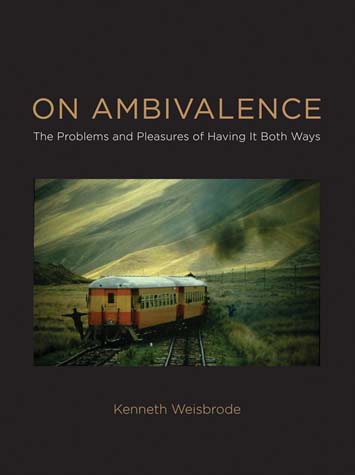
If you haven’t read Kenneth Weisbrode’s recent short book on the topic, entitled ‘On Ambivalence’ I can highly recommend it.

‘Ambivalence lies at the core of who we are. It is something more subtle, and more devastating than human frailty. Weaknesses can be remedied. Ambivalence comes, rather from too much ambition. Desire begets dissatisfaction, and vice versa. Optimization becomes a fetish. Wanting the ‘best’ means that we must have both or all and are reluctant to give up any option lest we pull up the roots of our desire. That is why ambivalence is so hard to confront, understand. Or master. And why it can be so disastrous.  Most of us know this. Yet we continue to deny it.’ (p2)


9780262017312

The person who is ambivalent about their eating, or drinking, or lifestyle ( add ad infinitum) is not only unable to choose the from the options they have in front of them, but refuses somehow to admit that there is even a choice to be made at all. It’s both a painful yet oddly pleasurable place to be. We cannot have it all, but still somehow  want to believe that we can. We don’t have to decide what to do, to change our lives, because there isn’t a decision to be made. Yet we suffer because we struggle to live what is an impossible existence, only we don’t admit how impossible it really is.

If I had understood this when I was younger, I might have been able to recognise how much suffering is rooted in ambivalence. I began to understand it when I worked in addictions, and later with people who had eating disorders.  I’ve talked to many people who have felt judged rather than helped by those they have consulted; who have been labelled as weak because they are unable to ‘choose to change their behaviour’, rather than essentially ambivalent about life and what they wanted from it. I was influenced by Bill Miller, who first described Motivational Interviewing in the 1980s. I remember reading about how the clients of the clinic where he worked were routinely asked if they were willing to accept the label of alcoholism and accept treatment. That was exactly what I witnessed as a junior doctor:

Consultant: ‘So do you think you are an alcoholic?’

Patient : ..’No… I don’t’

Consultant: ‘Are you prepared to attend AA?’

Patient: ‘Why would I want to do that.?’

Consultant: ‘Well, if you aren’t prepared to admit that, you aren’t motivated to accept help. Come back again when you are.’

We may say it doesn’t happen quite like now, but it does. A person who doesn’t see the need to make a decision about taking up therapy and attends only intermittently is rapidly discharged for being unmotivated.  Instead of trying to understand their ambivalence and empathising with the problems they are experiencing which make it impossible for them to contemplate a decisive response to their problems, we treat them as wasting our time. When he first described Motivational Interviewing, Miller emphasized the responsibility of the therapist in helping the client to acknowledge and explore their ambivalence. When the person is ‘unmotivated’ we are discharged, as therapists, from our responsibilities.

I was personally fortunate. I had a therapist who was prepared to engage me in acknowledging that I both wanted to succeed and to fail in my career, and ultimately to both to live and to die. I’m still ambivalent, but I don’t want to talk about that now. There isn’t time. My cat is currently driving me crazy, wanting to be on both sides of the back door at once. Now that’s ambivalence.


Relapse and rewind

It’s fortunate that my other half and I share the same acerbic sense of humour.

‘When you aren’t well you start to talk all the time, and about 80% of it is rubbish, ’ he told me, ‘and you’re doing that now.’

It was at this point that I was finally able to admit that my mood, up and down since last autumn, had taken a major nosedive since New Year. The problem is that when I’m going down, I don’t generally recognise it until quite late, and I’m not always willing to listen to advice to ‘slow down’. This time, along with the usual symptoms of depression I’m so familiar with, I experienced the worst constant physical symptoms of anxiety I have ever felt; resulting in panic when I lost my bearing in Manchester’s Arndale Centre and I couldn’t immediately find the way out. This time, nothing would relieve the anxiety apart from alcohol. What my other half was referring to was the emotional and verbal expression of my anxiety. The constant seeking of reassurance and ruminating out loud about life problems, in a way that probably drives those around me crazy too.

However given my history of recurrent depression, it’s no surprise really that I’ve had another relapse. I had hoped that since retirement I somehow wouldn’t experience the same stresses I used to. And I’d been pretty well for a couple of years at least. But I was wrong. Losing my animal companion and several major family and health stresses I won’t go into here were enough to tip the balance again. It was back.

It’s the beginning of March now. For a while I panicked when I simply switched on the desktop computer. Now I can write again. I burst into tears in the middle of my last blog but I forced myself to get it finished. I have this feeling that if I can’t write then somehow I couldn’t live. Maybe it isn’t right, but I kind of believe that. For the last couple of weeks I’ve gradually been feeling better and the constant anxiety is subsiding to its usual level. I don’t feel like something awful is going to happen imminently and I’ve stopped thinking about death (I was having passive thoughts that life wasn’t worth living again). I heard birdsong the other day as I walked up the garden path and I realised I hadn’t taken any notice of the birds in the garden or their choruses or the bulbs shooting up for…well I’m not sure; because depression creeps up insidiously.

Why is my mood lifting?

Perhaps it just would do anyway. Spring is on the way. I’m bound to feel better…except for me it doesn’t happen that way. Even after the events that precipitate it are all past, my downturn goes on and on, thought not as low or for as long as when I was off medication altogether.

I can only make sense of it as a combination of the following and as you might expect from me, it’s a biopsychsocial combination of remedies:

  • I found a way to talk about my worries and fears about the future with my partner. It wasn’t easy but we managed to resolve some practical things I was concerned about.
  • I was able to utilise some of the practical coping skills for managing my rumination I learned from cognitive therapy and I started to use the guided mindfulness CD I had always been ‘too busy’ to listen to. I tried to stop myself from fighting against my mood, and simply accept that I was feeling terrible: bleak sad and empty. Paradoxically once I do that, I’ve learned, it is always a little easier to move forwards.
  • I forced myself to keep going out even though I wanted to shut myself in the house and never come out again. I’ve met many people in my career who have done just that. I had to ‘feel the fear and do it anyway.’
  • I was able, too with support, to put aside some of the impossible self-imposed deadlines I place on myself. I have to remember that my ‘Rules for Living’ are nigh impossible to live up to. Instead I set myself somewhat simpler goals like going out for a walk, and doing some washing. Small achievements which then helped me to move forwards.
  • I agreed to a change of medication. I wasn’t happy about it. I’m now on multiple tablets for my various conditions, but at the point I was at, it was worth a try. I cannot bear the thought of being sedated by medication and fully understood all my patients who refused to take medication that numbed their thinking. My mind has to be clear but when I’m very low I can’t frame the words and sentences either. I try to get to somewhere in the middle. I just cannot do it without pharmaceutical aid.
  • I sought and accepted the support of friends, real life and on line.

My other half did his part by being there for me, as he always is, even if I am talking rubbish, and arriving home one evening with a present of Lindt chocolate bunnies. Chocolate has antidepressant properties too, I tell myself as I bite the head off one of them. He tells me he knows I am getting better because I’ve started to talk about it all in the past again now. I think I’m getting better too, but I wont really know until I can look back and recognise how much I’ve improved.

That’s the nature of the beast.

Work

I’m going to write about a topic I know nothing about, at least not from the viewpoint of an expert in the published research, but as that doesn’t generally stop many other people I don’t see why it should inhibit me. I have after all worked for most of my life so I’ve plenty of lived experience; and I’ve treated many people who have been struggling to get back into work, or suffering ill-health as a consequence of the toxic environment in which they work. Its eighteen months now since I retired from the University, and a year since I gave up my clinical work and drastically reduced my workload. I’ve been told that work is something that is good for our mental health, so I can only tell you that I feel better physically and mentally overall than I have for several years. People tell me I look younger. I regularly apologise for having thrown in the towel; but it has been something of a fight- to get to the point where I could be done with the job before it did for me.

Please don’t get me wrong, I always enjoyed the interactions with patients and service users, and if I miss anything, it’s the feeling of making a difference in a person’s life; connecting with them and helping them to achieve some change. However I do know that if I had stayed in the NHS rather than being able to move into an academic post quite early in my career I would have been forced into taking even earlier retirement many years ago. I didn’t find the health service to be a sympathetic employer, either in the face of my own episodic periods of depression, which sometimes required time off work, or that of my patients who worked in the system- doctors, nurses and allied professionals. Not only was the macho style of management one of the factors that made it difficult for people to return to work with some degree of flexibility, it was sometimes a key factor in a person becoming depressed or severely anxious in the first place. I personally experienced bullying on more than one occasion, which contributed to several months off work. I know I’m less resilient than I sometimes appear to be.

My patients in the private sector had very mixed experiences. I remember one man who was criticised at work for needing to take breaks to ensure he ate at regular times- he had type 1 diabetes. When he got depressed they sacked him. Another patient with longer-term mental health problems was a poster-girl for a supported back to work scheme. The supermarket who took her on were very keen to be involved, but after a few months, after the support had been withdrawn and a ‘success story’ publicised, expected her to ‘work like everyone else’. Her voices returned as she became increasingly stressed and paranoid. She lost the job. In contrast, a person who worked for a large multinational company was allowed to return to work gradually over an extended period of time, and the occupational health department regularly consulted with all of us to ensure we were all agreed with the plan. They viewed my patient as a valued employee with expertise and experience they did not want to lose. I wish I could say that the NHS generally responded in a similar way. But it didn’t.

So where does this take me? Well, now the end goal of Recovery seems to be to get into paid work. Indeed attendance at Recovery Colleges has been sanctioned in order to apparently assist people with mental health problems to do so. Aside from the fact that, if Recovery were so straightforward all we needed to do was attend a course in it (and I don’t believe it is for many people), I’m very concerned about what we are sending many people back into. Not everyone is an academic who can work flexibly and take time off without risking their employment, I know that. However many more people do jobs from which they gain little sense of self-worth or value beyond simply earning a living. I’m a working-class girl. My parents both clocked in at 7.30 every morning and neither of them would have described their jobs as particularly fulfilling. What they did get was company, an opportunity to use some of their skills at least and a pay-packet. As a student I worked on supermarket checkouts, served in a bar and waited on tables for employers who varied considerably in their attitudes to ill-health. I wouldn’t have coped with those jobs at all if I had been depressed- nor would I have been in any great hurry to return. I personally know people who would never be able to cope with the stresses of regular employment again, yet they are repeatedly reassessed with the constant threat of losing their benefits. This just acts as a further stressor- we all know its cruel and has led to suicide.

So I have doubts about paid employment being the right goal for everyone. Surely it isn’t just about ‘work’ but how we spend our day? Yes, I know we have to bring in an income, but I’ve personally met very few people who really didn’t want to work. What they wanted was a supportive plan to help them move towards employment. A plan which might also involve volunteering and further study or training to gradually help them rediscover a sense of who they were, where they were going, and what goals they could realistically achieve. Not a simple ‘course’ but a journey, which might end in a regular job, but might not if that wasn’t right or possible. A much more humane solution than we are presented with now.

So don’t tell me that work is always good for me, because I know it isn’t. If it was, I wouldn’t be sitting here, feeling quite relaxed, writing this blog. I’d be on call. Or writing another grant proposal.

Whew!

Reassessing ‘assessment’

One of the side effects of having more time than I used to is that I begin to brood over the meaning of the words I once used without a second thought. It particularly happens on long walks without the running commentary of the radio. In a recent bIog I talked about ‘recovery’. Now I’ve started to think about a word I would never have given much more than a second thought too as a working psychiatrist- ‘assessment’.

The problem with many words in mental health is that they can begin to assume alternate meanings. Use of the ‘active’ and ‘passive’ tense can be important too in conveying a sense of who has the power. There is something very passive about being ‘counseled’ and the act of counseling has itself taken on various meanings from receiving counseling as ‘therapy’, wise counsel as ‘advice’ and being ‘counseled’ as a form of disciplinary act.

I don’t remember as a psychiatric trainee being specifically trained to carry out a ‘psychiatric assessment’. I was taught how to master a psychiatric interview, which considered of ‘taking the history’ (which can sound and feel rather like a rather one-sided action on the part of the doctor, removing something from the patient) and carrying out a mental state examination. I soon learned that for the interview to be effective I had to spend as long actively engaging the patient in thinking I was a person with whom they would be willing to share their experiences, as asking all the questions that psychiatrists are (in)famous for. Later on, I began to research how both GPs and psychiatrists approach the ‘consultation’ as the meeting between professional and patient is commonly known in primary care. Indeed actively ‘consulting’ the doctor conveys more power to the patient than being interviewed or assessed by them. I spent hours, days and weeks observing interactions for my research. I remember the patient who, when asked by the psychiatrist whether he knew if he had had a traumatic birth quite reasonably replied ‘well the Battle of Britain was on at the time doctor’.

Somewhere along the line, the psychiatric interview or consultation became the ‘assessment’ with a list of questions to ask the patient. Changes in the examination system of doctors reinforced this, with the shorter structured OSCEs (Observed Structured Clinical Examinations) with role-played patients, that are probably fairer to the candidates, but reward marks for asking the ‘right questions’ when ‘assessing depression’, ‘suicide risk’ or ‘hallucinations’. I’m as guilty of this as anyone. I teach suicide risk assessment skills. The blurb for my latest book on depression mentions assessment too.

So what’s the problem I have with assessment? Well, when a person assesses another they are implicitly making a judgment about their suitability for something or their ability to achieve particular goals. As a patient I have been assessed for therapy. That’s fair enough perhaps when there are indications as to whether or not a person might benefit rom that intervention. Psychologists regularly carry out assessments perfectly reasonably as not everyone will benefit from their specialist expertise. But how often is this mutual assessment? Are you a person I could talk to?

And so often now I see mental health assessment as a tool to exclude rather than seek to help a person find the help they might benefit from. Its more ‘this person isn’t psychotic or actively suicidal so there is nothing we can offer them’ rather than, ‘this person is consulting me. They are extremely distressed. They don’t understand what is happening to them. How can I help them?’ In our increasingly fragmented health care system everyone is carrying out assessment according to their particular ‘criteria’ while the service user understandably feels they have been ‘assessed to death- when is someone going to help me?

Can we move away, in mental health care, from this culture of assessment back to one of a consultation, which David Tuckett and his colleagues first described many years ago as the ‘Meeting Between Experts’?

I am the expert in what I am experiencing. You are the expert in what might be effective. In consulting you and providing you with all this very sensitive information about my inner life, I’m an trusting that you as a professional will be able not only to say if you will be able to help me personally, but also that you will do your best to help me access what I need.

I really need your assistance now to navigate this increasingly hostile system of care. I am asking for your help.

Strategies for Living

In the last few weeks, while I’ve been largely alone in Orkney, I’ve been aware of having to cope with my mood and thoughts from day to day and reading about how people with mental health problems cope on Twitter and support each other.

I’ve also been reminded of something I read many years ago.

At the turn of the millennium, the Mental Health Foundation carried out some service user research and produced a report called ‘Strategies for Living.’ Over 400 people had completed Knowing our own Minds – a user-led survey of alternative and complementary treatments and therapies in mental health and Strategies for Living reported the findings from interviewing 71 people with experience of mental health problems in depth. This was a really positive piece of work, which highlighted the particular activities and experiences which people with mental health problems found helpful in coping with their everyday lives: from on-going survival strategies, such as the need for financial security to crisis strategies such as making contact with friends or professionals, ways of controlling symptoms such as taking medication, having therapy, taking exercise or using a Walkman (yes it is a few years old) to distract from hearing voices, to ‘healing strategies’ through religion and spiritual beliefs to complementary therapies.

Relationships with others were key. Several common themes could be identified:

• Acceptance
• Shared experience… shared identity
• Emotional support… ‘being there’
• A reason for living
• Finding meaning… and purpose
• Peace of mind… and relaxation
• Taking control… having choices
• Security… and safety
• Pleasure

Mental health services were largely absent from the accounts that people offered although some individual professionals clearly offered a great deal of valued support

Why am I reminded of this now?

How we cope from day to day is a very personal phenomenon. There are of course some common strategies that people find helpful and these were the ones reported in Strategies for Living.

However there are also some other ways of coping that were not reported in here. The strategies that people do not always want to admit to. I know some of these intimately. Despite growing up in a household of heavy smokers, I’ve never tried a cigarette, but I watched my father consume 40 a day as his own personal way of keeping life at bay. Excessive drinking is something I’ve always suspected I could sink into and I’ve consciously tried to cut down in recent months. It isn’t always easy. I spent some of my career working in alcohol services and I know how hard it can be to withdraw from alcohol and other substances. But there are other ways too that we cope with how we feel: eating, or not, over exercising, self-harm and self-injury , spending every night out on the town or shutting ourselves away completely from the world to the point that we feel completely isolated and ultimately brooding about strategies for dying rather than living. Suicidal thoughts are themselves a coping strategy. Knowing there is a way out when it all gets just too much.

My concern with much of the self-help literature, some of which sits on my own bookshelf unopened, is that it makes various assumptions:

  • We actually want to change, and stop using the sometimes self-destructive ways of coping we find helpful in day to day survival.
  • We can find the resources to be able to do that.
  • We have the material resources and social capital to be able to adopt some of the positive strategies people suggest to us, such as time, money and a place to live to start off with.

Its difficult to adopt new ways of coping until you have acknowledged what you will lose in giving up the other strategies, the ones health professionals would prefer you to unquestionably ditch. Such positive ways of coping cannot be prescribed (such as in the advice to ‘go home and have a warm bath and a cup of tea’ that currently seems beloved of some crisis support teams- actually I didn’t  see these even mentioned in Strategies for Living either). Health professionals need to start from where we are at now. What have we found helpful in the past? What do we do now to cope? What is difficult about changing ? And avoid being judgmental if they want us to be honest.

The problem with feeling depressed is that it involves rumination. Indeed in some cultures it is considered to be a problem of ‘thinking too much’. We become aware of our thoughts, and struggle to cope with them minute by minute. I certainly have some obsessional features to my thinking, and I’m aware that if the day doesn’t go ‘right’ in some often hard to clarify way, I can feel as though everything has gone ‘very wrong’. I have to mentally restart the day in some way. These thoughts can be painful and repetitive and I seek ways to avoid them. Distraction is probably the most effective way I’ve found and I deeply resent that some psychologists I’ve met seek to denigrate such an effective coping strategy as a ‘safety behaviour’ in CBT speak. Hell- give me a break- it’s what I find helpful!

There are many different strategies for living and quite a few for dying.
Help me to find the ones that fit me best to help me survive.
Don’t advise, lecture or proselytize.

Solitude

Winter sunshine, Orkney

I’m back in Orkney after six weeks away. I’ve been busy, teaching and working, as far afield as Bangladesh. I’ve also found it impossible to sit down and write even when I’ve not been occupied.

One of the things I’ve had to learn as an adult is how ‘be’ with myself. When I was a child, I was often very solitary. I enjoyed reading and spending time alone. I’m one of those introverted people who needs to recover from a stressful day, with people who never seem to stop talking, by being on my own; rather than, as some people relax, by heading out to a noisy party. Extended time interacting with others without a break is for me a peculiar form of torture, although I strangely never experienced this much in the company of my patients and closest colleagues.

Unfortunately the world is full of extroverts who cannot understand the needs of someone like me. As Anneli Rufus commented in her book Party of One: The Loner’s Manifesto, its not easy to be a loner in a world obsessed with ‘team-building’; in a society where the very word ‘loner’ has connotations of being odd, crazy, secretive and strange.
However, being alone brings it’s own challenges. Living inside your own head is all very well if it’s fairly pleasant in there. But if it’s rather a mess and full of the rubbish left over from past relationships and conflicts, it’s not a peaceful place to be. Its tempting to spend more time in the company of others, not necessarily because you want to be with them, but in order to drown out your troublesome inner dialogue.

It is true that spending time on your own can be a way of escaping from dealing with things you have to tackle in the ‘real world’, but its really important not to assume that is always the case. I’ve seen too many people forced out of their protective shell by extroverts who think they should ‘socialise’ more. It happens in mental health because of the belief that those who are on their own mustn’t feel lonely. Some people need time alone to feel safe.

Looking back over my adult life, I’ve spent hours, days and weeks in the company of others trying to avoid feelings of loneliness and unworthiness, while at the same time resenting the time I’ve wasted not doing all the things I wanted to be able to spend time on. Something changed for me in adolescence. I started to hear the self-critical voices in my head (and my mother too- a born extrovert) telling me to ‘get out and mix more’. Its also hard to meet a partner too if you never leave the house, though social media is changing the way we view dating and our other interactions with the world to a degree that mental health workers haven’t quite caught up with yet. The on-line world can seem more real to you than the jungle out there…and can be just as threatening.

I find it difficult to be creative in the company of others, or when there is too much ‘going on’ in my life. Virginia Wolff was so right about needing a Room of Your Own. I’m on an island. As Anthony Storr wrote in his now classic text Solitude we need time and space to discover what we are capable of achieving. Being alone is a necessary step to learning about your self. The difficulty of course is that you may not like what you find. There may be a great deal of ‘stuff’ reverberating around your head. Being alone forces you to begin to sort out the packed store cupboards of your mind and throw out the junk. When I am on my own with my thoughts I have to find ways of dealing with them, e.g.by going out for a walk or having a sleep. Not by seeking out others who will then make more demands on ‘me’. It sounds a little selfish as I write about it. But its self-care.

An increasing number of people live alone, including many who are depressed. Loneliness is viewed as a growing problem in our society, yet there remains a real stigma to being on your own, which I suspect prevents some people from embracing their solitude and learning to live with it as they fear becoming even more lonely. I can see now that I felt lonelier in a failing marriage, making meaningless conversation at corporate parties, than I did when I really began to come to terms with being on my own on a prolonged stay in a remote Scottish cottage.

I am not completely alone now. I have a husband to whom I speak to every day, but from whom I spend quite long periods away. He is a person who needs his own space too. Each of us needs to find, what is for us, the right balance of intimacy of aloneness to be able to function.

There now….I’ve started writing this blog again.