
Antidepressants are a feminist issue

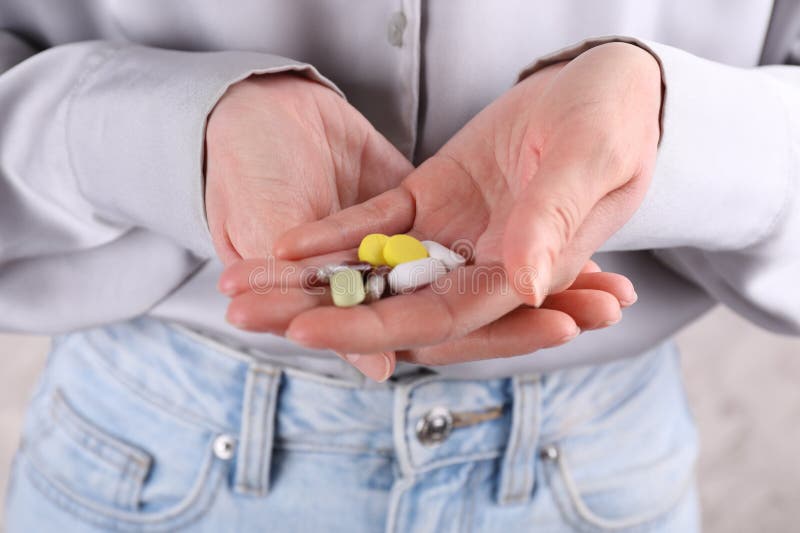
It’s 35 years now since I first took antidepressants, and I’ve been on them continuously for 31, the last 25 years or so on an SNRI (Serotonin and Noradrenaline Reuptake Inhibitor). So, it can be more than a little disturbing to reflect that just like my mother (who took Ativan and Valium long-term) I’ve ended up on psychotropic medication for much of my life. Particularly when I read an article Are antidepressants a feminist issue? published 3 years ago by Halima Jibril in Dazed Magazine, which cites NHS data from 2021/2 that 5.5 million women in England and Wales were prescribed antidepressants compared to 2.8 million men. That’s twice as many. Its woman who are much more likely to be taking them. 

Women are more likely to get diagnosed with depression than men, but there are several reasons for this, many of which I’ve discussed in a previous blog. Jibril also mentions the issue of over-medicalisation of distress, which has been a key theme in feminist critiques of psychiatry over the decades. It’s been suggested that not only are women’s emotions pathologized, but also that medication is used as a tool of control. Both have been true in the past, and in some places they still are. My profession has yet to acknowledge the full extent of its past and continuing poor treatment of women. However, if you are a person who believes there is no such thing as ‘depression’, as many do, it seems logical you are unlikely to believe there is a place in the world for antidepressants. 

I recognise depression to be real and very disabling in its severe forms. I’ve suffered from it much of my life and I’ve met and tried to help many other women, patients and friends, who have too. So, I’ve no doubt we have been the key market for antidepressants, just as we were in the past with benzodiazepines: 

Jan, ‘single and psychoneurotic’ because ‘she had never found a man to match up to her father,’ as the ideal candidate for Valium. [from an advert Archives of General Psychiatry 1970]

My mother didn’t fit this description, but she suffered with chronic anxiety. Something I inherited.

Many of us have benefited from antidepressants. I wouldn’t have been able to engage with some of the psychotherapy I received unless I had recovered sufficiently first by taking the pills. Nice recommends a combination of therapy and medication for severe depression. However, we do know much more now about antidepressants than when I began to use them in the early 90s. We’ve learned about the problems they can cause – particularly difficulties in withdrawing which can be severe for some people and also sexual dysfunction – including PSSD (Post SSRI sexual dysfunction). 

Women respond better to SSRIs than they did to the older Tricyclic Antidepressants (which I took at first), and younger women respond better than postmenopausal women. Hormonal fluctuations affect how our bodies metabolise them.  However, women have also been found to experience more severe sexual side effects from some antidepressants than men do. I’d like to know much more about sex/gender differences in both how we respond to and experience withdrawal from antidepressants, given that they are taken much more commonly by women. 

We still don’t know enough either about the impact on younger women of beginning and continuing on medication for long periods in their lives. Having started pills at 35 after the failure of therapy to prevent a severe relapse, I know how difficult it is for me to answer the question, ‘Who am I really?’ The person I was before I took the medication, whose mood fluctuated sometimes to extremes, or the person I am now, calmer, more level, able to focus (I’ve never experienced emotional blunting although I know some people do) but also not quite the person I was. Is this me or is it the medication? I’ve managed to cut my duloxetine dose in half without too many problems (I am well familiar with brain zaps) but what would happen if I tried to cut further given the length of time that I’ve taken them? I share Awais Aftab’s measured opinion on what we know, and don’t yet know, about withdrawal. We cannot be complacent. 

However neither can we be complacent about how many women are being prescribed antidepressants. It isn’t a decision women take lightly but I know from my own time in practice how antidepressants are prescribed when therapy, if it were available, would be effective. I also know that some, like me, would benefit from medication when therapy and other options, just don’t work. They were far from my first choice in my early life. However, alternative treatments – including any kind of therapy without waiting for months – but particularly, longer-term psychodynamic therapy for women who have experienced early trauma and therapy for depression associated with PTSD related to domestic violence, are all difficult to access quickly if at all in the UK unless you pay. The specific issues facing women who experience depression, either in terms of better access to care other than pills, or politically in the multiple problems in our misogynistic society that make women more likely to get depressed, are not being adequately addressed.

                  Depression is real. As women we need to campaign not only for changes in society to help prevent it, but demand access to more effective and a wider range of treatments for it, when it happens, than simply a prescription. 

My latest book Out of Her Mind: How we are failing women’s mental health and what must change is available now.
Recovery during a war on depression

 There has never been an easy time for people with severe mental illness (yes, I am calling it that) to get the help they need to recover, but at the present time it seems harder than it has at some other times in my life. The terrible impact of austerity on the provision of mental health care, combined with the redefining of ‘recovery’ as being capable of economic activity has discriminated against those who are disabled. The results have led too many people to take their own lives.

I have experienced episodes of depression throughout my adult life but I acknowledge that I am fortunate to have been able to retire from work, and to embark on what David Karp the sociologist describes as defining depression as a condition that one can get past. When I am well, as I have been for the last few months apart from a blip before Christmas (work related), I find it hard to remember just how awful I felt the last time I was severely ill. But what I’ve been working at over the last couple of years is trying to reclaim recovery for what I always originally understood it to be. Not 50% reduction in my scores on the PHQ-9, or my ability to work, but re(dis)covering the life I’ve glimpsed at times but never managed to reclaim- because I’ve learned how depression cruelly deceives you by whispering that there is nothing left in life for you. It’s so much more than unhappiness. It’s a way of being.

The current discourse about ‘depression’ hasn’t helped. I’ve spoken on social media about how there seems at times to be a war on antidepressants, but actually I think it’s more than that. I think it’s a war on what I, and many others experience as depression. There is a real sense of denial of experience- of the phenomenon (it’s really ‘misery’ and ‘unhappiness’); of the cause (it’s all about power, threat and meaning– the body doesn’t come into it- despite the fact that depression is undoubtedly experienced in the mind and the body); and the treatment (antidepressants don’t work- and anyway they aren’t antidepressant- they just numb and sedate you); and actually work is good for your mental health. Any work (no it isn’t).

Therapy has become aligned in some places with employment services and in Five Years Forward, ‘depression’ is subsumed under Improving Access to Psychological therapies only. The fact that it can have psychotic features in this setting is sometimes missed by those not trained to recognise this.

What I have learned is that first and foremost you need someone who may not agree with your view of the world, but believes you when you say this is how it is, to be there to guide you through. You have to be able to trust them. Many people find that difficult because of what they have been through in life, but so many health professionals seem to fail to understand the role they must play in engaging you.

Getting access to the right treatment for you is essential. I don’t think depression is homogenous. In my experience the part played by physical, psychological and social factors in its aetiology can change between episodes and over a lifetime. And treatment needs to be similarly tailored. When I was younger I benefited from dynamic psychotherapy in helping me to make sense of my difficult early life. Later, CBT helped me to cope with every day living. And I needed medication- and still do.

At the moment we are still in the midst of a debate between those who say there is incontrovertible evidence that antidepressants work- and those who still say that it’s mostly a placebo effect. I believe they work- for many people – but not for others. I guess one of the problems is that if you accept that medication works on depression then there must be some physical process at work in the brain- at least for some people some of the time. As I’ve said above- I think there is- but many will never be willing to consider that.

Some people experience problems with antidepressants- they can make you feel worse- I experienced awful agitation on fluoxetine. You can also have major difficulties withdrawing from them but I don’t think we yet know the true extent of this. Anecdotal evidence or internet surveys with their inherent bias, are not enough. But I believe that people experience this, and I don’t think my profession has, in the past, taken it seriously enough.

And we need better treatment for those who do not respond to antidepressants. I’ve no doubt from my own experience that people with adverse childhood experiences are less likely to respond to medication and need access to sufficient good quality therapy. The kind I had access to, longer term one-to-one, is now rarely accessible without payment. Yet I cannot see how recovery can be possible, with brief interventions only, for people who need time to build up trust because of what has happened to them in early relationships.

Beyond treatment you have to be able to rediscover living again. For me, that’s the part of the process that feels like healing. I’m still learning from the therapy I had in the past. I am rebuilding a life and finding meaning in existence again.

I am very lucky to be able to do this. It would be wonderful if those who espouse those simple absolutes about what depression is and what recovery involves might reflect on what it is like when no-one will listen to how awful you feel, and people just tell you what you should be believing and doing (what they fervently believe themselves or is economically expedient)- when that seems impossible and intolerable to you.

This is not mental health care- and if it were all I had received I would not be recovering from depression now.

I don’t want your sympathy

Please don’t be offended, but when I’m not feeling well I don’t want your sympathy.

I know that I get depressed. But when someone is being sympathetic towards me it does feel rather like he or she is really thinking more about what they would feel like if this awful thing happened to them too. People can sometimes be really very kind to me when they are feeling sympathetic, and I appreciate that. I can see they do want me to feel better. But that warm feeling only lasts as long as I don’t do something to upset them- like shout at them or start arguing and tell them to go away. They can lose all sympathy for me then, because they really can’t feel very positive about the new angry version of me- and you need to feel ‘good’ about a person to have that warm glow of sympathy for them.

But when I lash out at others that is me too. That is how I can be when my mood gets low. I am irritable. I can remember a couple of times when I’ve seen pity in the faces of people around me. I’ve made them feel uncomfortable and embarrassed. But I don’t want your pity either thanks. Sometimes that has come with the implicit suggestion that I should be able to control myself better, even though I don’t think I can at the time.

What I want is for you to be curious about my life and who I am. To make a connection with me by trying to imagine exactly what it feels like to be me, in the situation in which I find myself. To be empathic. You don’t have to like me to feel empathy for me- you simply have to try and understand how and why I feel and behave the way that I do. To do that you have to have a conversation with me. When a health professional talks to me as though I am a real person we both experience something more meaningful. We meet as human beings- what Martin Buber called the I-Thou interaction. But the way that mental health services operate now, it sometimes feels impossible for anyone to get to know anyone else very well. You might be constantly being assessed as to your suitability for a service and be shuttled through many places for which you don’t seem to be ‘quite right’. No connection is made because it will only be broken again- the professionals retain their detachment. You become an ‘it’ to be processed in the system rather than a person, and you don’t feel helped either.

Some mental health professionals must, I am sure, think this is a better way of working because it feels safe and organized. But ultimately it is damaging and dehumanizing to everyone, both you and them. Sometimes they say they cannot help because you are not yet severely unwell enough- other times because you are simply too hard for them to cope with. Once again, they offer you their pity but nothing else.

Compassion has become a bit of a buzz word in the last couple of years, but I fear it is at risk of becoming commodified like so many other important qualities of health care. When you have compassion for someone you ‘suffer with’ them and you have a desire to relieve their suffering and help them. Personally I think its hard to have true compassion for someone unless you have time to get to know who they are and what their problems are- to have an ‘I-Thou’ rather than an ‘I-It’ encounter with them. There are few truly altruistic people who are universally good and willing to spend their lives helping everyone, regardless of what they know about them. The philosopher David Hume wrote that as humans we are characterized at best by limited generosity; especially on a Friday afternoon at 4.30.

So I fear unless you can truly make an empathic connection with a person rather than simply feel sympathy for them, the extent of your compassion will be limited. It will disappear as soon as they disappoint you. I’ve seen this happen to so many people with ‘troublesome’ behaviour with whom caring professionals have not made that important attempt to understand a life from a different perspective than their own. I have felt it from colleagues when my own behaviour was no longer within ‘acceptable’ limits for ‘depression’.

I think mental health professionals must take time to reflect on what motivates them to take up their profession. Many seem to want to maintain their ‘professional’ distance rather than get emotionally engaged and I fear this is all so easy to do in a fragmented and overburdened system like the one we now have. I have met many who retain the ‘I-it’ perspective as a cloak of (imagined) superiority. Some seem more driven by a feeling of pity for those of us who are more unfortunate in their lives, or move no further than sympathy- which I have indicated above has serious limitations. They do this rather than risk finding out that patients and service users are human too. For if you do that you have to admit the possibility that their ‘afflictions’ may not be unique to them. You may even be susceptible too- and then you would definitely not be satisfied with mere sympathy would you?

My memoir, ‘The Other Side of Silence: A psychiatrist’s memoir of depression is available in bookshops and on Amazon UK here. USA here.

Going North- the problems of trying to lead a disciplined life.

It is high Summer in Orkney, and I am back again in Scotland once more.

When things are difficult in my life I’ve always headed North. I don’t mean the North of England. That’s pretty much where I come from now. I’ve lived and worked there long enough to be a real ‘Northerner’. When I go South to London I like to broaden my accent a bit for the hell of it. But for most of my life the real North has only existed somewhere in my imagination- a magical place that never seems entirely real until I arrive there- and when I do it isn’t because I’ve reached some point on the map. Its more than that, it’s the sense of peace that infuses first my limbs and then seeps through my body. My heart rate slows down. I can feel the blood pressure in my arteries falling as the valves that constantly drip adrenaline into my system and contribute to my persistent feeling of anxiety are closed down one by one. Not by medication, but by nature. I can stop moving. My skin begins to tingle and itch as the wounds beneath, the invisible ones I’ve carried around most of my life, begin to heal.

Recovery isn’t just about absence of symptoms. Researchers who deal in the currency of symptoms talk about how in depression we pass from ‘normalcy’ (whatever that is) to the experience of ‘disorder’ followed hopefully by ‘response’ to the treatment, ‘remission’ of symptoms (in which they lessen or disappear) and then ‘recovery’, but many of us have ‘residual’ symptoms which wax and wane over time. Similarly psychological therapies are not designed to achieve a ‘cure’ in medical terms. We have to find ways of living with from day to day with our symptoms, problems and unresolved psychological conflicts. Health professionals rarely ask ‘How do you get through the day?’ yet that is such an important question. Every morning when you finally get out of bed, you have to face several hours of being, doing, feeling and interacting before you can get back under the duvet. For me, how to survive this daily experience is central to the process of recovery.

But I’ve never been very disciplined and in many ways I am still a rebellious child. I dislike going to bed. Without my husband to get me up to bed I can sit lost in my thoughts, reading, surfing the net or watching the TV for hours. I can lie in bed half the morning like a teenager.

I have this intention every time I come up here that this time I am going to get myself into some kind of healthy daily regime. There is so much information about the kind of lifestyle I should lead if I am going to learn how to manage my recurrent downswings in mood and loss of energy, which are the first signs that I might be becoming more severely depressed again. I know there are some things I can do to stay well. The list is endless and I know there is some evidence for all of these things: taking regular exercise, getting sufficient sleep for my age, avoiding alcohol and other ‘substances’ and eating a “Mediterranean diet” (not always easy in Scotland- never mind if you are on a low income). I also know that, given my propensity for relapses I should stay on the medication I have taken, in one form or another for more than 20 years, as well as the other tablets I have for my physical health problems. Keeping my mind on track is essential here as I am alone most of the time. It’s a great place to practice the skill of allowing the boxes containing ‘difficult thoughts’ to pass across on the horizon of my mind without having to unpack them. I know there is a lot of rubbish in them that really needs to be thrown out. If I allow a worry to take over my mind here its quite difficult to elude it. My mood soon begins to spiral downwards. These are the skills, based on Mindfulness I began to learn in the Cognitive Therapy I underwent a few years ago, to help manage ruminative thoughts.

I must get to bed before midnight and up before 8. Eat healthy meals that I have cooked myself. Take some exercise every day. There is a voice inside me saying ‘if you do these things you will not only be well, but you will be good’. But why do I have to be good? I find it impossible to be good all the time. Can anyone truthfully manage that?

So I cannot tell you a satisfying tale of how I did all of these things that I know should help me and they did. I can only say that when I am able to do them, they do.

I am gradually learning to forgive myself for failing to always live up to the targets I set myself for each day. I made them, so I can break them. I don’t have to spend every hour doing something useful- where does that idea come from? I have a choice. It doesn’t really matter if I don’t get any cleaning done until just before I return to Yorkshire. The North is a place where I find it easier to be me because it reflects something about what is inside me- I can see myself reflected in the lochs, the moorland and hills- a little chilly at times and not to everybody’s taste, but perhaps worth discovering. We all have to find a place where we feel we can be ourselves. I need to learn how to carry the essence of it back South with me. The longer I am here, with each visit, the easier it is becoming.

My latest book’The Other Sides of Silence- A psychiatrist’s memoir of depression is out now and also just published in  USA

The diagnosis

It is only 6 words.

‘I think you have polycystic kidneys.’

But there is nothing simple about being given a diagnosis. It means interaction with a new world of people and initiation into a different way of life – the doctors, nurses, therapists, surgeons, technicians, and the places you will find them in- the new hospital clinic you haven’t been to before, the x ray department, the laboratory, each with their own particular perspective on your illness and what is going to be best for you- body and/or mind. It is about learning how to speak in a different language. It is also about your own memories, ideas, worries and expectations of what that diagnosis means to you, and all the other things you will have to do in your life, or have done to you, that you have never experienced before and hoped that you never would have to. And all those things that you hoped to be able to do, but now perhaps never will.

I don’t have much memory now of how kidneys should work. Blood flows in and urine flows out- and the kidney works some kind of magic in between. The first patient whom I cared for long enough in my first job as a doctor to get to know as a person, and who I then saw die, had kidney disease. It was very different from my own. He had diabetes and came into hospital when a viral illness sent his damaged kidneys into failure. I listened in the ward office to the renal team as they decided against taking him on for dialysis, which unlike now was very unusual for patients with diabetes as they ‘did badly’. I watched from the door of the single room where he spent his last few days as he said goodbye to his wife and children. He was a young man- no more than 40. And I felt even more helpless as his wife screamed out in agony at the sheer unfairness of his sudden, and so unexpected passing. A phrase, ‘The Renal People’ uttered by the surgeon, a very kind and well-meaning man, evoked a particular and unwelcome memory for me.

Despite feeling fitter than I had for years, it felt as though my body had let me down. Something was happening inside me over which I had no right of determination. For the first few days after the surgeon delivered his verdict I felt numb. Then, like many people, but especially doctors, I spent hours on-line researching the subject until the rational part of my brain was exhausted. I collapsed onto the easy chair in my study and burst into tears. I sobbed until my throat was hoarse, my chest was tight and my shirt was wet with tears. John put his arms around me and held me. I knew I was beginning to grieve for the loss of my health, and the hopes I had for the future. And it all seemed so terribly unfair. Just `at the point that I had given up the work that was gradually killing me, and was prepared to restart that life I had postposed for so long, I had to find out that something else was going to do that anyway. The sociologist Mike Bury talks about the biographical disruption of chronic illness- how it necessitates a fundamental re-thinking of one’s biography and self-concept. The timeline of my life has been fractured and it is still physically painful.

Now I know that I have a genetic disorder of the kidneys that I’ve had for many years, but didn’t know about before, and which is going to get worse as I get older, at a rate as yet undetermined. There is a possibility I will eventually need to have dialysis. My kidneys and liver contain within them cysts, which have been slowly growing in size, squashing the healthy tissue into destruction since my childhood, or that is what the Professor of Nephrology had told me.

‘It is something you have always had. It isn’t new. Its autosomal dominant so you have a 50% chance of developing it if one of your parents carries the gene, but in about 10% of cases it’s a new mutation.’ He couldn’t understand why investigations carried out in my early thirties hadn’t revealed the problem then. As the years passed the timer on my kidneys had been ticking away silently inside me and I had been completely unaware. It had been programmed into me at birth and was probably running quite slowly otherwise it would have been noticed much sooner. But I suspected that the other problems that my family genes had contributed to- a constant sense of anxiety and periods of severe depression, would have been even harder to bear if I had known. Neither of my parents had been diagnosed with kidney disease as far as I knew before they died, but my maternal grandmother had collapsed in the street and died suddenly in her thirties. I’ve always believed that must have been due a brain hemorrhage, and brain aneurysms are a possible complication of this disease.

It may be impossible to ‘recover’, in terms of restitution to my former state of ‘health’, in mind or body and I have no idea what will happen in the future- other than I hope I can manage my mood more effectively than in the past, and that it is possible I may need renal dialysis at some point. I can no longer make the excuse that I am still waiting for the future to arrive before I have to reclaim the life I always wanted to live if I just had the time. The ‘future’ is now and I will have to discover how I can make the most of it.

My latest book, a memoir of psychiatry and depression, The Other Side if Silence is available now


Moods

Not everyone who gets depressed recognizes the experience of simply ‘feeling low’. The pain of emotional suffering comes in many different forms. The agony of heartache; the exhausted feeling of weariness with the world; the anguish and torment of ruminative thoughts of guilt and despair; the perception, which can develop into a terrible sensation of being beyond any feeling at all, that all of the joy has simply gone out of being alive. A sense that the world has gone from being a place where there is still a potential for happiness, to one which seems empty, hopeless or even dead.

But each day I am aware of something I call my mood. I have more time now to reflect on my life from moment to moment than when I was working. Rushing around all day meant that I was probably less acutely aware of it and yet my mood is a key part, for me, of my experience of ‘being in the world’. It’s the lens through which I see what is happening around me- and its qualities on any particular day colour, clarify or even completely distort the different ways I am able to think about myself, the world around me and what will happen in the future- just as when I was a child, the Hall of Mirrors in the fairground warped my reflection: sometimes I was amused by the altered image that was reflected back to me. Other times it horrified me.

Mood is more than simply ‘feelings’ or ‘emotions’- it’s a longer lasting state of mind and it encompasses everything you are thinking about- it can transform how you view events around you and change something which yesterday you thought was a great opportunity into tomorrow’s disaster in the making. We aren’t always aware of our mood but the people around us often are. My mood is not only the spectacles I wear but the overcoat I show to the outside world.

My mood is both me and yet not me, simultaneously. I cannot manage without my glasses. I know, rationally, when I feel down that if I could will myself in some way to change them to a different pair, the world wouldn’t look as bad as it does to me at that moment, but those are the only ones I possess. Tomorrow, or even tonight things may appear differently though them, brighter, sparkling and full of hope. My mood has never been ‘high’ –However I do have periods of irritation and agitation when I can get very angry with people around me when I don’t think they are doing what I think is the ‘right’ thing. But what I perceive as ‘right’ can also change with my mood. When I’m feeling positive even the things I find most boring can seem worth doing. At times my mood seems to be balanced on a knife edge- it can change within the space of a few hours. But then it can remain stable for months.

When something really seems to shift in my mood, it is as though some unseen being in my brain pulls a lever.  Usually this happens in response to a build up of life events (yes, social factors play a key part), and when these events are of a particular kind that holds an inherent threat to my sense of who I am (the psychological part), then my mood is much more likely to shift, and quite rapidly too. When I was working full time I could move from feeling anxious, but keeping my head above water, to quite a different state of mind, within a day. When I am there I feel quite different. I don’t only feel sad, I feel physically ‘changed’; heavy of limb, tired, unable to sleep yet also very agitated. I ruminate about things that at other times I would be able to cope with easily. I am full of fear as the negative thoughts I have about myself the world and the future come flooding back.

If I am going to manage my moods more effectively I know that I need to work harder at challenging my familiar, but hard to live up to, rules about how to live in this world that I identified in therapy. But I mustn’t beat myself about the head if I am not able to do it every time. Making another rule for living that I cannot keep is not the answer. I fantasize about being the kind of disciplined person that meditates every morning, exercises every afternoon and eats a healthy supper in the evening, doing everything that I know is ‘good’ for mental health.

I want to be able to keep the awful low periods and those hopeless suicidal thoughts at bay if I can, but if I don’t succeed I have to remind myself that, with time and care, the way I see the world usually changes once more.

The first rule we often have to challenge in life is that it is unacceptable to fail.

My memoir: The Other Side of Silence: A psychiatrists’s memoir of depression is available now.

Borderline Traits

A recent reviewer of my memoir about depression and psychiatry has noted that in describing the emotional mess of my early adult years and on-going struggles with low mood, I ‘courageously come close to defining traits of Borderline Personality Disorder’.

I really don’t mind her saying that- indeed part of me is actually surprised that she is the first person to do so. I purposefully included a description of my difficulty in relationships, mood swings and problems in trusting others alongside a description of similar problems in one of my own patients. I wanted to show not only the variety of ways that people can experience what we commonly call ‘depression’, but also how my own problems mirrored those of my patients, such that there was very little distance between us.

By this time, in my early thirties, I had already had quite a long period of psychodynamic therapy but was still having problems:

 I didn’t know how to begin to contain these frightening feelings when they took hold of me. There were times when I felt low in mood and physically exhausted, as though there was a weight bearing down on my chest, which prevented me from moving. On other occasions, it seemed as though anything and everything was possible. At those times I did seem to lose control and retreat from reality. It was then that the suicidal thoughts would return, although by then usually only fleetingly.

Nevertheless, I recognised only too well the persistent state of emotional chaos that Elizabeth Wurtzel described in her book, Prozac Nation. I particularly empathised with her when she talked about wanting a therapist who could help her to learn to be a grown-up and to show her how to live in a world where the phone company didn’t care that you were too depressed to pay the phone bill.   (From The Other Side Of Silence: A psychiatrist’s memoir of depression)

 I’m well aware that there are features of my personality and behaviour that could well be called ‘borderline traits’ and it’s interesting that no one else has mentioned this. Is it because I am a Professor of Psychiatry? Is this the kind of thing one shouldn’t  say to me?  Most people have been incredibly supportive about my honesty, but others- including one or two mental health professional colleagues, have seemed a little embarrassed by my openness. Some will have been on the receiving end of some of my irritability and anger in the past- which is always much worse when my mood is going down. If so, I can only offer my apologies, but might add that in my experience some mental health services can be less than sufficiently understanding of the emotional problems of those whom they employ.

As time goes by my views are changing, despite having written on the topic of Personality Disorder in the BMJ; and this largely because of my anger at the lack of access to appropriate therapy for people who need and deserve help, rather than abuse. I’ve always been aware that people like me who perhaps have ‘difficult’ personalities (I prefer to think there are also times when I can be very warm, creative and caring too) are often dealt a bad deal by mental health services, when they get depressed. Our difficulties with early attachments both make relationships difficult to cope with, and predispose us to longer periods of more severe depression and anxiety as well. I have considerable sympathy with the view put forward by Peter Tyrer that Borderline Personality Disorder is ‘neither borderline nor a personality disorder’. People given this label describe ‘symptoms’ for which they desperately seek help, and don’t demonstrate persistent and inflexible ‘traits’. Their problems are not necessarily lifelong (which I understand personality traits as being), and they can be helped to change over time.

My mood is still unstable at times, but not to degree it was before I had the right kind of therapy to help me comes to terms both my past with how to survive in the world. I also need medication to stop me from plunging down into prolonged despair- with all the associated physical symptoms of anxiety and depression.

People who have problems with their mood don’t fit into neat boxes. As I’ve argued before, diagnoses have their place in terms of research and predicting likely response to treatment, but they should be used alongside a plan that addresses their main presenting life problems, range of symptoms and underlying aetiological factors that may be maintaining the status quo. Some will call this a formulation, but it’s not simply a psychological one- it addresses all three of the key areas- biological, psychological and social.

We need to design the treatment around the person- looking at what they need, not excluding on the basis of a diagnosis that has become for many, a term of abuse. I know many will still want to use the term ‘borderline’ because it can help get access to the right kind of therapy; but we need to acknowledge that the difficulties some of us have with managing certain aspects of everyday life (without, for me, a little drama on occasions) are simply degrees of the extraordinary diversity of humanity- differences that we should learn to celebrate not abjure.

PS- my husband proofreads my blogs- and says life with me has always been a bit of a roller coaster at times- but he wouldn’t swap me for anything.


Authenticity

Oxford dictionary: Authentic – adjective: ‘relating to or denoting an emotionally appropriate, significant, purposive, and responsible mode of human life’.

My 60th birthday has come and gone. My body is beginning to fall apart but I still feel 16 inside. Life is a ‘work in progress’, or at least that is how it has always seemed for me. I get depressed from time to time and it’s such a truly awful experience that it’s hard to believe there can be any positives from suffering it, even if evolutionary biologists suggest there might be. But I recognise that its impact on my life has enabled me to begin to see more clearly what is really important : my relationships and my writing.

When you are someone with mental health problems it can be difficult to work out who is the real ‘authentic’ version of you. Even if people aren’t really talking about me, am I the oversensitive person who will always think they are? Or maybe that is one side of me, amongst many different faces. There are times still when I wonder whether the medicated me I’ve been for so long is the ‘real’ me, or are these tablets simply suppressing the person I truly am? When I worked in addictions people would ask me the same kind of questions.

‘Who will I be without the alcohol? Will I be able to live with myself? Will other people?’

‘Why am I so different when I’m drinking heavily? Yet sometimes that feels like the real me- the one who is trying to get out and cause havoc?’

One of my patients used to give me brutal feedback about the colour of my nail polish (I had a gothic period- which on reflection I’m still passing through) when she was going high. When she was well she would insist on apologizing when she really didn’t have to- she was just expressing another, very perceptive, part of herself that was usually kept in check.

When my mood is irritable and agitated, I can come out with the kind of comments that would be much better left unsaid- and certainly not shouted. From psychodynamic therapy I learned about the parts of me I was repressing, but they don’t have the best of social graces. In cognitive therapy I found ways to manage the way I ruminate about being me in this world. It’s far from a perfect fit, but who is to judge what is perfect?

Damien Ridge highlighted 4 different aspects of recovering from depression after talking to people who were, or had experienced it. (I am talking here about recovery in its original meaning as a personal journey not a service driven imperative).

  • Preventing depression from occurring in the first place
  • Limiting the impact of actual episodes of depression
  • Recovering from the effects of depression in the short and long term
  • Re-working the self so that is more functional or authentically felt

I haven’t succeeded in preventing episodes and, as one reviewer commented about my book, perhaps it would be fair to say my story illustrates well the limits of medicine. Neither talking nor tablets, separately or together, have provided a complete answer. My current doctor thinks I would have been in hospital over the last few years without the treatment I’ve had, and I think he is probably right. I can limit the impact of episodes now, and I’ve been able to live and work while experiencing bouts of depression.

I cannot always remember what the ‘depressed me’ is like until she wholly inhabits me once more. I can only say that being ‘her’ is not a good feeling in any way, it means feeling cut off from the rest of the world, unable to communicate, as though there is a thick ground glass screen between me and the rest of life. I can hear and see something of what is going on but I don’t feel any part of it, and it fills me with fear. I don’t want to be her, and so far I’ve managed to get away from her much of the time in the last 20 years, but has that been the right thing to do?

The writer Will Self, who is fiercely against taking tablets for depression has said that ‘from the stand point of the 20th century, to be melancholic is good mental health’. He has been able to employ his own personal experience of it to gain insights into extraordinary ways of viewing the world. Would I have had a different perspective on life if I had persisted in trying to cope in a different way? For instance by writing, painting my way out of depression or seriously learning how to meditate – or even, dare I say it, attempting to rediscover the faith I had as a teenager?

The problem I have is that it’s been nigh on impossible to open a book when I’ve been severely low, never mind sit down at a laptop and type. I would love to have been able to write my way out of depression, but it’s not possible for me. I can only work when I’m ‘well’ and I cannot help but see the world through the lenses of the treatment I have had- the ideas I have taken on board from therapy, and in particular the medication I still swallow every morning and evening. They certainly seem to alter my perception of the world in some way to make it a less hostile place.

For thirty years my major role in life was being a doctor. It both satisfied me and punished me. The thought that I might ever have to return to work again as a doctor fills me with anxiety, but I’m still registered with the General Medical Council. The alternative was being ‘erased’ which sounded like I had done something wrong, when I hadn’t. The act of giving up my work as a health professional stands in the way of what I’ve felt was my raison d’etre – helping other people.

Last month, more than 2 years after retiring, I shredded all the paperwork relating to my annual appraisals over the last 15 years (or whenever they began). There is no going back even though I miss that sense of being part of the ‘real’ world on the front line of health care. Now I have time to find out more about the person I really am and what I want to do next. There is some important unfinished business with my ‘self’.

“The privilege of a lifetime is to become who you truly are.” C.G Jung

My memoir on depression and psychiatry: The Other Side of Silence- A psychiatrist’s memoir of depression, is available now.


Lacking motivation

A common reason, in my experience, why people don’t get taken on for therapy  (or are discharged prematurely) when they are referred to a therapist is that they are deemed to be ‘lacking in motivation’. The concept of ‘being motivated’ is something I’ve thought quite a lot about because when I’m depressed I have very little motivation to get out of bed. So what is meant when people who are depressed are lacking in motivation to undertake therapy? Why should we think more about it?

To get taken on for a talking therapy, you have to jump through quite a few different hoops, several of which you may not realize are actually there:

  • First you have to recognize that you might actually need some help. That’s a pretty major step. Stigma in our community makes it difficult for many people to come forwards and identify themselves as having a mental health problem. In some minority communities, simply doing this can damage your sister or brother’s marriage prospects.
  • Then you need to be able to access the system, through your GP or by self-referral. That assumes that you can leave your house (many people with disabilities cannot) and negotiate the various other barriers to getting a referral including feeling able to talk to your GP, or using the telephone to refer yourself. All these can be doubly difficult if you don’t speak English. Information about services isn’t always available in other languages. Talking to people on the telephone can be difficult if you are very anxious.
  • •Next you have to understand what it is that you are being referred to. You many have no idea that you are expected to turn up at the same time every week for several weeks. You may be a single parent, who lacks reliable childcare. If out of hours appointments aren’t available you may have to tell your boss you need the time off and why. Not everyone has control over how they spend their day like most professionals do.
  • You may have a great deal of emotional turmoil in your life- relationships in crisis, money problems, ill-health in your family. You are not sure how you can commit to something you don’t really understand and how this can be a priority. No-one may yet have explained how therapy is supposed to help you.
  • A letter arrives. It takes you a while to open it because you haven’t been opening the post. It’s all bills anyway, and seeing them just gets you more upset. You’ve been finding it harder and harder to get going in the morning. The letter says you have to ‘opt in’ to therapy, by a certain date. You tear off the slip and send it back. Just in time.
  • When the assessment appointment finally comes after several weeks or months, you have to cancel because your child is seriously ill. The service tells you that you can only cancel twice then you will go to the bottom of the waiting list again. You try and leave another message but only get the answering machine. Repeatedly. You begin to lose hope. Things are getting worse and you seem to have even less energy than before. You have started to feel that life isn’t worth living anyway.
  • You finally get to see the therapist who asks quite a few questions, but you still aren’t entirely sure what you are supposed to do, or how this is supposed to help you. You tell her that you are taking tablets, which have helped a bit, but your doctor hasn’t reviewed them because he is waiting to hear what the therapist thinks. She tells you that this is nothing to do with her but a question for your doctor. She asks to see you again before making a decision. She says there will be six-month wait anyway to see somebody. You start to think ‘what’s the point?’ you are feeling increasingly hopeless.
  • The evening before you are due to see her, your husband comes home to say he has been made redundant and the two of you spend the evening wondering how you are ever going to cope. The therapist has sent a text to remind you of your appointment but it’s the furthest thing from your mind at the moment. You forget to go.
  • Two weeks later you get a letter offering you one more appointment. If you don’t attend you will be discharged and they will assume you no longer want to come. That last part of the sentence worries you, because you know you really need help now. You are losing weight, you have no energy any more and the future looks bleak. You put the letter in the bin.

The therapist writes to your doctor and says you don’t seem motivated to attend at the moment, and sends you a copy.

There are many things that can contribute to a perceived ‘lack of motivation’. Not being willing to attend regularly (because of what that means in terms of who you have to tell and negotiate with); not able to understand what therapy is about and your role in it (because no-one has still really explained it); not prioritizing therapy because your life is in turmoil (a difficult ask for people who live life on the edge of an economic abyss) or simply feeling so hopeless and lacking in energy that you don’t manage to get there ( symptoms of severe depression).

The responsibility has been put back onto you. The therapist didn’t seem to want to talk about the problems you were facing in your life and your money difficulties. Only what you thought and felt about them. They didn’t address how ambivalent you feel about the whole enterprise or try to really engage you in a way you could respond to. They didn’t seem to understand how difficult you found it to make any decisions at all, never mind commit to ‘therapy’ and when you talked about how you had begun to think of harming yourself they did seem concerned but didn’t seem to know what to say.

You may think this tale is an exaggeration, but it is simply a reflection of what service users have told me many times about their experiences.

Once upon a time you had to be ‘Young, Attractive, Verbal, Intelligent and Successful’ to get into therapy. Now, above all, you have to be motivated. Have things changed?

My new book: ‘The Other Side of Silence: A Psychiatrist’s Memoir of Depression,’ is available now, and describes my own experiences of therapy.

I’m a psychiatrist and I live with depression

I am a psychiatrist, and I’ve had depression on and off for most of my adult life. I’m now retired from practice. I’ve written about depression in a book, and people are saying how brave I am to ‘come out’ and say it. Yet if I had written about having arthritis, or some other physical condition, no one would have described my ‘coming out’ in such terms. Why should it be such a surprise that a a person who worked as a consultant psychiatrist for almost 25 years, and has spent her life researching and teaching the subject, should have first hand experience of it herself? Probably because, in the health professions, the last thing we usually want anyone to know, particularly our colleagues, is that we too are vulnerable to exactly the same stresses and problems as our patients. We like to see ourselves as strong; indeed maintaining our position on the career ladder often seems to depend on that. There is stigma related to having depression, even though mental health workers profess that they are always ‘fighting’ it. Depression is something that others suffer from, not us.

It is exactly this ‘us’ and ‘them’ attitude that I set out to challenge in the book. It started off as a memoir of my own fairly extensive treatments for depression, both with medication and psychotherapy. However as I began to write it, the close parallels between my own experiences, and those of the people I had tried to help throughout my professional life just became more and more obvious to me. There certainly wasn’t a clear boundary between my own experiences and those of my former patients. We all had complex lives- experienced loss, grieved for those who have gone from our lives, felt lonely, wanted to be loved, and sometimes felt compelled to self medicate with alcohol to ease our distress. Some of us made the same mistakes in our relationships over and over again. Many of us wanted or even tried to end our lives. The stories I tell in the book are taken from my own work as a psychiatrist but have been extensively altered and merged to create people who are true to life, but not ‘real’ case histories. However my own story is very real indeed. It wouldn’t have been appropriate to have been so open when I was still practising- when people came to see me the focus was rightly on their problems not mine. When I was unwell I withdrew from seeing patients until I was recovered. I’ve never tried to hide my illness from colleagues. I’ve just never been quite so public about it.

So far, I’ve had some interesting reactions. As I mentioned above, I’ve been described as brave by some, but others are still clearly unsure what to say to me. When I’ve talked in the past about treatment, in particular the fact that I’ve taken antidepressants now for the last 20 years, I’ve certainly picked up from some of my colleagues that ‘this isn’t the sort of thing one talks about’. Why not? Isn’t this exactly what mental health professionals talk about every day? How can we challenge stigma in society if we cannot face up to our own tendency to stigmatise both our colleagues and, even now, our patients?

I have listened to junior members of staff describe people with depression who are not actively suicidal, or psychotic as the ‘worried well’. I’ve been told that depression is not a ‘severe’ mental illness warranting more investment of psychiatric and mental health nursing resources. I’ve read articles written by my colleagues, which describe it as ‘medicalising misery’. Only people who have never experienced the pain, despair and hopelessness could talk about depression in such terms. I’ve spent my life challenging such attitudes. I made it as far as being a Professor of Psychiatry, despite repeated episodes of depression. I know I’ve had better treatment than many people ever receive and my aim has always been to improve access to, and quality of care for depression. I’ve managed to live with depression and found ways of coping with it- though that has been far from easy. That is also what my book is about. I refuse to be ashamed of it.

Nobody should be.

My book, ‘The Other Side of Silence: A Psychiatrist’s Memoir of Depression’ is published this week by Summersdale.