What is happening to the mental health of young women?

Society seems to have great difficulty in talking about the mental health of women just now. That’s problematic when the latest figures show the gender gap between men and women remains and is especially stark for young girls and women. The proportion of all those aged 16-24 with a common mental health condition rose from 17.5% in 2007 to 25.8% in 2023-4. However, the proportion of young women reporting a mental health condition is now the highest on record, at 36.1% in comparison with 16.3% of men. This news went almost unregistered by the media in Britain at the end of June.

It’s just girls isn’t it?

The authors of the latest iteration of the Adult Psychiatric Morbidity Survey (2023-4) say in their Conversation article, ‘Mental health in England really is getting worse. One in five adults are struggling.’ They also challenge the claim of overdiagnosis. “The APMS has been conducted with consistent methods over decades, using the same robust mental health assessments with large, random samples of the population. This means the results are largely not affected by changes in levels of mental health awareness or stigma, and changes in levels of diagnosis or service contact.”  These data are epidemiological estimates based on official criteria. (Helpfully the survey also shows self – diagnosis rates too for comparison, and these are higher).

So what is happening for young women? And why do we seem to find it so hard to discuss it? 

We know this is a worldwide phenomenon and in many countries suicide rates are increasing more rapidly in young women than in men. A recent Australian study reported an annual prevalence of nearly 50% for mental disorder in young women. Socioeconomic factors play a significant part in why both men and women develop mental health conditions – debt, unemployment, chronic ill-health, homelessness – but women are more likely than men to be in precarious work, to be reliant on benefits to survive, be single-parents and unpaid carers. Poverty matters, and if you add in intersectional factors such as being from an ethnic minority and/or LGBTQA+ risks to mental health multiply. Women are also more likely to have faced early traumas such as sexual abuse and then must deal with sexual harassment and gender-based violence in their everyday lives.  If in doubt, look at the pages of Everyone’s Invited which spells out the experiences of many young women very clearly. We have rising levels of misogyny, which is rightly leading us to question what is happening to young men and what needs to change for them. But this fails to take into account what happens to those who experience and survive the damage caused by the behaviour of boys and men, and the harm this is causing to the psychosocial development of young women. Gender based violence and abuse alongside being in poverty creates a web of adversity and mental ill-health in women’s lives.

Growing up now as a girl is very different from how it was for me in the 1960s and 70s. The pressures in terms of getting an education, feeling good about your body image, navigating sex and relationships and discovering and developing an identity are considerable and amplified by social media, which I’m so relieved I never had to contend with. 

Women are more often seeking help for anxiety, depression, eating disorders and self-harm but their mental health issues are not being considered through a gender specific lens. The menstrual cycle plays an important part in the mental health and well-being of young women but has been largely disregarded in the past in mental health care. We still need to know, for example, much more about the interactions between ovarian hormones and early life trauma in women. The APMS reveals that more men are getting access to care than they previously did. However, waiting times for psychological therapy remain long, the majority on those lists are women and the therapy provided will most likely not be tailored to the specific needs of women who have experienced trauma and violence. It is all too easy, as a young woman, to receive a diagnosis of Borderline Personality Disorder when you have been subject to repeated abuse and trauma.

 Is it surprising that new claimants for disability benefits in the UK are more likely to be younger, for mental health related problems and to be women? Limiting access to those benefits will increase poverty and continue the cycle of despair and adversity. Instead, we must rethink the way we support women and girls. Many will need access to a tailored, person-centred, biopsychosocial assessment, designed around their needs and preferences but its most definitely not a problem to be solved with more medication. To stem the increasing problems young women are facing demands that society recognises it, talks about it and has the political will to address the serious challenges young women currently face such as gender-based violence and misogyny. As women we are expected to not complain too much, ‘put up and shut up’ and if we do need help, ask for it ‘appropriately’ which doesn’t include harming ourselves, even though our needs often go unnoticed anyway. We often are accused of exaggerating or faking it. There is a continuing pattern of raising concerns about women’s mental health and society failing to act.

Isn’t it time we listened to young women, believed what they are telling us about their lives and talked about it rather than just let each new report drift by and disappear into the ether?

Then let’s get together and do something about it. 

My latest book: Out of Her Mind: how we are failing women’s mental health and what must change, is on sale now.

On writing a book about women’s mental health

For the last 5 years I’ve been working on a new book about women, mental health and feminism, addressing two big questions – how are we failing women’s mental health? and what needs to change?

                  Over the last decade, we’ve been rightly concerned about men’s mental health. Men continue to take their own lives at 3 times the rate of women. However, women are suffering too, and the size and nature of the mental health problems and illness they experience seems to get lost beyond that desperate headline. Just as women’s physical health is much more than about our reproductive system, the mental health crisis we currently face is much more than about perinatal mental illness. Girls and women are twice as likely to experience depression and anxiety, ‘common’ mental health problems and intersectional factors such as race, LGBTQ+ and disability, along with poverty, simply magnify this difference further. Girls and women are much more likely to self-harm than boys and men, experience 2 to 3 times more post-traumatic stress disorder, more commonly have eating disorders and are 3 times more likely to be given the diagnosis of borderline personality disorder, a diagnosis that I argue (controversially still for some) should be finally consigned to the bin. Young women are presenting with more anxiety and depression than ever before and since the pandemic there has been a considerable increase in their distress and requests for help from services than have been unable to cope. Some of those who have been failed by ‘mental health care’ in our hospitals and community services are tragically dying too.

                  Why is this happening to women?

                  Has feminism failed?

I have no doubt that what happens to women in our society plays a huge part. Women not only experience more sexual abuse in childhood, but they are also subject to greater intimate partner violence as adults than are men. There is an epidemic of male violence towards women in our society and it is happening too within our mental health services. Misogyny and sexual harassment are rife. Women are more likely to be single parents, working in low paid, precarious jobs, and be forced to live on benefits.  And it is clear that when women who experience trauma cannot get the understanding and help they need, they alone can become the problem, rather than helping to address the circumstances that contributed.

Women who discovered during the pandemic that their jobs were considered of less value than those of men, so they could return to full-time childcare, certainly felt failed by feminism. The silenced women in the street of Afghanistan must surely feel the same too.

In the 1980s when I started training in psychiatry there was a real resurgence in feminist interest in mental health. In ‘Out of Her Mind’ I’ve explored what has changed since then. Most recently some feminist writers have denied the reality of ‘depression’ and accused psychiatrists of simply labelling the impact that trauma has on women as mental illness. In my view that denies the reality of what many women are experiencing and can be perceived as another form of gaslighting. Instead of repeating the mantras of the past about the evils of psychiatry, even though I can and do acknowledge horrendous things have happened and still do, to women in mental health care, we must also focus down on the experiences of individual women, here and now. What needs to change?

Listening to this woman’s story has always been my starting point. What has happened to her? What is she experiencing? What does she need now to help her move forwards? 

As a psychiatrist I work from a biopsychosocial perspective, and looking through biological, social and psychological lenses, identify what increased her vulnerability to mental illness, and what has stresses in her life have caused it to occur right now. However, we must add a fourth lens to these three, the political. What part does her status as a woman in this society, particularly if she is also subject to intersectional inequalities, play in her experience of emotional distress and mental illness? 

What can all this tell us both about what might help her? 

                  I began to write this book while not only researching but most of all listening to many stories from women not only in the UK but elsewhere too, as well as interviewing expert commentators. Those stories add to the many I have collected in my own mental filling cabinet during the years when I was working as a psychiatrist. The book is framed as a narrative of how I returned to my own feminist roots as a doctor who spent so much of working life both working with and trying to help women. Everyone whose story and/or opinion is included in the book gave permission and had the opportunity to comment on/make changes to text that was finally included – over 120 people. I’m immensely grateful to those who gave me their time. 

You can purchase the book here its called ‘Out of Her mind’

A final note I’ve donated a large proportion of the advance I received from the publisher, Cambridge, to three charities: WISH, Self-Injury Support and Southall Black Sisters. They continue to help, daily, those who are facing sometimes incredibly challenging problems.

The keeping of stories

When I was a doctor I was a keeper of stories- and I don’t mean just the person who entered those stories into casenotes. As Danielle Ofri says in her memoir of life at Bellevue Hospital in New York, Singular IntimaciesI often felt the weight of balancing so many patients’ stories within me. I remembered what people told me, the expressions on their faces, their pain and anguish, the events of their lives, and the impact that what had happened to them not only had on the person telling their story to me- but how it affected me- the listener.

From the general practitioners, psychologists and psychiatrists who have seen me through episodes of depression to the nephrologist I visit every year for my kidney disease there are a small number of people who know my story of ill health. I used to be able to count the ones who have been important on one hand but as I grow older it now takes two. There aren’t very many because most saw me for many years, through periods when I was very unwell, and much less frequently, in times of good health too. We knew each other. It was such a relief that I didn’t have to repeat my story each time we met. When my mood deteriorated, they remembered how I could be, what I had achieved in my life, and helped me to distinguish the person that I might really become from the one beaten down by the overwhelming impact of depression and anxiety. Over time, I was able to develop sufficient trust in each one to allow them to help me. I believed that they cared what happened to me, and the hope that they held for me each time I became unwell acted as a lantern to light the way on the road to recovery. They have been the keepers of my story.

Seeing the same health professional over time, something we call relational continuity of care, really matters. It is particularly important in primary care, where person-focused rather than disease focused care is far preferable for people with multimorbidity- older people like me with sometimes several different conditions. A recent systematic review led by Professor Sir Denis Pereira Gray, a veteran advocate of continuity of care who consulted in the same house as both his father and grandfather, has shown that it saves lives. Being able to see the same doctor really is a matter of life and death. Yet our policymakers have prioritised fast access over continuity so that it can now be increasingly difficult to see the same GP.

Continuity is also crucial in mental health care. When, at the recent Royal College of Psychiatrists International Congress, a mother told an audience the story of how her teenaged son had seen nine difference consultant psychiatrists in one year, many of us were shocked. How could such fragmentation of care have been allowed to come about in our mental health care system? How could the impact be anything less than highly detrimental? Yet it is clear from the reaction of so many people with whom I’ve discussed this in the last month that this story is so far from unusual. Nevertheless there is evidence that continuity of care is associated with better quality of life for people with severe mental illness. Another more recent study that compared mental health care systems based on continuity or specialisation pointed towards reduced length and number of hospitalisations, and faster or more flexible transitions between services in continuity systems. And both patients and staff (unsurprisingly) preferred continuity models.

This is not however to say that the old ‘sectorised’ model of the past, with one consultant overseeing a community, was without problems. Sectors were often too large, with one consultant perpetually overstretched, and there was limited opportunity for choice when the relationship between doctor and patient broke down, or a sector consultant had particularly strong views about certain diagnoses, or treatments. When I arrived to take up my first consultant post in general adult psychiatry, I found to my horror a ‘blacklist’ of patients my predecessor had refused to see or admit to his unit- most of whom I eventually managed to engage and help. I saw many for second opinions from within and even outside our organisation. The NHS was more flexible then and extensive paperwork was not required. Later, working side by side with a colleague across one sector, we were able to provide our population with more choice, and between us a range of different expertise and interests.

Now service users and patients are shuttled from one functional team to another – from community to crisis team, to in-patients, to recovery, back to their GP and then back again around the circle- each with a different consultant. Add to that the problems with staff retention in both mental health and primary care and the savage cuts to services and I fear we may have a generation of doctors who no longer know both the pleasure, and responsibility, of the keeping of stories. Instead they have become, like those who saw me in hospital last year, the anonymous faces who struggle to piece enough information together to get through the day safely, relying even more on patients, if they are able, to fill in the necessary gaps. We seem to have forgotten that it is the power of the relationships that are forged between us – professionals and patients- that matter, not the number of ‘contacts’ we have notched up; and these sustain not only our quality of life- but life itself. For me as a doctor it was the power of those stories and my ability over time to make a difference in how they ended that fulfilled me, and sometimes prevented me from moving on even when other things in a job were getting difficult. How much is lack of continuity, and the increasing sense of anomie accompanying it, not only caused by failure to retain staff, but fuelling it?

And, most of all, we patients feel increasingly unsafe  too.

Anonymous, anxious and wary as we wonder: Who is the keeper of my story now?

Sacred cows of community mental health care

A little while ago, someone I met from a third sector mental health organisation complained to me about their local community mental health team: ‘It’s a real nuisance when referrals miss the allocation meeting- then people have to wait for another week- and they might not get accepted…’

I’ve spent quite a bit of my working life trying to help things function more smoothly at the interface between primary care and specialist mental health care, so I wasn’t surprised to hear this- though disappointed that so many of the same issues keep coming up year after year- confirmed when I asked twitter whether the ‘traditional’ community mental health team allocation meetings still take place. In many places they clearly do. And that surprised me. Because this tweet pretty much summed up (for many I think) the inherent dysfunctionality of the enterprise:

Untitled

More than a decade ago, my colleague Carolyn Chew-Graham and I researched the relationship between CMHTs and GPs in Manchester and Croydon,and, as part of this project, we obtained permission to record referral allocation meetings and analyse them- in addition to carrying out in-depth interviews with GPs and  team leaders. We concluded that:

‘Inconsistency was observed in how decisions were made on whether a referral was accepted or not. Conversations tended to switch between clarifying information, inconsequential comments, comments about the referrer, comments about risk and reiterating what has already been said. It was usually difficult to identify a point in the discussion at which a clear decision was made.

The findings from the analysis of the taped meetings were thus in marked contrast to the more structured and organised way in which participants reported that decisions came about within meetings.’

When we interviewed the GPs, some were visibly distressed by the process of trying to get a person who they felt unable to help seen by mental health services. Others were more pragmatic:

Untitled

These interviews were carried out in 2006, long before the current financial crisis in the NHS. In many places the same systems still exist. Are referral allocation meetings one of the lingering sacred cows (at least in some localities) of mental health care? And what does that signify about such services?

I attended my first allocation meeting at one of the first Community Health Centres, Brindle House in Hyde, more than 30 years ago. At the time we thought we were cutting edge, and perhaps we were, discussing the GP letters over coffee every Monday morning. A decade later, I helped to set up CMHTs from scratch after the closure of a mental hospital, and it soon became apparent that everyone in the team felt overloaded by the number of referrals. We tried to solve that problem, and didn’t entirely succeed, by setting up a primary care focussed team for people with common mental health problems- but it still worked in too similar a way to the CMHT. It wasn’t easy to get mental health workers out to work closer to primary care- yet it seemed to me that was where the solution lay. I’m still arguing this.

What twitter also told me was that in many places allocation meetings have been replaced by assessment teams, Single Points of Access and triage to attempt to control the pressure of referrals into the service- followed by case allocation by team leaders. Daily instead of weekly allocation prevents delays, and meetings can be reserved for discussing how to manage the flow (water metaphors abound). Caseloads are also more effectively managed than they once were. In my opinion, CMHT professionals should not have the freedom to say ‘I’m full’ whilst at the same time resisting supervision. When working with experienced mental health professionals in collaborative care research I have found that while many appreciate more support and supervision a few expect to work completely autonomously. I support the need for 3 types of supervision- case management, clinical and developmental- to acquire new therapeutic skills, but one or more of these may be absent. Meanwhile Single Points of Access (despite their woeful lack of evidence- this is the only study I’ve ever found) and ‘assessment teams’ are at risk of becoming the new ‘sacred cows’.

When I meet to work with a group of GPs, as I did only few days ago, it’s clear that they remain very unhappy at the difficulty accessing care for their patients- despite often having good working relationships locally. While many of the ways that the interface has been ‘reconfigured’ have helped to control the demand for access to care, the question arises whether they are really the best options for the whole system- in particular patients and service users. More resources would help, absolutely, but other things need to change too. The problem with some of these new structures and ways of working is that they have increased the problem of a person being assessed several times before anyone agrees to help them- if at all. Single points of access, although ostensibly better in many places than what has gone before, cut across existing relationships between teams and primary care, and can especially disrupt doctor-doctor communication- which GPs value.  I really look forward to the proposals from the team currently working on the National Community Mental Health Pathway, but I suspect that not only ways of working need to change– but values have to be challenged too, particularly how staff arrive at their beliefs about who is ‘deserving’ and ‘not deserving’ of ‘care’. That might expose some other sacred cows and open them up for discussion.

I continue to believe that community services must work much more closely with primary care. As Emma Tiffin and her colleagues have shown in Cambridgeshire, supporting primary care with the local PRISM service ( PRISM presentation 7.12 ) who don’t accept referrals but requests for service (‘referral’ and ‘threshold’ are banned words- it’s about providing advice to GPs and supporting patients through to the best service option for them- not turning people away) things can be done differently. Services need to reconsider how they can provide a more open, accessible and helpful face to the community and that means working much more closely with primary care. Assessments should be as few as possible- and ideally the person who initially engages the person should continue to work with them. I know from talking to service users- and using services myself, how stressful that first meeting is- but so much important therapeutic work can be done in that one session. The key to ensuring this works effectively is the right kind, and level of supervision- with medical input essential.

Allocation meetings where decisions are made about whether or not to accept GP referrals, and who is going to take them, should be a thing of the past.

My last allocation meeting at Brindle House in 1984 ended with some of team performing a goodbye song- with new words to the music of Stairway to Heaven (they knew I was a Zeppelin fan). I found the verses recently when clearing out my study. Very happy memories-

but we have all moved on.


Diagnosis, power and suffering

I was very fortunate in my psychotherapists. None of them tried to impose an interpretation on my experiences in a way that didn’t feel right for me. They suggested them from time to time, but they always allowed me the choice to find my own way forward. Two of them didn’t discuss diagnosis at all. However the cognitive therapist, who said that my use of antidepressants was ‘between me and my psychiatrist’ worked from the basis that I had recurrent major depression- what it says at the top of every letter from my psychiatrist to my GP- and the therapy I received was rooted in research evidence.

So it has been interesting, and worrying too, this week to watch people on social media arguing about the Power-Threat-Meaning (PTM) framework just published by the British Psychological Society. Some of its supporters have somewhat grandiosely claimed that it will ultimately replace diagnosis and that this is an ‘all encompassing’ framework. Its authors have denied this although, as widely noted, this is not what it says in the overview, where it states that continuing use of diagnosis is ‘unethical’. Nevertheless those of us, professionals and service users alike, for whom diagnosis has continuing validity, have been concerned and sometimes moved to anger by the conversation.

In my own career, I was particularly influenced by feminist approaches to therapy (especially after a memorable weekend at the Women’s Therapy Centre in the 1980s)- but my longest period of supervision was from a wonderful psychodynamic therapist who skillfully challenged me when my strongly held beliefs interfered with my ability to listen to and empathise with my patient. I can think of people I have seen in the clinic who would have found the PTM framework liberating and potentially empowering, particularly those who had experienced complex trauma in early life and had received the diagnostic label of ‘personality disorder’. But I can also think of others who would have found the idea of their problems being rooted in a response to ‘power’ difficult to understand or use in a way that made sense to them.

I didn’t experience anything like the trauma many of my patients did, but I was shamed and criticized, physically punished and experienced a degree of emotional neglect and absent parenting. The PTM framework doesn’t help me personally to make sense of that, although a therapist with a strong allegiance to it might think differently and want to try and convince me so. Neither does it help me to understand why my brother, alone amongst the members of our family, developed obsessive-compulsive disorder at the tender age of 7. I have spent my life, since my very helpful therapy ended, coming to terms with my grief for the childhood that I did not have- something which Alice Miller wrote about decades ago. I would have found the PTM framework helpful in understanding my battles with power in the NHS, and paradoxically perhaps with managers of psychological therapy services in particular when trying to increase access to therapy. But it still doesn’t explain why I amongst my colleagues was the one who got severely depressed. For that I would still argue a ‘biopsychosocial’ framework is still needed.

For me there are several principles that need to be considered:

  • All mental health professionals need to be able to work flexibly across different models in order to find what is most helpful for this person at this time in their life to understand and overcome this problem. If a therapist has too much allegiance to a particular model this can be detrimental- but I know from what people tell me that they have experienced this. Models may change over time and it may be necessary to draw from several in making sense of a problem and planning treatment.
  • Psychiatrists have power in their ability to diagnose and detain people under the Mental Health Act, but other therapists exercise direct power in the consulting room too. And we all have less power than many might imagine in the face of NHS management. It’s essential we work together effectively in teams alongside patients and service users, not in conflict with each other.
  • Diagnoses are not ‘things’ but concepts. As Robert Kendell, with whom I was a medical student in psychiatry, wrote:

‘thoughtful clinicians are aware that diagnostic categories are simply concepts, justified only by whether they provide a useful framework for organising and explaining the complexity of clinical experience in order to provide predictions about outcome and to guide decisions about treatment.’

  • The need for diagnosis is not going to disappear whatever the most evangelical adherents of new models might think. Diagnosis is used worldwide, for clinical work, epidemiology and research because it has utility. Psychiatrists are the first to admit that the current systems are problematic. I was involved in the ICD-11 for primary care, and met some of those working on DSM5 firsthand. I’ve seen how unsatisfactory the process can be. But across the world the vast majority of people with mental health problems don’t receive any mental health care at all, and if they do it is not from a highly qualified psychological therapist, but in a primary care setting. In helping doctors in many different countries to recognise the commonly occurring experience we call ‘depression’ (which exists the world over) I’ve tried to do my part to promote better care, and I certainly don’t think that is unethical- indeed quite the opposite.
  • It would be foolish to think that ‘good’ ideas don’t have unintended consequences. The libertarian wing of antipsychiatry described by Peter Sedgwick in Psychopolitics was perfectly in tune with the Thatcherite reduction in spending on mental health care in the 1980s. We must beware that statements that ‘mental illness doesn’t exist’ are not taken up by those seeking to further persecute people who are suffering terribly in the current social and politic climate. Because people are suffering.
  • And people who are suffering have a right to be ‘ill’. Cassell (1998) talks about the importance of understanding the nature of ‘suffering’. Suffering is experienced by persons, not merely by bodies, and has its source in challenges that threaten the intactness of the person as a complex social and psychological entity. Suffering can include physical pain but is by no means limited to it. It is crucial that we respond empathically to address that suffering whatever we call it. To call it ‘illness’ does not necessarily suggest a biomedical aetiology. The ‘sick role’ has its benefits and it allows us time out of life and additional support and help in order to recover,  and if everyone’s response is ‘normal’ then why do some suffer so much more than others do?

Because there are undoubtedly those amongst us in our society who are more vulnerable and need our help.

According to those who are at the front line in the fight for social justice for people with mental illness in our community,  diagnoses are required (regardless of what it says in the PTM framework) along with deficit based descriptions which fit mental health problems with every day tasks such as difficulty in eating, bathing and dressing. Follow this link for more guidance. Med_Evidence_WCP_Guidance_final_14dec


We have plenty to do together to work for better mental health care. The PTM framework will be enormously helpful for some, but not for others.

Please lets not not forget how we all came to be here- to try and work together to improve the lives of service users and patients.


Why I’m fed up with being positive

So many people in the world now seem to be in pursuit of happiness. Worryingly that seems to be perceived to be something that primarily requires us to rework our ‘self’ with all of those self-help books I’ve complained about before; or achieve with very short-term therapy in which you don’t, God forbid, have the opportunity to get dependent on your therapist, even though every one of us, therapists included, are dependent on someone or something. And if you don’t achieve happiness I suspect the conclusion will not be anything to do with the difficulties that you have faced in your life- the traumas of childhood, the struggles of poverty, the lack of meaningful employment or the stigma that you face for being ‘depressed’. No, I am beginning to fear that in this age of relentless positivity the conclusion will be that you simply haven’t been smiling hard enough.

If there is a truly positive place in the world it is America. People serving you in shops and restaurants (mostly) smile at you and wish to ‘have a nice day’ (although the young man in the fish shop in Orkney wished me that today too- sadly). For those of us more cynical Brits who spend time in the USA (like Ruth Whippman in in her recent book ‘The Pursuit of Happiness’) it can be difficult to come to terms with a place where everyone seems to be so determined to find happiness by one means or another. In my favourite bookshop, the Elliott Bay Book Company on the top of Capitol Hill in Seattle, which by the way has a marvelous ice cream shop nearby, I found that the personal development shelves where people go to seek instruction in happiness, have now been relabeled simply as ‘self’. On the top of this section there is now label which simply said ‘self overstock’ which may or may not be intended to be ironic. I didn’t purchase anything, though I did buy a large vanilla cone from next door, which provided some relatively short-lived but exquisite pleasure.

I find the current vogue for dishonestly reframing everything in a positive way really irritating. We are not allowed to have problems any more only strengths.

Well that’s fine. I know I am a resourceful and resilient individual thank you very much with an excellent standing in the community. But can you help me with the fact that my electricity’s been cut off. That’s a problem not a bloody strength. And since I lost my job I’ve been feeling really down and I’ve had no money for 6 weeks while they sort out my benefits. I don’t mind you saying they are problems, because its true, they are, and I need some help.

This persistent and problematic level of positivity seems to have entered almost every aspect of mental health care. I suspect it wouldn’t bother me so much if it was balanced with an acknowledgement that people have real life difficulties that for which they do really need the help of others, especially mental health and social care services. And I have a suspicion that its all really about people becoming more ‘self-sustaining’ and cheaper to run.

The current wave of positivity began with the rise of the Positive Psychology movement almost two decades ago, led by the American psychologist Martin Seligman, previously better known for having come up with the term ‘learned helplessness’ to describe what happens when people feel powerless to change their lives for the better- and proposed as one of the psychological theories for how we get depressed. In her wonderful book Smile or Die: How positive thinking fooled America and the world the journalist Barbara Ehrenreich ably convinces the reader that the ‘positive thinking’ movement has not only pervaded almost every aspect of our world in the 21st century through the influence it has had on business and economic theories, but that it has also done a considerable amount of harm. We have been encouraged to believe that by thinking in ways akin to making magical wishes, we can improve our lot. That by the repetitive act of reading daily ‘affirmations’ and writing gratitude letters to express how we feel about what is positive in our lives we can increase our sense of ‘wellbeing’. Even that by thinking positively we can avoid death from cancer.

Even though the evidence for positive psychology remains weak  when viewed against what we know about other kinds of psychological treatments (and in the case of beating cancer, non-existent), it has consumed all in its path- perhaps supported by the extraordinarily powerful marketing that has accompanied it. Those who have developed it have become gurus and then very successful business people. As Ruth Whippman points out, their expertise is now being purchased to bully the unemployed into feeling better about their job prospects. And positive psychology has found its natural bedfellow in the Recovery movement where there is a similar degree of evangelical positivity about the future prospects of a person struggling with mental health problems. In the recent book Wellbeing, Recovery and Mental Health’  which ‘brings together two bodies of knowledge on wellbeing and recovery’ the authors describe a type of positive psychotherapy for people with severe mental health problems including such strategies as ‘savouring’ (I’m not sure what that means), gratitude letters, and recognizing your signature strengths; once again without providing much good evidence of its effectiveness  other than those who took part had very positive views of the programme. I do hope that was enough for them.

I’m finding all this unwarranted and dishonest positivity quite depressing. Am I alone? Or is this just another instance of my unfortunate learned helplessness?

Talking values

Our values are the principles by which we make judgments about what is important in life. We often make the assumption that because we consider ourselves to be ‘reasonable’ people, share a professional title or have similar political views we must feel basically the same way about everything- but we don’t.

I was reminded of this at a recent conference when I was talking (as I sometimes get asked to) about the importance of and ways of helping people with common mental health problems in primary care. One member of the audience expressed concern that directing resources to people with anxiety and depression was being promoted at the expense of people diagnosed with ‘real’ mental illness and told us that a member of a team working in primary care had complained to him that there was ‘nothing wrong’ with people they were being asked to see. Another asked the panel how we might help people to stop asking for help with such problems and be more ‘resilient’ instead.

If you know me at all you will be able to imagine my reaction. I’m one of those people who get help with a ‘non-psychotic’ illness, although what has been of great benefit to me is so much harder to access these days, not easier. I was also thinking of the depressed colleagues of these professionals who would find it quite difficult to admit they needed help in the face of people around them expressing these values and beliefs. I objected passionately to the use of the word ‘resilience’, as I always do and probably alienated the young woman who asked the question rather than convinced her with my reply- she disappeared soon afterwards.

Some time ago there was a push towards ‘values based practice in mental health’. According to the Oxford psychiatrist and philosopher Bill Fulford ‘Values-Based Practice’ is the theory and skills for effective health care decision making where different (and hence potentially conflicting) values are at play. Not only do health professionals hold many different values from patients and service users, they often differ considerably between each other- both between and within their respective groups. Discussion of all of our respective values is essential in those difficult areas such as the role of diagnosis, how to make care more patient-centred in the face of feeling ‘hit over the head with evidence’ (as someone said recently on twitter) and ethical dilemmas such as involuntary treatment. It is never so simple as something being ‘right’ or ‘wrong’. All of these require time to reflect, on how and why we hold particular values of our own and why completely different ones may be so important to another person- and being able to admit honestly ‘maybe I don’t have all the answers’.

On social media there is little opportunity for reflection and arguments about value-laden topics can quickly become abusive. I do think its crucial to remember how many people with mental health problems look to social media for support, and abrupt questioning by mental health professionals of the personal values they hold on topics, such as being given a diagnosis and treatment that they believe has helped them, should be viewed as ethically unacceptable by their membership organisations- just as it would be in a direct clinical encounter. Values based practice is not simply about educating a person about what is wrong with their beliefs, but starting from where that person is at and trying to understand and make sense of their values and beliefs. Neither of you is ‘right’.

I should try to understand how and why fellow professionals come to hold the views they have about people with common mental health problems. Telling them they are wrong isn’t the right way to approach the problem- I know that- but sometimes, as with all of us, emotions get in the way.  And, as I’ve witnessed in so many meetings, we can assume we are all ‘on the same page’ (or hope we are to avoid conflict) but attempted execution of the task at hand soon reveals that we all do it entirely differently because we never wanted to have those difficult discussions about our basic values. The national roll out of services- such as implementing stepped care services for depression, and IAPT, were good examples of this- approached very differently depending on the values and beliefs of those leading the process in each place, and varying considerably in effectiveness. If we do have time and place for both self-refection and conversations with fellow professionals and service users we often find we have much more in common that we imagine. We can even agree to disagree on certain topics but still work together if there is mutual respect.

I have much more time now to talk and think about those powerful emotional responses, so influenced by my personal experience and those of friends who have felt unable to disclose their problems- and how these have affected my decision-making. Can we please have more opportunities in the training of mental health professionals not just to talk with people who reinforce our values- but those who might challenge them? and I don’t mean in the setting of a conference presentation where discussion is limited and things can easily degenerate into a shouting match too. A first step, according to Gwen Adshead,  might be to ‘respect’- to be mindful of another persons differing beliefs and values. To care about their experience as much as your own. The people I have disagreed with will have arrived at their position perhaps because of particular experiences they have had- just like I have. How and why?

All of practice- not only psychiatry, is influenced by values- but insufficient attention is paid to not only what is best for the patient from the viewpoint of the doctor or therapist, but what is right for that person, at that point in their life given the situation in which they find themselves. A professional cannot and should not assume that they always have the ‘right’ values or the correct answer.

Moods

Not everyone who gets depressed recognizes the experience of simply ‘feeling low’. The pain of emotional suffering comes in many different forms. The agony of heartache; the exhausted feeling of weariness with the world; the anguish and torment of ruminative thoughts of guilt and despair; the perception, which can develop into a terrible sensation of being beyond any feeling at all, that all of the joy has simply gone out of being alive. A sense that the world has gone from being a place where there is still a potential for happiness, to one which seems empty, hopeless or even dead.

But each day I am aware of something I call my mood. I have more time now to reflect on my life from moment to moment than when I was working. Rushing around all day meant that I was probably less acutely aware of it and yet my mood is a key part, for me, of my experience of ‘being in the world’. It’s the lens through which I see what is happening around me- and its qualities on any particular day colour, clarify or even completely distort the different ways I am able to think about myself, the world around me and what will happen in the future- just as when I was a child, the Hall of Mirrors in the fairground warped my reflection: sometimes I was amused by the altered image that was reflected back to me. Other times it horrified me.

Mood is more than simply ‘feelings’ or ‘emotions’- it’s a longer lasting state of mind and it encompasses everything you are thinking about- it can transform how you view events around you and change something which yesterday you thought was a great opportunity into tomorrow’s disaster in the making. We aren’t always aware of our mood but the people around us often are. My mood is not only the spectacles I wear but the overcoat I show to the outside world.

My mood is both me and yet not me, simultaneously. I cannot manage without my glasses. I know, rationally, when I feel down that if I could will myself in some way to change them to a different pair, the world wouldn’t look as bad as it does to me at that moment, but those are the only ones I possess. Tomorrow, or even tonight things may appear differently though them, brighter, sparkling and full of hope. My mood has never been ‘high’ –However I do have periods of irritation and agitation when I can get very angry with people around me when I don’t think they are doing what I think is the ‘right’ thing. But what I perceive as ‘right’ can also change with my mood. When I’m feeling positive even the things I find most boring can seem worth doing. At times my mood seems to be balanced on a knife edge- it can change within the space of a few hours. But then it can remain stable for months.

When something really seems to shift in my mood, it is as though some unseen being in my brain pulls a lever.  Usually this happens in response to a build up of life events (yes, social factors play a key part), and when these events are of a particular kind that holds an inherent threat to my sense of who I am (the psychological part), then my mood is much more likely to shift, and quite rapidly too. When I was working full time I could move from feeling anxious, but keeping my head above water, to quite a different state of mind, within a day. When I am there I feel quite different. I don’t only feel sad, I feel physically ‘changed’; heavy of limb, tired, unable to sleep yet also very agitated. I ruminate about things that at other times I would be able to cope with easily. I am full of fear as the negative thoughts I have about myself the world and the future come flooding back.

If I am going to manage my moods more effectively I know that I need to work harder at challenging my familiar, but hard to live up to, rules about how to live in this world that I identified in therapy. But I mustn’t beat myself about the head if I am not able to do it every time. Making another rule for living that I cannot keep is not the answer. I fantasize about being the kind of disciplined person that meditates every morning, exercises every afternoon and eats a healthy supper in the evening, doing everything that I know is ‘good’ for mental health.

I want to be able to keep the awful low periods and those hopeless suicidal thoughts at bay if I can, but if I don’t succeed I have to remind myself that, with time and care, the way I see the world usually changes once more.

The first rule we often have to challenge in life is that it is unacceptable to fail.

My memoir: The Other Side of Silence: A psychiatrists’s memoir of depression is available now.

Children and young people first

There are some images from my six months as registrar in child psychiatry that stay with me.

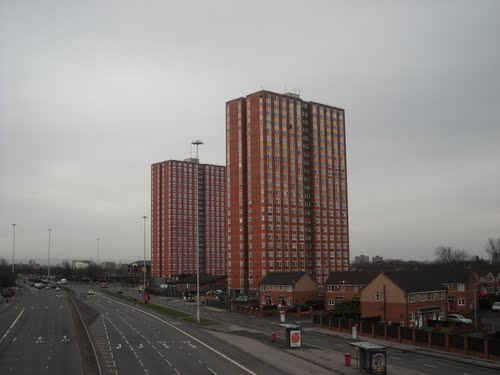
It was the early 1980s and the social worker and I were visiting a young single parent living on the 9th floor of a tower block in Salford 6. She had just moved back to live with her parents after the breakdown of her relationship. As she opened the door we were greeted by her 6 year old daughter, a pretty little girl who danced towards us, twirling around in circles. Only she continued to twirl around, and around, and around the overcrowded space completely absorbed in in own world. According to her mother she spent much of the day performing an unearthly dance between the furniture and screaming loudly every time she was prevented from doing this. She had no words. I could see how much her mother and grandparents loved her, but their faces were lined with desperation. The young mother already had the air, and appearance of someone at least a decade older than her years.
“I’ve been told she’s autistic,” she said, starting to cry, “but I don’t know how to cope with her…I just can’t, and now my husband has left me.”

It wasn’t difficult to see what was needed was some intensive support for the whole family. It was then, as now, in short supply but that didn’t stop us trying to put it in place. In my time at the clinic in the old Royal Manchester Children’s Hospital in Salford (not the shiny new one at the Infirmary) I witnessed over and again the impact of serious mental health problems and difficulties on families already struggling to cope in unsuitable or substandard housing. And it reminded me, sometimes too often, of the impact that the problems of my younger brother, who developed obsessive compulsive disorder at the age of 7, had on my own parents’ physical and mental health.

As my friends will know, I’m not particularly ‘good’ with children (I have none of my own) so when I was on-call over the weekend I struggled to try and strike up conversations with silent teenagers in the paediatric ward, the day after they had taken an overdose. They usually went something like this:
‘Hello, my name is Doctor Gask. And your name is Jenny- is that right?’
Silence…no eye contact…a reluctant nod.
‘I really wanted to find out what happened to you- to see if we can help…is that okay?’
…’I suppose so.’
‘OK. So would you like to tell me what happened yesterday?’
More silence.
I soon learned, by watching the consultant I was attached to, a kind and extraordinarily astute child psychiatrist who was close to retirement, that direct questions were not the way to engage a young person in talking about their problems. If they turned up for a follow up appointment- and that often unfortunately depended on whether their parents saw the need for them to have any help, not only their own willingness to come, he would set about making a young person feel at ease, without actually appearing to make any effort at all. He would smile like a genial grandfather, and simply strike up a chat about things completely unrelated to the events that had brought them into hospital: their favourite pop stars (they were not called ‘bands’ then), hobbies, best friends and gradually build trust before moving onto the thorny question of why they had taken the tablets. After forty minutes or so he would be ready to ask: ‘So how would you like things to be different?’ followed by ‘I wonder how we can help you with that…should we try and look at that together?’

I realized quite soon into my six months working with children and young people that this wasn’t where I wanted to be for the rest of my career. I didn’t have the kind of skills and patience that the consultant had. I found it difficult to work with families where children whose apparently quite normal behavior did not meet the expectations of their parents. In particular I felt angry when parents failed to take up the offer of help because of their perception (perhaps rightly so) that we were suggesting the difficulties their children presented with had a great deal to do with their own life problems and parenting style.

However what I did learn, and has never left me, was the acute awareness of how the people I saw later in their lives with depression and anxiety, in their twenties, thirties and older, had first developed difficulties with their mental health in their youth. This was where their problems had begun.

I returned to work in Salford 20 years later and helped to set up a primary care based mental health team. Our base, at first, was in a building attached to the old Salford Royal Hospital where I had attempted and failed to strike up conversations on a Saturday morning. Only now the building, like many older hospitals, had been converted into luxury flats. As I discussed in supervision, with the Psychological Wellbeing Practitioners, the problems of the people being referred to us, I was acutely aware that the generation we had struggled to help back in the 80’s were the very people now presenting to the mental health services. What happens to us in early life- our relationships, experiences within our own families, continues to have an impact on our mental well-being for the rest of our lives.

Services for children and young people with mental health problems have never been well funded and now in the UK they have been cut more than ever before. What services do exist are withdrawn at school leaving age and very many of those who have succeeded in getting help fail to meet the ever more selective criteria of adult mental health services, unless they have been lucky enough to be seen in some of the newer services which don’t recognize this traditional cut-off point, which is completely unsupported by what we now know from research:

not only that adult mental health disorders are common in the population, but that most of them have their onset by adolescence. This period of life after puberty also sees a range of important organisational developments in the brain that last until the late 20s and usher in adulthood as might be defined from a developmental rather than a social or legal point of view.’

Yet this is exactly the period when adequate mental health care is perhaps most difficult to access.

I was recently asked in an interview (by Ruth Hunt) what my priority would be for funding when the new money promised for mental health care, too little once more, finally arrives. I didn’t hesitate. It has to be for children and young people, if we are going to begin to try and prevent the cycle of suffering. More families failing to cope and the next generation experiencing the same problems.
It has to be children and young people first.

My memoir about depression and Psychiatry: The Other Side of Silence is available now

Learning from Goldilocks

I’ve hesitated in writing about this topic, because I know things are extremely difficult in mental health services at the moment in this country. I don’t want to sound as though I think it is easy to do things differently. When teams are being cut it is very hard, and I am also retired now from clinical care so I am not in the firing line any more.

But what I’m going to talk about goes way back beyond the present problems- as long as I can remember. When I was younger, it pervaded the decisions I had to make when I saw a person in A&E who was unfortunate enough to live on the wrong side of the red felt pencil line in the on-call copy of the Manchester A to Z. It’s the problem that led one senior psychiatrist a few years ago to respond to me in a research questionnaire that no other speciality defines itself more adamantly by what it does not do than mental health. Its important to also say that I am not here referring to the awful burden staff carry when trying to find a bed for a person who needs admission; when they can spend all night phoning around the country. I know they are trying desperately to help the person who is in immediate need of care. I’m talking about what happens at the front line contact- when a person is referred by their GP, or seeks help- long before their problems have reached the point where admission is indicated.

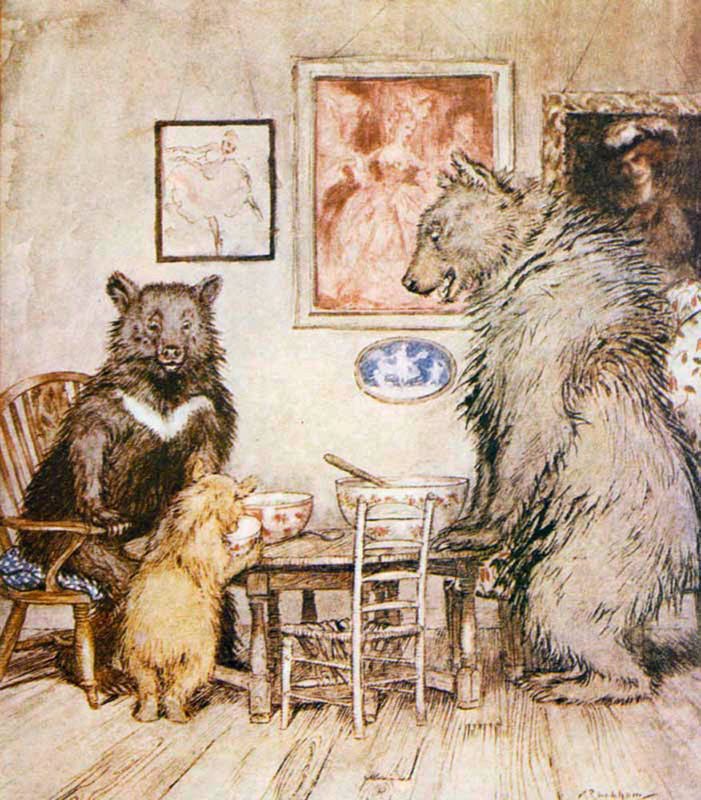
We talk a great deal about patient and service user centred care in health services, but what we deliver and receive is not always that. The `Goldilocks Principle’, which applies in many areas from climate study to economics, states that something must fall between certain margins, rather than reaching extremes. The earth is a Goldilocks planet as it falls within a planet’s habitable zone. So what does have this to do with health care? Well, in mental health care the situation is often the reverse of the Goldilocks story. Instead of one person and three bowls of porridge, which may or may not be right for them, we have the reverse. Three people and one bowl of porridge. A service often defined by what it will not offer rather than how it might help, with no other options available for the people who do not fit these criteria. The decision not to help the other two people is often accompanied by the statement ‘we are not commissioned to provide X,Y……’ This is not a new phenomenon. It existed beyond the current cuts, but they have made it worse.

Now, there may be so little on offer that even access to that single bowl of porridge is limited or absent. Or a person may be told that their health will have to deteriorate further before the service will accept them. ‘Go away and come back when you are just right, even though we all know that is going to make it even harder to provide the help you need in the long run.’ And I know this is not a new phenomenon in the inner city populations where the lack of opportunity for early, timely intervention means a person may only be offered help, even though their GP has tried and failed to get them care for some weeks, at the point beyond which they no longer believe that they need it. So they then receive it under the Mental Health Act.

But when we do get the opportunity to re-build services- and its difficult to have seen thirty years of changes without hoping that something will change again at some point for the better, we need to try and ensure that what is provided is not simply about matching the person to what is on offer. This is what results in the multiple assessments with different teams which service users find so difficult, demeaning and pointless. This doesn’t have to mean allowing a person to choose exactly what they want, like Goldilocks did. We know that has problems not only of cost-effectiveness but the risk of causing harm. It is about having a dialogue in which all views are considered.

On a personal level -It is about thinking- ‘How can I help this person to get what they need’? If I cannot help them- who can and how can I facilitate them to arrive there. If it isn’t available what can I do?

At a service level it is considering how, if the person doesn’t really require specialist care, how can we support their GP, and/or the third sector to provide that care- and if we are ill equipped to do that, how can we find out.

It is also about ensuring we are not ‘cherry picking’ those people who are easier to help to improve our outcomes but trying to meet the needs of the people we were commissioned to help.

At an organisational level it is not only about developing specialist skilled teams to deliver help for more service users with complex problems, but making sure these teams in turn provide the right support to generalists. This will help to ensure service users who need help for which services have not been clearly commissioned and ‘fall between the cracks’ can be offered appropriate care.

It also means fostering a culture of dialogue, trust, respect and cooperation to ensure that the worker who makes initial contact with a service user is not told that their assessment is of no value because they do not belong to a particular profession or work in a certain team.

At a commissioning level, it is about asking the question ‘what are we not doing?’ ‘what isn’t there that should be?’ and ‘what isn’t working?’ for people with mental health problems- who will be able to tell you very clearly. It may not be possible to provide it, but we still need to talk about it and work out what can be done rather than what cannot.

At the moment it may seem hard to achieve any of these things- but these are not new problems and they will not all be solved by more investment. A person should never be thought of as ‘just right’ for a service. The care that they are offered should be, like Goldilocks’s porridge, ‘just right’ for them. Only unlike in the fairy tale, we should also try and ensure that doesn’t come at the expense of others- the three bears.